
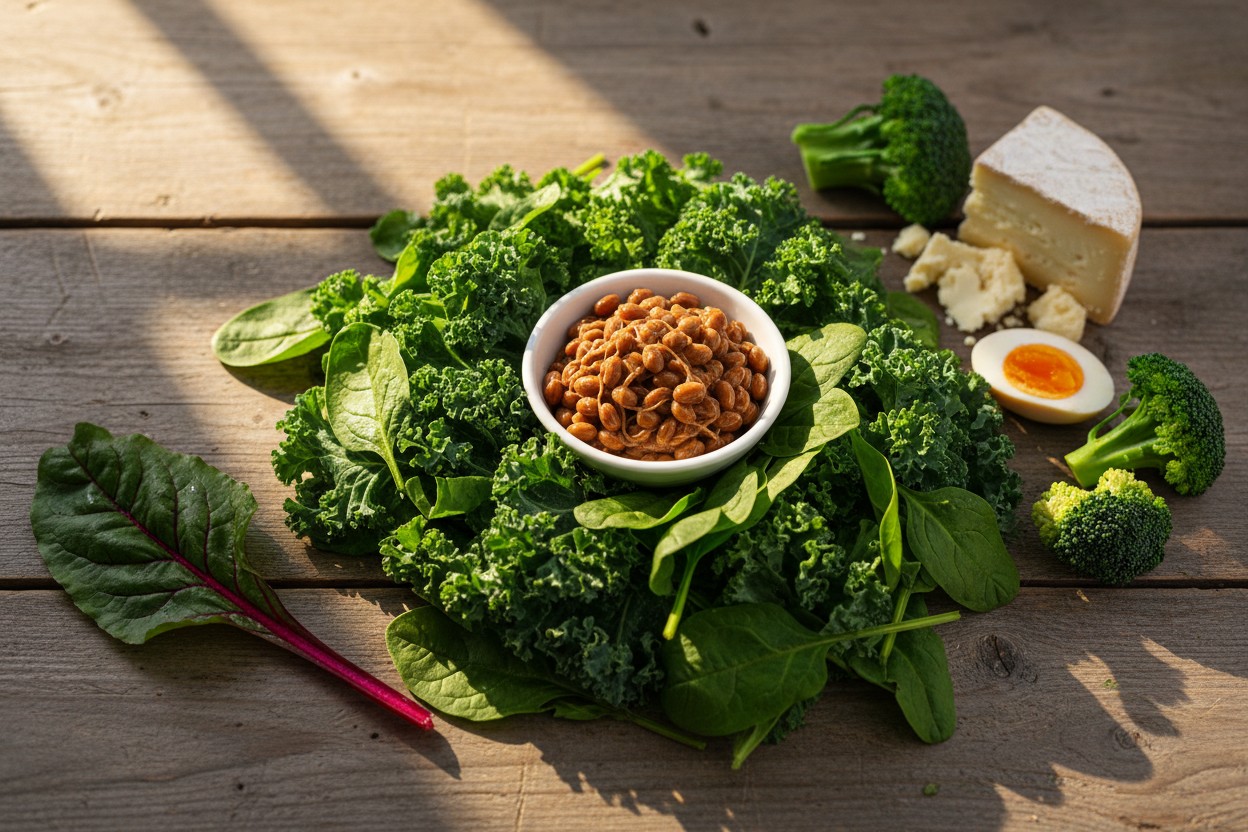
Vitamin K is a fat-soluble vitamin essential for blood clotting and bone health, according to the National Institutes of Health. The nutrient was first identified in the 1920s by Danish researcher Henrik Dam, who observed that chickens fed a cholesterol-free diet developed bleeding tendencies, according to Tieraona Low Dog in the book "Fortify Your Life." Dam found that feeding the birds alfalfa, spinach, cabbage, or liver reversed the condition, and he named the substance vitamin K after the German word for coagulation, the book states.
Vitamin K exists naturally in two primary forms: K1 (phylloquinone) and K2 (menaquinone). According to an article on Mercola.com, vitamin K1 is found in green leafy plants and plays a key role in blood clotting, while vitamin K2 comes in several forms such as menaquinone-4 and MK-7 and supports bone and cardiovascular health [2]. The body uses vitamin K to activate proteins necessary for blood clotting and calcium regulation, according to the same source.
Health Benefits of Vitamin K
Emerging research indicates that vitamin K offers benefits beyond clotting, particularly for bone and heart health. A study by researchers in the United Kingdom and Australia, reported by NaturalNews.com, found that adequate vitamin K intake is associated with improved bone health and reduced risk of falls and fractures [10]. The research, published in the journal Bone Reports in 2023, concluded that most individuals require slightly more than 100 micrograms of vitamin K1 daily, the report stated.
Vitamin K2, in particular, has drawn attention for its role in directing calcium to bones and away from arteries. According to an article on NaturalNews.com, adequate K2 intake can dramatically reduce fracture risk and heart disease mortality [5]. Another report from NaturalNews.com states that vitamin K2 helps prevent heart disease, especially arteriosclerosis, and is crucial for preventing osteoporosis [1]. However, the conversion of K1 to K2 in the body is limited; according to Lara Pizzorno in the book "Your Bones," only about 6% of the K1 from leafy greens ultimately gets converted to K2 [9]. The same book notes that the body prioritizes using vitamin K1 for blood clotting before any leftover amounts become available for conversion.
Top Food Sources of Vitamin K
Leafy green vegetables are the most abundant sources of vitamin K1. According to an article on NaturalNews.com, foods such as kale, spinach, collard greens, and Swiss chard provide high levels of vitamin K1 [4]. A report on NaturalNews.com highlights that turnip greens, a traditional staple in Southeastern U.S. cuisine, deliver 530 micrograms of vitamin K per half-cup when boiled — a level that surpasses many more widely marketed greens [11]. Collard greens offer a similar amount, according to the same report.
Vitamin K2 is found primarily in fermented foods and animal products. Natto, a fermented soybean dish, is one of the richest sources, according to the Mercola.com article [2]. Small amounts of K2 are also present in high-fat dairy products from grass-fed cows, egg yolks, liver, and other organ meats, according to a NaturalNews.com article [4]. Because vitamin K is fat-soluble, absorption can be improved when these foods are consumed with dietary fat, according to the same source [6]. Cooking methods also matter: a study in the Journal of Food Science indicated that steaming preserves more vitamin K than boiling, though the provided sources do not detail which study, but the context from [11] mentions boiling turnip and collard greens.
Considerations for Vitamin K Intake
Individuals taking anticoagulant medications such as warfarin must manage their vitamin K intake carefully. According to a book summary on BrightLearn.ai, warfarin works by interfering with vitamin K-dependent clotting factors, and sudden changes in dietary vitamin K can alter the drug's effectiveness [12]. The American Heart Association has stated that maintaining consistent vitamin K intake is important for patients on blood thinners.
Deficiency may also be more common than recognized. According to an article on Mercola.com, Dr. Cees Vermeer, a leading vitamin K researcher, has stated that nearly everyone is deficient in vitamin K [3]. The book "Vitamins and Minerals" by Kroner Zina notes that while vitamin K levels may be adequate for normal clotting, they may not be sufficient for optimal bone health [8]. To support adequate intake, experts recommend including a variety of leafy greens and fermented foods, and those on anticoagulants should consult a healthcare provider before making dietary changes, according to the BrightLearn.ai source [12].
Summary
Vitamin K from food sources plays key roles in blood clotting and bone health, based on current dietary recommendations. Including a variety of leafy greens and fermented foods can help maintain adequate levels, though individuals on anticoagulants should consult a healthcare provider to ensure consistent intake. The growing body of evidence from both mainstream and alternative health sources underscores the importance of this often-overlooked nutrient.
References
- NaturalNews.com. "Vitamin K2 Helps Prevent Heart Disease and Osteoporosis". NaturalNews.com. December 30, 2009.
- Mercola.com. "The Superstar Nutrient Very Few Fully Appreciate". Mercola.com. September 18, 2023.
- Mercola.com. "10 Important Facts About Vitamin K That You Need to Know". Mercola.com. March 24, 2004.
- NaturalNews.com. "8 Science-backed health benefits of vitamin K". NaturalNews.com. February 1, 2023.
- NaturalNews.com. "Why vitamin K may be the most overlooked nutrient for longevity". NaturalNews.com. February 9, 2026.
- NaturalNews.com. "Fat-soluble vitamins: What are the best dietary sources of vitamins A D E and K". NaturalNews.com. December 16, 2020.
- Tieraona Low Dog. "Fortify Your Life - Your Guide to Vitamins Minerals and More".
- Kroner Zina. "Vitamins and Minerals".
- Lara Pizzorno. "Your Bones".
- NaturalNews.com. "Study Links Vitamin K Intake to Reduced Fall and Fracture Risk in Older Adults". NaturalNews.com. May 16, 2026.
- NaturalNews.com. "Forgotten greens deliver superior vitamin K for bone and blood health". NaturalNews.com. April 16, 2026.
- BrightLearn.ai. "Beyond Warfarin: The Natural Path to Stable INR for G20210A Mutation Patients". June 6, 2026.










Please contact us for more information.