


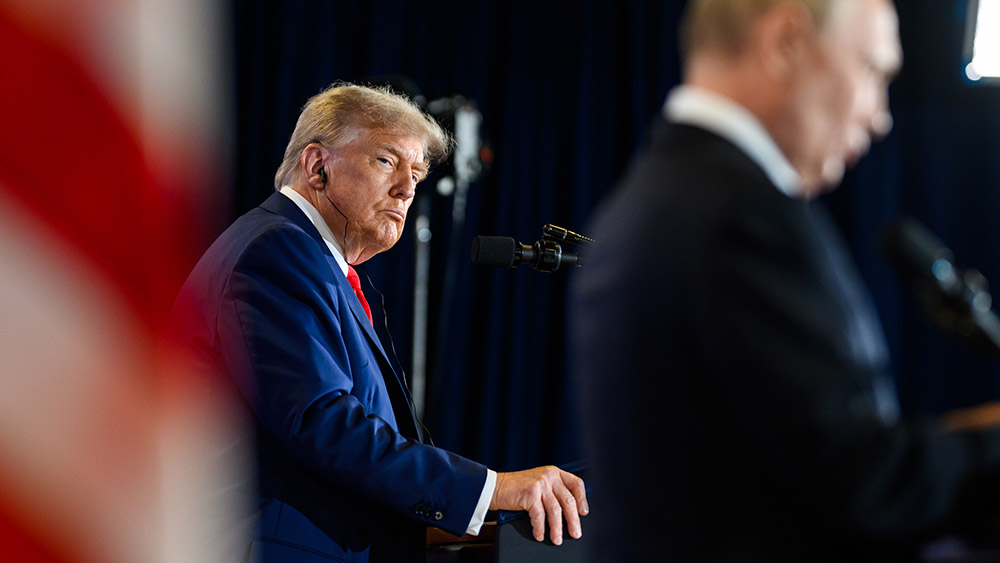
- The Trump administration denies transferring any funds to Iran under the new agreement, calling such reports fake news.
- The deal is a digital memorandum of understanding focused on reopening the Strait of Hormuz and ensuring Iran never gets a nuclear weapon.
- A $300 billion private investment fund for Iran was misreported as a $300 million government cash transfer by media outlets.
- Vice President Vance confirmed no American taxpayer money will be released to Iran under any terms of the agreement.
- Congressional leaders demand transparency and oversight, with skepticism remaining on both sides of the aisle.
On Monday, President Trump took to Truth Social to denounce reports that the United States would transfer $300 million to Iran as part of a newly signed memorandum of understanding, calling the story "Fake News, put out by the Dumocrats!!!"
The president's post came after multiple media outlets began circulating claims that the U.S. would provide cash to Tehran as part of a broader framework agreement to end hostilities and reopen the Strait of Hormuz. Trump did not specify which $300 million figure he was disputing, and the confusion may stem from a misstatement. The New York Times had previously reported on a potential $300 billion investment fund for Iran, which Iran could access if it fulfilled its obligations under the agreement, with the Financial Times later adding that the fund would be financed by private companies rather than government money.
Vice President JD Vance directly addressed the issue during a Monday interview on CBS News, confirming that the deal was signed "digitally" on Sunday and that "no money" had been released to Iran. "When people say that billions of dollars of assets will be released, that's not true," Vance said on CBS Mornings, adding that "what is true is that Iran will have a much better and much more prosperous future if they meet the obligations they make in this agreement."
Media confusion or deliberate misinformation?
The $300 billion figure was first reported by the New York Times, citing an Iranian official and a diplomat, and was later confirmed by multiple outlets including the Financial Times, which added that the fund would be financed by private companies rather than governments. The fund would be tied to Iran's compliance with the new agreement and would support rebuilding efforts. Officials told the outlet there is interest from businesses in Europe, Asian countries such as Japan and South Korea, and the United States.
But somewhere in the transmission of information, $300 billion became $300 million, and the private investment angle gave way to claims of direct government cash transfers. Vance was unequivocal in his response to Fox News' Sean Hannity on Monday: "They never get a dime of American taxpayer money. Ever. Full stop. Not even close."
The vice president also took aim at media coverage, saying "the American media literally picks up talking points and propaganda from the IRGC that has no support in the text of the agreement that we've actually negotiated and no basis in reality."
Despite the administration's denials, some members of Congress remained skeptical. Senate Minority Leader Chuck Schumer demanded transparency, saying "Senate Democrats have been unwavering in calling for an immediate end to Trump's Iran war" but adding that the public needs to know "what exactly is in this 'understanding'?" Thune and Schumer both emphasized that the agreement would require congressional oversight.
A deal under scrutiny
The memorandum of understanding, which Trump announced on Truth Social on Sunday, calls for the immediate reopening of the Strait of Hormuz and the removal of the U.S. naval blockade. Trump wrote: "Ships are starting to move, many loaded up with Oil, out of the Strait of Hormuz. They are going along the Southern 'Highway,' which is totally safe, secure, and pristine."
Vance outlined three key provisions of the MOU during his Monday media appearances: first, the Strait of Hormuz will remain open immediately; second, Iran will never have a nuclear weapon; and third, if Iran changes its behavior and stops funding terrorism, the U.S. is willing to "fundamentally transform our relationship with them."
But concerns remain on both sides of the aisle. Sen. Thom Tillis questioned the secrecy surrounding the deal, asking reporters: "If it is a secret deal, then how can I take it seriously?" Sen. Ted Cruz defended Trump's decision to order military strikes against Iran in February, calling it "the single most consequential decision of his presidency," while also noting that Congress would likely have a role in approving any formal arrangement.
Meanwhile, Israeli leaders offered mixed reactions. Prime Minister Benjamin Netanyahu acknowledged differences with Trump, saying "we often agree, and we often disagree. That happens in the best of families." He also stressed that "with or without a deal, Iran will not have a nuclear weapon."
What is certain is that the next 60 days will test every assurance the administration has offered. With Congress still waiting to see the text, Iran and Washington offering sharply different accounts of the deal's terms, and senior U.S. officials internally divided, the gap between a signed memorandum and a durable agreement remains wide. The money question may be the loudest debate right now, but it is unlikely to be the last.
Sources for this article include:







Please contact us for more information.