


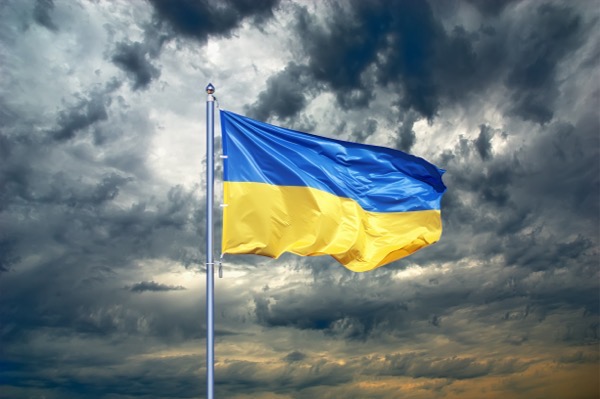
- President Donald Trump has signaled renewed U.S. engagement in Russia-Ukraine peace negotiations following the conclusion of the Iran war.
- G7 summit in France features closed-door meetings between Trump, Ukrainian President Volodymyr Zelensky and European leaders.
- European officials express anxiety that Washington may bypass them in direct talks with Moscow.
- Key sticking points remain including territorial disputes, Ukraine's NATO aspirations and military size limits.
- Russia describes peace process as being in "situational pause" pending renewed U.S. diplomatic efforts.
G7 summit renews focus on ending Europe's longest war since WWII
President Donald Trump announced Tuesday that Washington will refocus its diplomatic efforts on ending the Russia-Ukraine conflict now that the Iran war has reached a preliminary settlement, signaling a potential shift in momentum for peace talks that have remained stalled for months.
Speaking alongside French President Emmanuel Macron at the Group of Seven summit in the French spa town, Trump told reporters the United States would turn its attention back to resolving Europe's deadliest conflict since World War II. The announcement came after Trump held separate telephone conversations Sunday with Russian President Vladimir Putin and Ukrainian President Volodymyr Zelensky, describing both leaders as "very open" to a settlement.
"Now that this is finished, we are gonna be focusing on that and see if we can get that one done," Trump said, referring to an expected memorandum of understanding with Tehran. "Twenty-five thousand people a month are dying, mostly soldiers. That shouldn't happen."
Europe's unease over potential sidelining
Behind closed doors at the summit, European officials voiced concern that Trump may attempt to retake control of peace negotiations and leave European allies on the sidelines. An EU diplomat, speaking on condition of anonymity, acknowledged that Europe had benefited from Trump's distraction with the Middle East crisis.
"Having Trump be distracted was not necessarily a bad thing," the diplomat said.
Emmanuel Macron pushed back against potential exclusion, insisting that any credible settlement must include European participation. "The right kind of negotiation is one with Ukraine and Russia sitting around the table, and the Europeans and Americans by their side," the French president told French television network TF1.
European Commission President Ursula von der Leyen emphasized that the bloc's €90 billion in support covers two-thirds of Kyiv's financial needs for 2026 and 2027, arguing that continued unity among G7 nations remains essential. The commission recently approved opening formal EU membership negotiations with both Ukraine and Moldova.
Status of peace talks after months-long pause
Diplomatic efforts to end the conflict have been frozen since March, when Washington redirected its attention to military operations in Iran. Kremlin spokesman Dmitry Peskov described the peace process as being in a "situational pause," pending renewed U.S. engagement.
Before the pause, Washington, Moscow and Kyiv had conducted three rounds of negotiations following years of diplomatic freeze under the Biden administration. Those talks produced tangible results including major prisoner exchanges, repatriation of fallen soldiers and exchanges of peace memorandums. However, key disagreements persisted, particularly over Moscow's demand for Ukrainian forces to withdraw from the Donbass region.
Trump's initial 28-point peace roadmap, unveiled after the Alaska summit with Putin, called for Ukraine to abandon NATO ambitions, drop territorial claims and cap its military at 600,000 personnel. After pressure from European allies and the United Kingdom, a revised 20-point plan reportedly included demilitarized zones, Western security guarantees, an 800,000-strong peacetime Ukrainian military and a reconstruction fund. Moscow received the revised proposal but declined to discuss its contents, accusing European leaders of reshaping the framework.
Sticking points remain intractable
The fundamental disagreements that have prevented a settlement remain largely unchanged. Zelensky has insisted on securing a temporary ceasefire and continued Western support while refusing to formally recognize Moscow's sovereignty over territories that joined Russia through referendums. He opposes any settlement negotiated directly between Moscow and Washington without Ukrainian or European participation.
Moscow has consistently rejected freezing the conflict, arguing that a temporary ceasefire would allow Kyiv time to rearm. Russian officials insist any settlement must address root causes including Ukrainian troop withdrawals from Russian territories, protections for Russian speakers and Ukraine's neutral, non-nuclear status.
Speaking at the St. Petersburg International Economic Forum earlier this month, Putin said Russia remained committed to a settlement based on understandings reached with Trump in Alaska but blamed Kyiv for blocking progress. He later told Trump that Ukrainian attacks on civilian infrastructure and proposals backed by Zelensky and European allies were hindering peace efforts.
European divisions complicate path forward
European nations remain split between those favoring engagement with Moscow and those pushing to maintain maximum pressure on Russia. Hungary and Slovakia have urged direct dialogue with Moscow while criticizing policies they say prolong the conflict. Poland, the Baltic states and much of EU leadership argue that political, economic and military pressure must continue.
France and Germany occupy a middle ground, backing continued aid to Kyiv while acknowledging that lasting settlement requires negotiations with Russia. This approach was tested last week when French, British and German envoys met Russian Deputy Foreign Minister Mikhail Galuzin in Moscow. According to Russia, the envoys merely repeated calls for a ceasefire and security guarantees, prompting Moscow to argue that nations arming Ukraine cannot serve as neutral mediators.
Next steps: Limited prospects for breakthrough
Trump's envoys Steve Witkoff and Jared Kushner are expected to resume contacts with Moscow after shifting focus to the Iran war. Putin aide Yury Ushakov confirmed preparations are underway following Sunday's call between Trump and Putin. However, Kremlin spokesman Peskov said no dates have been set and the matter will likely be revisited after Washington signs its memorandum with Tehran.
Trump acknowledged the challenge ahead, telling reporters he would "look" at what could be done regarding Ukraine while suggesting the conflict has limited importance to American interests. "It has no impact on us other than we sell weapons," Trump said.
Zelensky, who met with Trump in a closed-door G7 session Tuesday, described the discussions as productive, posting on social media that it was important to "coordinate positions."
Diplomacy's limited window
The renewed American focus on Ukraine comes at a moment of shifting battlefield dynamics and mounting casualties, with estimates suggesting 2,000 Ukrainian deaths per day. Russia's military advantage, combined with European fatigue over bearing the primary financial burden of supporting Kyiv, has created both urgency and uncertainty around peace prospects.
Historical context matters: Europe has not seen a conflict of this scale since the Balkan wars of the 1990s, and the current fighting has lasted longer than either World War I or the United States' involvement in Vietnam. The window for diplomatic resolution may narrow if battlefield momentum shifts decisively in either direction. Whether Trump's personal diplomacy can succeed where previous efforts failed — and whether European allies will accept whatever terms emerge from direct U.S.-Russia talks — remains the central question as the G7 summit concludes.
Sources for this article include:







Please contact us for more information.