


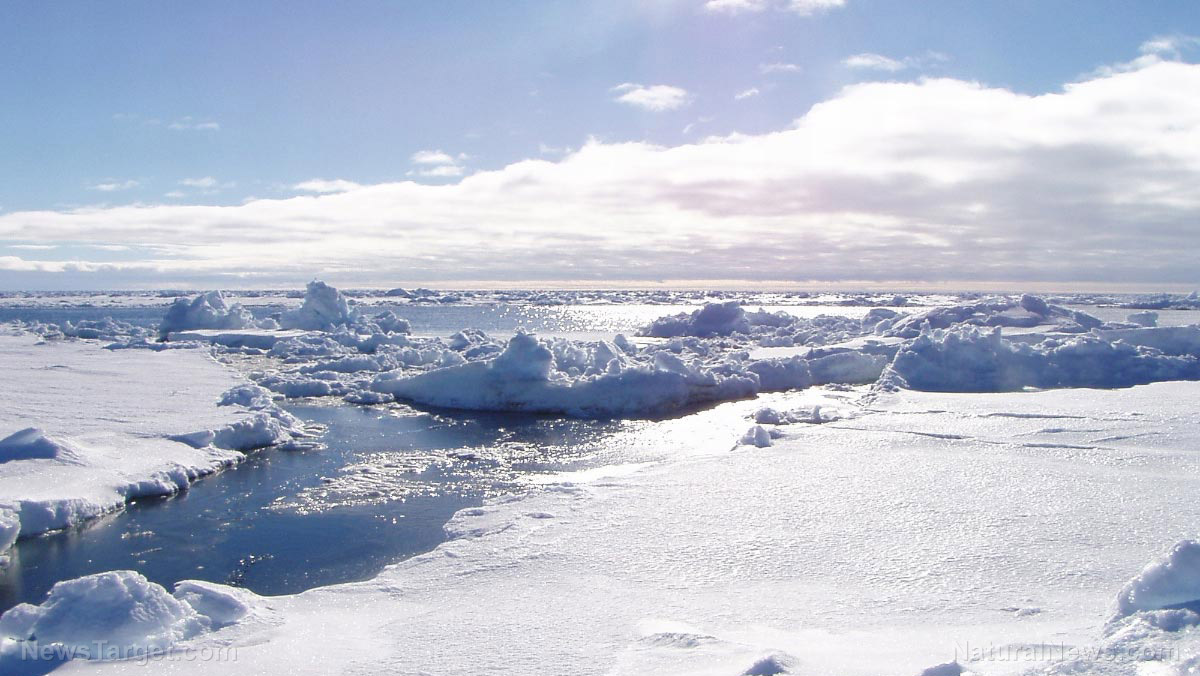
- Recent Antarctic "heatwave" was a localized, temporary event on the Peninsula, not continent-wide warming.
- Simultaneous record cold at the South Pole (-73.6°C) contrasts with Peninsula warmth, highlighting weather variability.
- Media sensationalized the event without context, ignoring broader Antarctic cooling trends and natural climate cycles.
- Studies show Antarctica is not uniformly warming; East Antarctica and regions like Elephant Island have cooled.
- Climate journalism should not link isolated weather events to catastrophic narratives while omitting contradictory data.
When a news outlet declares a "huge heatwave" in Antarctica, it's easy to assume a climate crisis is underway. Yet a closer look at the facts reveals a different story. Futurism recently sensationalized a brief warm spell on the Antarctic Peninsula, framing it as evidence of climate collapse. The problem? The event was localized, temporary, and occurred while much of the rest of the continent was experiencing record cold. As climate debates grow more polarized, it's worth separating weather noise from genuine climate trends — and asking why only one side of the story gets headlines.
The localized nature of Antarctic warming
The "heatwave" occurred on the Antarctic Peninsula, already known as the continent's warmest and most climatically variable region, nicknamed the "banana belt" for its relatively mild maritime conditions. On June 6, temperatures near the Trinity Peninsula briefly reached 15.4°C (59.7°F). Futurism called this "horrifying." But as the article itself acknowledged, the warmth was driven by extremely strong westerly winds, which is a weather phenomenon, not a climate signal. The peninsula's proximity to the Southern Ocean and its susceptibility to föhn wind events mean warm-air intrusions are not unprecedented. Media outlets rarely mention this context.
A continent of extremes
What those breathless headlines also failed to mention: while the peninsula was warming, the Amundsen-Scott South Pole Station recorded a low of -73.6°C (-100.5°F) on June 16, with a daily maximum of only -69.9°C (-93.8°F) — the station's first sub-70°C reading since 2023. According to meteorologist Cap Allon's observations at Electroverse, Antarctica has seen a stark, colder-than-average air mass sitting over the continent for weeks, with temperatures in parts of the interior running more than 20°C below the long-term average. That cold pool has been strong enough to spill north into South America, triggering frost alerts across Brazil, Chile, and Argentina.
One part of Antarctica briefly experiences an unusual warm episode while another part drops below -100°F. That is how weather works on a continent larger than the United States and Mexico combined. Yet only one of those data points generated international headlines.
Weather is not climate
The Futurism piece also claimed the heatwave follows "decades of increasingly warm temperatures observed on the white continent." That is not accurate. Antarctica is not warming uniformly. While the peninsula experienced warming during parts of the late twentieth century, numerous studies have shown little warming or even modest cooling across large sections of East Antarctica, which makes up the bulk of the continent.
A 2026 study examining glacier behavior near King George Island — just north of the peninsula's tip, and the very area featured in heatwave coverage — found that temperature trends and glacier retreat in the region correlate with natural ocean-atmosphere cycles, specifically the Southern Annual Mode, rather than with rising greenhouse gas emissions. Phases of cooling and glacier advance have alternated with phases of warming and retreat, with neither pattern following a linear trend linked to CO2.
A separate study of Elephant Island, roughly 130 kilometers from the heatwave epicenter, found approximately 0.75°C of surface cooling since the 1990s. Antarctic sea ice has also shown substantial variability from year to year and decade to decade. The continent is shaped by complex interactions involving ocean currents, atmospheric circulation, sea ice dynamics, and natural climate oscillations — complexity that disappeared entirely from Futurism's coverage.
Instead of that complexity, readers got the now-familiar formula: identify a dramatic weather event, link it to climate change, invoke the "Doomsday Glacier," and imply catastrophe. The article's reference to the Thwaites Glacier is a case in point. Thwaites lies in West Antarctica and has no direct connection to the weather event on the peninsula. Its inclusion served one purpose: reinforcing a crisis narrative.
This is increasingly common in climate journalism. Any unusual weather event becomes a vehicle for recycling the same talking points about glaciers, sea level rise, and tipping points, regardless of whether they are relevant to the event being reported. A single warm spell on the Antarctic Peninsula becomes proof of climate catastrophe, while simultaneous record cold at the South Pole goes unmentioned. That is not objective journalism. It is selective storytelling, and readers deserve better.
Sources for this article include:





Please contact us for more information.