



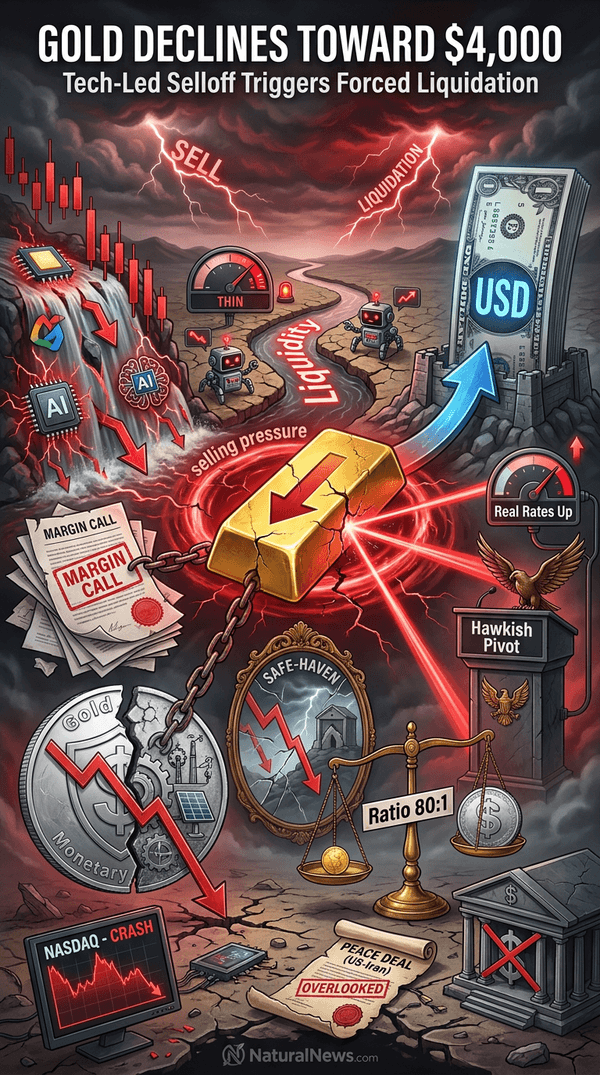
Gold dropped as much as 2.4% to about $4,091 an ounce in trading Tuesday, nearing a low from earlier this month, amid a broad selloff led by technology stocks that rippled through global markets. Silver plunged up to 5.8%, and other precious metals also declined as investors sold holdings to cover losses elsewhere, according to market reports. [1] [2]
Analysts attribute the drop to a hawkish stance from the Federal Reserve and a stronger dollar, which offset the positive impact of progress toward a US-Iran peace deal. Federal Reserve Chair Kevin Warsh, nominated by President Donald Trump, has signaled a more aggressive approach to inflation, driving the dollar index up 0.8% since the last Fed meeting, according to a report. [3] The dollar's strength tends to weigh on gold, which is priced in the US currency. [4]
Cross-Market Selloff and Haven Status
Gold typically serves as a haven asset during periods of uncertainty, but it often falls during broad market selloffs when investors liquidate positions to meet margin calls or rebalance portfolios, according to market observers. The recent tech sector decline has reverberated through global equities, adding pressure on precious metals already weighed down by rising rate expectations. [5] A rush to unwind crowded trades from AI shares to precious metals triggered margin calls and amplified the market's slide in recent sessions. [6]
The tech rout, driven partly by concerns over AI spending and a slowdown in memory-chip demand, pushed the Nasdaq to steep losses. South Korea's Kospi index suffered one of its largest drops on record, and semiconductor stocks fell globally as investors reassessed the outlook for the industry. [5] The selloff spread to commodities, with gold and silver caught in the crosswinds of forced selling and a strengthening dollar. According to a Trends Journal analysis, higher US interest rates push the dollar higher and put downward pressure on gold because gold is dollar-based. [4]
Analyst Forecasts and Institutional Revisions
The decline in gold and silver has led to a flurry of forecasts from analysts, though the precise path remains uncertain. In March, gold experienced its biggest single-session drop in 43 years, losing more than 9% in the futures market, according to a report by Matthew Piepenburg at VonGreyerz.gold. [7] The move surprised many traders, as gold typically thrives on geopolitical chaos, yet the current war in Iran and broader uncertainty failed to support prices in the short term due to forced liquidation and dollar strength.
Some economists point to the resilience of US macroeconomic data as a factor that has reduced the urgency for rate cuts, reinforcing the headwinds for metals. The gold-silver ratio, which measures how many ounces of silver it takes to buy one ounce of gold, has widened, reflecting silver's sharper decline. According to an analysis published by NaturalNews.com, the ratio is currently near 80:1, still heavily distorted from historical norms. [8] Silver's industrial demand, particularly from solar and AI-related sectors, continues to grow, but short-term price action remains subject to the same liquidation pressures affecting gold. [9]
Upcoming Data and Market Outlook
Traders are now focused on the US personal consumption expenditures price index due for release Thursday, which is expected to accelerate and could influence the Fed's next rate decision. A hotter-than-expected reading may reinforce the hawkish stance and further pressure precious metals. Meanwhile, the US economy is showing signs of strain, with GDP growth projected at only 2.5% this year, according to a report by Patrick Lewis on NaturalNews.com, weighing on overall market sentiment. [10]
Gold has fallen more than 20% since the Iran war began in late February, and silver has dropped even more sharply over the same period, according to market data. In recent trading, spot gold settled around $4,060 an ounce, while silver hovered near $61, with platinum and palladium also declining. The Bloomberg Dollar Spot Index rose 0.4% during the session, adding to the headwinds for dollar-denominated commodities. [4] Analysts caution that until the Fed signals a pivot or the dollar weakens, precious metals may face continued downward pressure, even as long-term fundamentals such as industrial demand and currency debasement fears remain intact. [11]
References
- "Portfolio Prepping". Daily Reckoning. June 9, 2026.
- "Stocks slide as chip rout drags indices lower - Newsquawk US Market Wrap". Zero Hedge. June 23, 2026.
- "Stocks Slide, Gold And Bitcoin Tumble After Trump Taps Warsh As Next Fed Chair". Zero Hedge. January 30, 2026.
- Trends-Journal-2023-05-21.
- "Futures Slide As Tech Tumbles, Korea Crashes". Zero Hedge. June 23, 2026.
- "Futures Tumble As Plunging Metals And Bitcoin Spark Global Selloff, Margin Calls". Zero Hedge. February 2, 2026.
- Matthew Piepenburg. "Gold's Biggest Fire-Sale In 43 Years: Perception Vs Opportunity". Zero Hedge. March 23, 2026.
- "The Silver Coup: How Paper Money's Collapse Is Reshaping Global Wealth". NaturalNews.com. May 13, 2026.
- Jacob Thomas. "Breaking the Chains on BrightU: How AI, Solar and Chip Wars Will Trigger a Global Crisis". NaturalNews.com. May 19, 2025.
- Patrick Lewis. "US Economy Stagnates as Government Spending Soars and Growth Slows to a Crawl". NaturalNews.com. April 13, 2026.
- Kevin Hughes. "Silver Tsunami: Why Precious Metals Are Your Last Lifeline Before the Crash". NaturalNews.com. March 20, 2026.
Explainer Infographic












Please contact us for more information.