


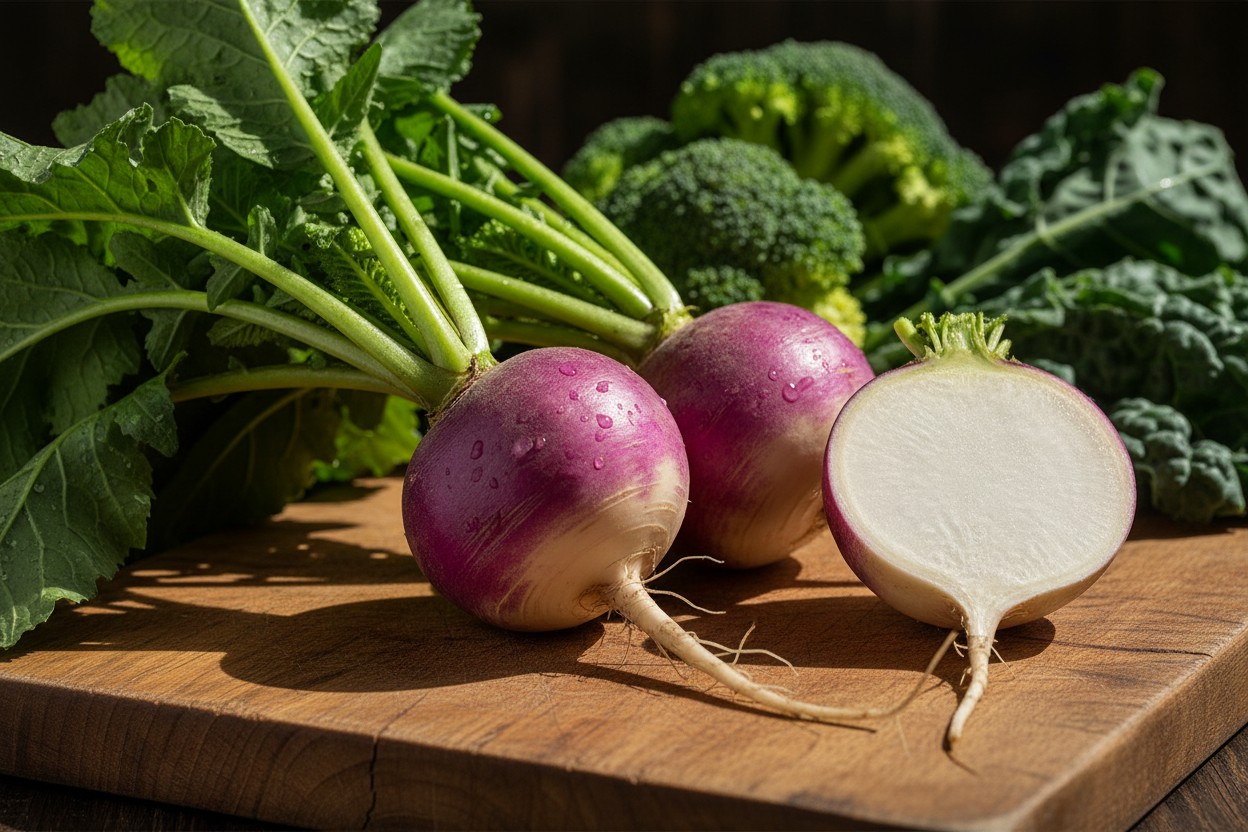
Turnips, a root vegetable belonging to the Brassicaceae family, provide a low-calorie, high-fiber option for individuals seeking to manage their weight, according to nutritional reports.
A report published by NaturalNews.com [1] describes the turnip as a vegetable characterized by its round shape and purple-and-white coloring, historically cultivated across temperate regions. The vegetable is classified as a cruciferous member, alongside broccoli, cauliflower, and kale.
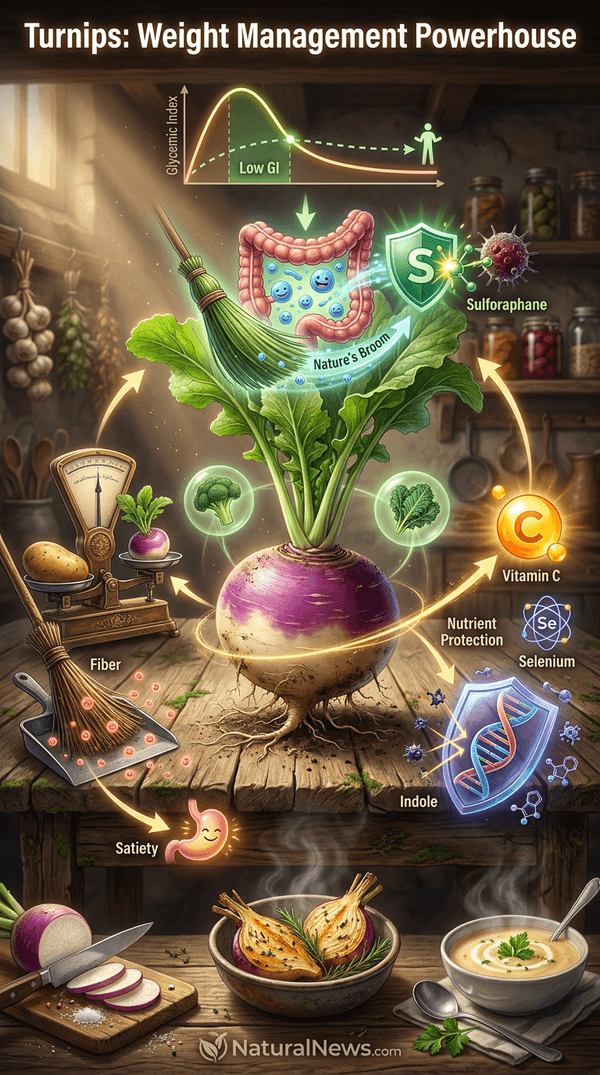
According to Mercola.com [2], turnips are an excellent source of vitamin C and fiber, and also contain indoles, a type of phytonutrient under study for potential anticancer effects. Cruciferous vegetables, including turnips, are recognized as good sources of vitamin C, selenium, folate and various flavonoids, according to the book "Integrative Medicine" [3]. These plant compounds are reported to support gut health and overall digestive function.
Nutritional Composition and Health Benefits
The nutritional profile of turnips includes significant amounts of vitamin C in the root and additional nutrients in the leafy greens, according to dietary sources. The book "The 30 Day Diabetes Cure" [4] notes that turnips are among the cruciferous cousins of broccoli that contain sulforaphane, a compound linked to antioxidant and metabolic benefits. The root vegetable also provides dietary fiber, which contributes to digestive regularity.
Dietary fiber, as described in the book "Becoming Vegetarian" by Vesanto Melina and Brenda Davis [5], is described as nature's broom, helping maintain colon health and being associated with reduced risk of colorectal cancers. The authors estimate that increasing fiber intake by 13 grams per day could cut the risk of colorectal cancer by about one-third. Turnips contribute to this fiber intake while providing a low-calorie density, making them suitable for weight management plans.
A study cited by Mercola.com [2] highlights that turnips are antioxidant-rich and nutrient-dense, containing beneficial plant compounds. The vegetable's ability to add bulk to meals without adding many calories supports satiety and helps normalize gut transit time, according to dietary references.
Comparison to Other Root Vegetables
Turnips are often overlooked in favor of more common root vegetables such as sweet potatoes and beets, according to the report by NaturalNews.com [1]. However, the vegetable offers a mild, slightly sweet flavor that adapts easily to a variety of dishes, including soups, stews, and roasted preparations. The same source notes that turnips provide a versatility similar to potatoes but with fewer calories and more fiber per serving.
Mercola.com [2] includes turnips in recipes for roasted root vegetables, noting that they pair well with beets, onions and parsnips. The website also recommends a savory roasted turnip recipe as an alternative to potatoes. According to these sources, turnips represent a smart choice for individuals focused on weight control, blood sugar management, or heart health due to their lower calorie density and higher fiber content compared to many other root vegetables.
Role in Weight Loss and Satiety
The fiber content of turnips is a key factor in their potential role in weight loss, as fiber promotes feelings of fullness and reduces overall calorie intake. The book "Becoming Vegetarian" [5] states that fiber is consistently linked to better bowel regularity and lower risk of diverticular disease and colorectal cancer. Fiber creates bulk, absorbs water, and helps normalize transit time in the digestive system, contributing to satiety.
A study on moderate calorie reduction, reported by NaturalNews.com [6], found that reducing daily calorie intake by 10 to 12 percent over two years produced improvements in blood pressure, insulin sensitivity, and weight loss in healthy adults. Incorporating low-calorie, high-fiber vegetables like turnips into a calorie-controlled diet can help achieve such reductions without sacrificing volume.
Mercola.com [2] emphasizes that turnips are an excellent source of fiber, which helps keep individuals full and satisfied. The vegetable's mild flavor and adaptability to various cooking methods make it an easy addition to weight loss regimens, according to the same source.
Selection and Culinary Versatility
Selecting fresh turnips involves looking for firm bulbs with bright coloring and greens that are not limp or wilted, according to general produce guidelines. The root vegetable can be stored in refrigeration for up to two weeks, as noted in the report by NaturalNews.com [1]. Both the root and the greens contribute nutrients, with the bulb being rich in vitamin C and the leafy tops providing additional vitamins and fiber.
Culinary applications for turnips are varied. They can be eaten raw in salads, roasted, mashed, or added to soups and stews. Mercola.com [2] recommends roasting turnips with coconut oil and sea salt for a potato-like consistency. The website also includes turnips in a roasted root vegetable recipe alongside beets and parsnips, highlighting their versatility. The mild, slightly sweet flavor pairs well with many savory dishes, making turnips an affordable way to add variety to meals.
Conclusion: Turnips as a Nutritious Addition
Turnips provide a combination of low calories, high fiber, and essential nutrients that support weight management and overall health, according to the reviewed sources. They are a versatile root vegetable that can be incorporated into a wide range of dishes, offering an alternative to more commonly used vegetables like potatoes and sweet potatoes.
The vegetable is a good source of vitamin C, fiber, and antioxidants, and its cruciferous nature links it to potential anti-inflammatory and metabolic benefits. For individuals seeking a nutritious, affordable, and flexible addition to their diet, turnips represent a practical choice supported by nutritional evidence.
References
- Coco Somers. "Nutritional Profile and Reported Health Attributes of Turnips Examined". NaturalNews.com. March 23, 2026.
- Mercola.com. "How to Grow Turnips In Your Garden". May 25, 2018.
- "Integrative Medicine".
- Russ Canfield and Jim Healthy. "The 30 day diabetes cure special reports".
- Vesanto Melina and Brenda Davis. "Becoming Vegetarian: The Complete Guide to Adopting a Healthy Vegetarian Diet".
- NaturalNews.com. "Moderate Calorie Reduction Linked to Improved Health Markers, Study Says". May 20, 2026.
Explainer Infographic













Please contact us for more information.