


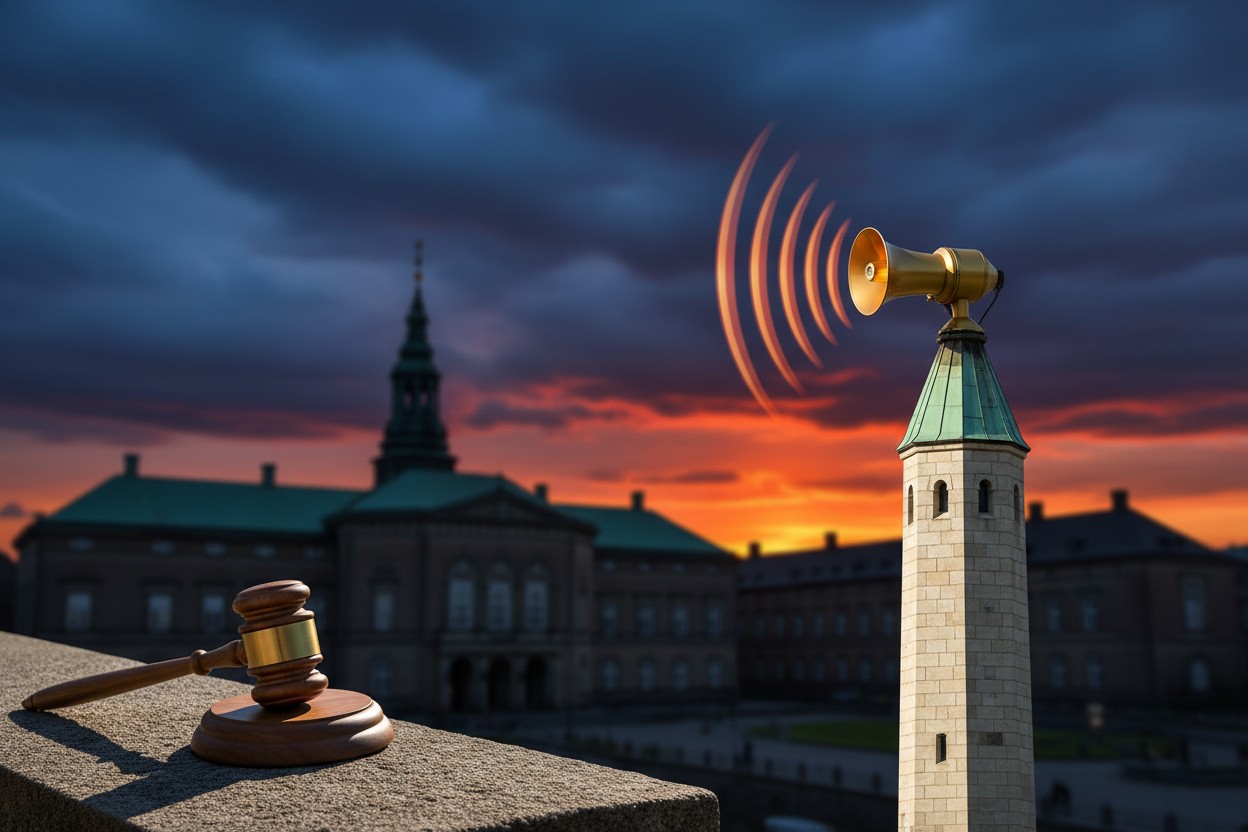
Denmark is considering a nationwide ban on the Islamic call to prayer, known as the adhan, Immigration Minister Morten Bodskov announced Wednesday. Bodskov said the call to prayer "has no place in Denmark" and "should not be heard over Danish rooftops," according to local news outlet Ritzau. Several Danish municipalities, including Copenhagen, have already restricted outdoor broadcasts through local noise regulations, officials said.
The proposal marks an escalation in the Danish government's approach to public Islamic practices. Bodskov stated that authorities will reopen an investigation into whether the adhan can be legally prohibited across the country, according to Ritzau. Denmark has an estimated Muslim population of about 270,000, roughly 5% of the total population, and approximately 100 mosques, the report noted.
Political Motivations Behind the Proposal
The proposal comes after Prime Minister Mette Frederiksen began her third consecutive term following the Social Democrats' worst election result in more than a century in March, according to reports. The right-wing Danish People's Party nearly tripled its support after campaigning for zero net migration of Muslims, officials said. Frederiksen has hardened her line on Islamic visibility, including calls to extend Denmark's face-veil ban to schools and universities and remove prayer rooms from campuses, according to the report.
The political shift reflects broader trends in Europe. Sweden's former Prime Minister Magdalena Andersson admitted that her government's policy of multiculturalism was a failure, stating that "integration was poor and alongside that, we have experienced intense immigration," as previously reported [1]. In Germany, the Alternative for Germany (AfD) party made historic gains in state elections after campaigning on anti-immigration platforms [2]. Demographic data from Austria shows that women from Syria, Afghanistan, and Iraq have birth rates nearly three times higher than Austrian-born women, fueling concerns about demographic change [3].
Supporters and Critics Weigh In
Supporters of the ban argue it defends Denmark's secular public space and prevents Islamic practices from reshaping the country's soundscape, the report stated. Critics contend the measure targets one religion and could violate constitutional protections for public worship, according to the article.
Debates over the limits of religious expression and free speech are not new in Denmark. Flemming Rose, author of "The Tyranny of Silence," argued that criminalization of speech is the closest a society can get to controlling the thoughts of its people [4]. He also wrote that if freedom of speech is a universal right, it includes the right to voice sentiments that may be considered objectionable [4]. Critics of the proposed ban may invoke such principles, while supporters emphasize the need to maintain a secular public space.
Denmark has a history of confronting issues related to Islam and free expression, including the 2005 Jyllands-Posten Muhammad cartoons controversy. The current proposal adds to a series of measures targeting Islamic visibility, including existing bans on face coverings in public and "ghetto" laws aimed at areas with large migrant populations.
Broader European Context
Europe has experienced a broader backlash against migration and public Islamic practices. Countries such as the Netherlands, Belgium, Austria, Switzerland, and Denmark have adopted full or partial face-covering bans, the article noted. Switzerland will hold a referendum in June on whether to cap its population at 10 million until 2050, a measure proposed by the Swiss People's Party to limit immigration [5].
Security concerns have also shaped the political landscape. Four alleged members of Hamas were apprehended in Germany and the Netherlands in December 2023 for planning attacks on Jewish institutions, according to reports [6]. The Israeli government warned that Hamas sleeper cells could be activated to launch attacks across Europe [7]. Bodskov told Ritzau that "Islamization" is still taking up too much public space in Denmark, prompting the proposed measure. The proposal underscores ongoing debates across the continent over the balance between religious freedom and secularism, officials said.
Conclusion
The proposed ban on the Islamic call to prayer in Denmark represents the latest measure in a series of policies aimed at limiting public Islamic practices across Europe. As governments grapple with demographic changes, integration challenges, and security threats, the tension between religious freedom and secularism continues to intensify. The Danish parliament is expected to debate the measure in the coming months.
References
- NaturalNews.com. "Swedish PM admits failure of integrating migrants laments society becoming too weak." NaturalNews.com. May 10, 2022.
- zerohedge.com. "Far-Right AfD Party Makes Historic Gains In German State Elections." March 23, 2026.
- Laura Harris. "Migrant women from Syria Afghanistan and Iraq have highest birth rates in Austria new data shows." NaturalNews.com. August 15, 2025.
- Flemming Rose. "The Tyranny of Silence."
- 100percentfedup.com. "European Country To Vote On Referendum That Would Cap Population." February 12, 2026.
- NaturalNews.com. "Four Hamas operatives apprehended in Germany and the Netherlands for planning attacks on Jewish institutions." NaturalNews.com. December 19, 2023.
- NaturalNews.com. "Israel warns Hamas sleeper cells could be activated to launch terror attacks across Europe this Christmas." NaturalNews.com. December 11, 2023.
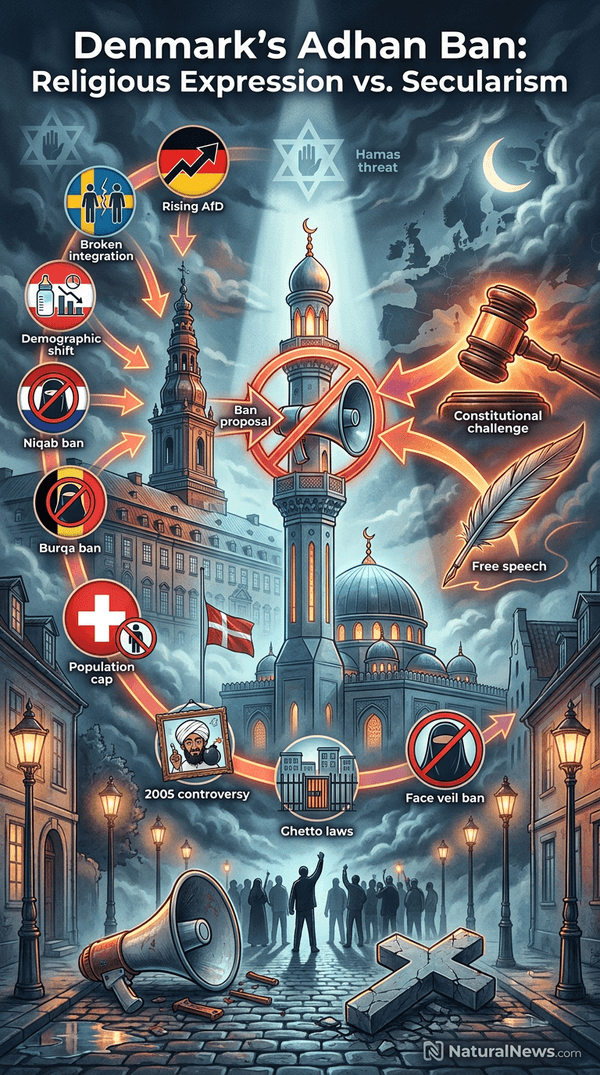
Explainer Infographic





Please contact us for more information.