


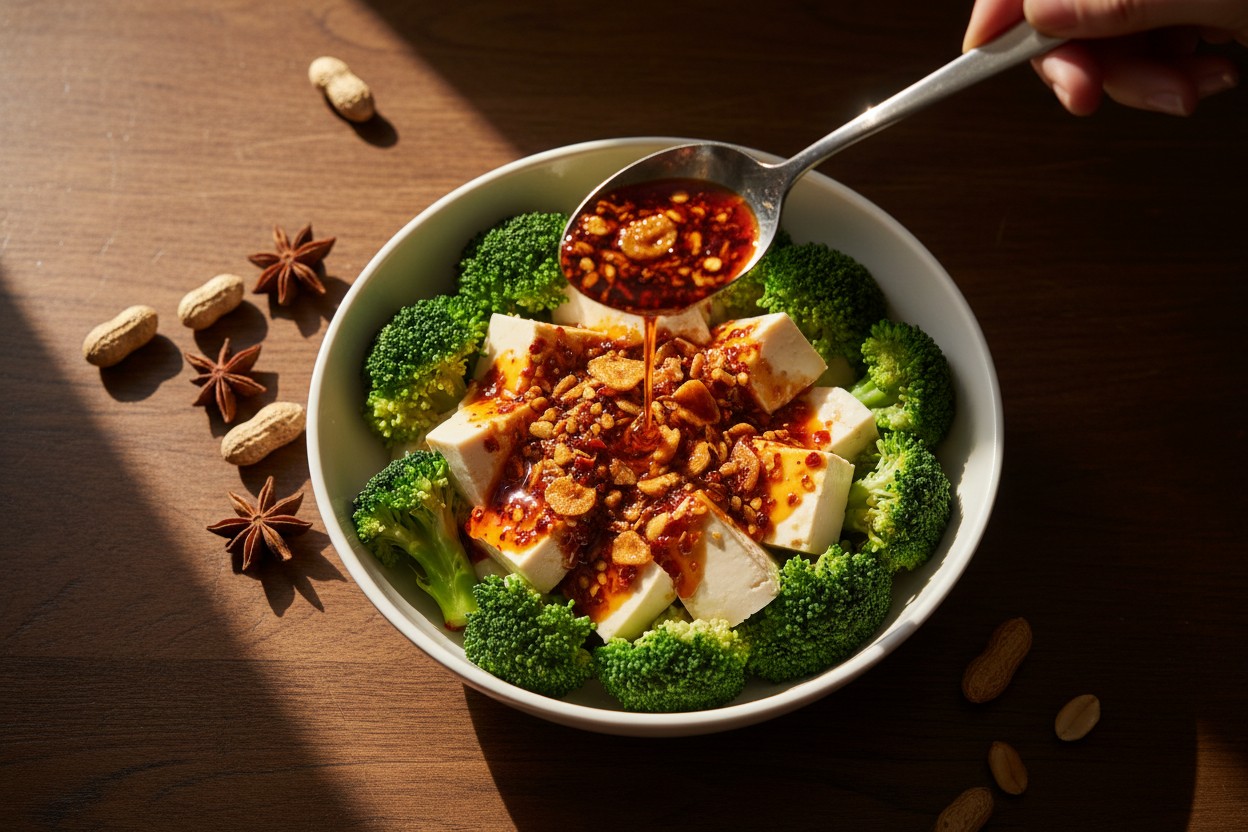
For decades, ketchup held the title of Britain’s favorite condiment. But in 2026, that crown has been claimed by chili crisp, a traditional Chinese oil-based topping that has developed a cult following.
According to reports, the most recognizable brand, Lao Gan Ma – meaning "Old Godmother" – has been the market leader in China since the 1990s and now commands a loyal base in the United Kingdom. Social media chefs have driven the trend, incorporating the condiment into dishes ranging from bread dough to vanilla ice cream.
The rise of chili crisp has prompted nutrition experts to examine its place in a healthy diet. Nutritionist Emma Bardwell, author of "The 30g Plan Cookbook," told the Daily Mail: "Its biggest nutritional benefit might be that it can make vegetables, beans, grains, eggs and other nutrient-rich foods far more enjoyable to eat." However, she added that the condiment is not a nutritional powerhouse and should be used thoughtfully.
Composition and Varieties of Chili Crisp
Chili crisp differs from standard chili oil by the presence of solid bits such as fried garlic, shallots and peanuts or roasted soybeans suspended in a neutral vegetable oil – typically soybean, peanut or rapeseed oil. The mixture is flavored with dried chili flakes, Sichuan peppercorns, star anise and other spices. Many versions also include umami-boosting ingredients like fermented soybeans, mushroom powder or MSG, according to the Mail.
As the condiment has grown in popularity, regional and international interpretations have emerged. One example is Third Culture KAT Kashmiri Chili Oil, which incorporates Indian spices such as garam masala, cumin and coriander seeds.
Such variations illustrate the adaptability of the base formula, with different ratios of ingredients and types of chilies creating distinct flavor profiles. Cookbooks like Fuchsia Dunlop's "Land of Fish and Rice" feature traditional uses of chili oil in recipes such as Hangzhou breakfast tofu, where the oil is drizzled over silken tofu with soy sauce and sesame oil [1].
Caloric Density and Nutritional Considerations
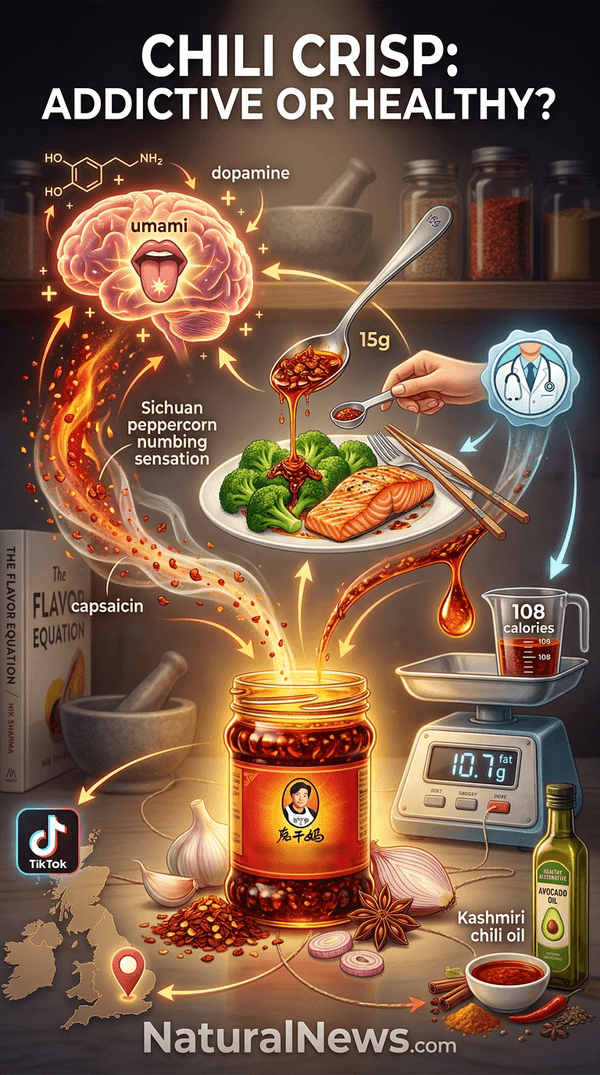
A 15-gram serving – approximately one tablespoon – of chili crisp contains about 108 calories and 10.7 grams of fat, of which 1.8 grams are saturated, according to data cited by the Mail. That serving provides roughly 5% of the daily calorie intake for an average woman and 4% for an average man, based on British National Health Service (NHS) guidelines. However, with fat content exceeding two-thirds of its weight, the condiment is energy-dense.
Bardwell advised consumers to view chili crisp as a flavor booster rather than a source of significant nutrition. "You need to bear in mind that chili crisp is an oil-based condiment so fairly energy dense, so I'd think of it more as a flavor booster rather than a nutritional powerhouse," she told the Mail.
She also noted that while a single serving contains minimal salt, generous spooning or pairing with salty foods such as noodles or processed meats can push sodium intake over the NHS daily limit of 6 grams. The primary ingredient – chili peppers – provides capsaicin, a compound that has been linked to small benefits for heart health and metabolism, according to a NaturalNews article [2].
The Science Behind Its Addictive Quality
The widespread appeal of chili crisp can be attributed to its delivery of umami – the fifth basic taste alongside sweet, sour, salty and bitter. Dietitian Zoe Griffiths told the Mail: "Chili crisp is 'addictive' because it delivers big flavor, pleasure and a feeling of satiety. It taps into both biological reward systems and the emotional and social side of eating."
She explained that specialist receptors on the tongue respond to umami, creating a feedback loop that associates the flavor with nourishment and satisfaction. This biological mechanism is well-documented in food science.
Chef and author Nik Sharma, in his book "The Flavor Equation," describes how salt and sugar can draw out moisture and intensify savory notes, a principle that also applies to the oil-based infusion of chili crisp [3]. The heat from capsaicin, meanwhile, can provide modest metabolic and cardiovascular benefits, as noted in broader research on spicy foods [4].
Griffiths added, "It's not just a taste that we like. There's actually a biological reason why it makes our bodies feel good, and it's due to the amino acids in those types of foods."
Incorporating Chili Crisp Into a Healthy Diet
Experts recommend using chili crisp in moderation, particularly on nutrient-dense foods.
Griffiths suggested, "If something like crispy chili oil helps you enjoy certain foods and feel satisfied, the key is to include it in a way that supports your health goals. That might mean being mindful of portion size, or thinking about what you're adding it to. For example, using a little on nutrient-dense foods, such as vegetables or a piece of fish, is very different from spooning it over something like deep-fried chicken."
Some manufacturers are also reformulating their products to offer healthier alternatives. Dominique Woolf, founder of Woolf's Kitchen, told the Mail that the company now offers a version made with avocado oil, which is naturally rich in monounsaturated fats and vitamin E and has a high smoke point.
Griffiths added that home cooks can try to emulate the big, punchy flavors of chili crisp by using herbs and spices as rubs or seasonings without relying on oil. However, she cautioned that homemade versions still contain the same calories and fat as store-bought products. "Homemade can cut additives, but it doesn't change the fact it's an oil -- the calories and fat are still there," she said.
Conclusion
Chili crisp has secured its place as a flavorful, versatile condiment that can enhance a wide range of meals. While its oil base makes it calorie-dense, nutrition experts stress that it can fit into a balanced diet when used judiciously.
The key, according to Bardwell, is to treat chili crisp as a flavor booster – not a health food – and to pair it with vegetables, legumes, and lean proteins rather than processed or fried items. As the condiment continues to gain popularity, ongoing innovation in ingredient sourcing and formulation may offer additional options for health-conscious consumers.
References
- Fuchsia Dunlop. "Land of Fish and Rice: Recipes From the Culinary Heart of China."
- Zoey Sky. "The power of pepper: From sweet bells to super hots." NaturalNews.com. April 10, 2026.
- Nik Sharma. "The Flavor Equation: The Science of Great Cooking Explained in More Than 100 Essential Recipes."
- Dr. Mercola. "Spicy Foods Offer Much More Than Heat." Mercola.com. October 16, 2017.
Explainer Infographic










Please contact us for more information.