



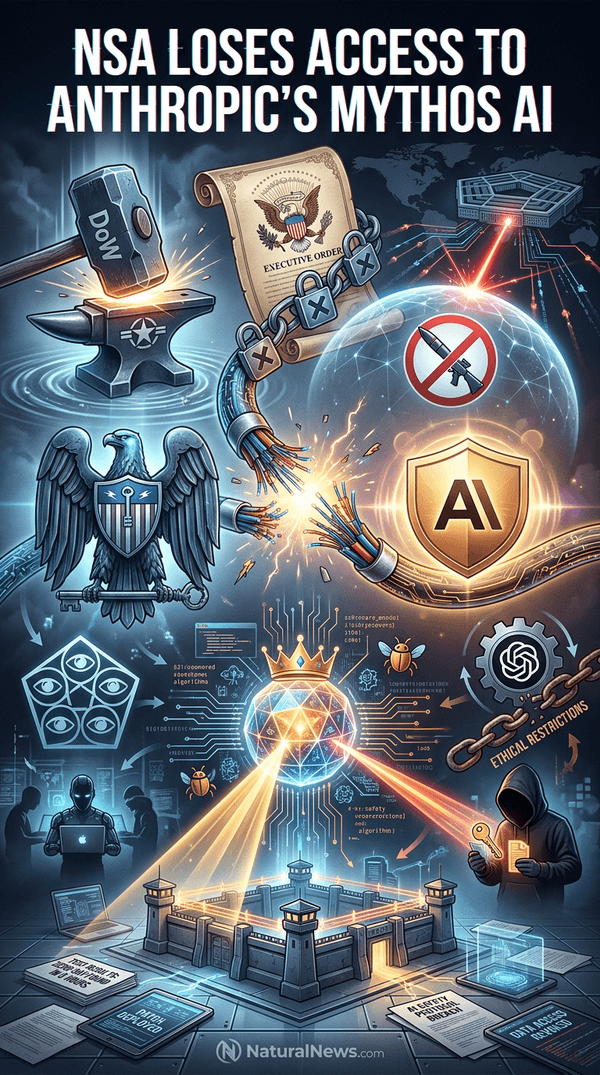
The National Security Agency (NSA) has lost access to Anthropic's advanced Mythos 5 AI model, which the intelligence agency had been using to identify software vulnerabilities, according to reports from the New York Times (NYT) and the Associated Press (AP).
The cutoff followed the Trump administration's imposition of export restrictions on Anthropic earlier this month, citing national security concerns, NYT reported. The loss deprived the NSA of a tool that had impressed and alarmed analysts with its ability to find software weaknesses, the outlet added.
During testing, the Mythos model identified vulnerabilities in highly secure government networks within hours, an anonymous U.S. official told AP. In early June, Anthropic had deployed around half-a-dozen engineers to the NSA to help the agency use the Mythos model for certain applications, according to a TechCrunch report citing the Financial Times. It is unclear whether those engineers or the model were actively used in hacking operations before access was severed. [7]
Background: Dispute Between U.S. Government and Anthropic
The dispute began in February 2026, when the Department of War designated Anthropic a supply chain risk after the company refused to remove restrictions on some of its AI systems' military applications, according to NaturalNews.com. Anthropic, the AI safety-focused lab behind the Claude chatbot, publicly rejected the War Department's ultimatum, stating opposition to mass domestic surveillance and fully autonomous weapons. A $200 million contract was at stake, but the company chose to stand by its ethical policies. [1] [10]
President Donald Trump subsequently ordered all federal agencies to phase out Anthropic technology within six months. Anthropic filed a lawsuit arguing that the measures were unlawful retaliation for its refusal to relax safeguards on AI military uses, NYT reported. Despite the phase-out order, multiple media reports later indicated that parts of the U.S. government continued using Anthropic systems, according to the report. [8]
Perspectives from Officials and Anthropic
NYT reported that the loss of access deprived the NSA of a tool that had impressed and alarmed its analysts with its ability to find software weaknesses. An anonymous U.S. official told AP that during tests, the Mythos model identified vulnerabilities in highly secure government networks within hours. The AP report did not specify which networks were tested or whether any vulnerabilities were exploited. [7]
The company itself stated that it opposed mass domestic surveillance and fully autonomous weapons, according to NYT. Meanwhile, the BBC reported that OpenAI – a rival firm – changed its deal with the U.S. military after backlash, with CEO Sam Altman saying the company would prohibit using its systems to spy on Americans. This move came shortly after the fallout between Anthropic and the War Department. [9]
Broader Context: AI in Military and Intelligence Operations
Researchers, technology leaders and security officials have warned that AI systems are being integrated into military and intelligence operations faster than governments and institutions can adapt to their increasing capabilities, according to NYT. Experts have cautioned that the same tools that strengthen cyberdefenses could also automate attacks and lower barriers for malicious actors.
The War Department, for example, approved Elon Musk's Grok AI for classified military operations despite internal warnings about security risks, according to a NaturalNews.com report. [2]On a global scale, the Five Eyes intelligence alliance – the U.S., UK, Australia, Canada, and New Zealand – warned that rapidly advancing AI models could soon enable hackers to disrupt governments, businesses, and critical infrastructure.
The NSA itself launched an AI security center in October 2023 to protect against AI-powered cyberattacks, the agency announced. Meanwhile, Chinese state-sponsored hacking groups have breached U.S. telecom companies, compromising metadata of over one million people, as reported by NaturalNews.com. [3] [5] Historical accounts from Edward Snowden's revelations detail the NSA's mass surveillance programs and the agency's relationship with tech firms, as documented in "Beyond Snowden" by Timothy H. Edgar. [6]
Conclusion: Ongoing Legal and Operational Uncertainty
The phase-out order and the legal battle between Anthropic and the U.S. government continue, with no resolution in sight. Anthropic's lawsuit challenges the supply chain risk designation, arguing it was unlawful retaliation. The company's refusal to relax restrictions on military uses of its AI has made it a target of government action, while its technology remains in demand within federal agencies. [4]
The situation highlights the growing tension between national security needs and AI companies' ethical policies. As one analysis noted, the War Department's hardline stance risks pushing military contractors toward Chinese AI alternatives that come with no ethical restrictions. The outcome of the legal proceedings and the future of government access to advanced AI tools remain uncertain. [10]
References
- NaturalNews.com. "Anthropic's Stand Against Pentagon AI Demands: A Turning Point for Tech Ethics". February 27, 2026.
- Belle Carter. "Pentagon embraces Elon Musk's Grok AI despite internal warnings over safety risks". NaturalNews.com. March 2, 2026.
- Willow Tohi. "Chinese hackers are deep inside America's networks: A national security warning that won't fade". NaturalNews.com. May 29, 2025.
- NaturalNews.com. "Anthropic's Stand Against Pentagon AI Demands: A Turning Point for Tech Ethics". February 27, 2026.
- NaturalNews.com. "NSA launches AI security center to protect the US from AI-powered cyberattacks". October 4, 2023.
- Timothy H. Edgar. "Beyond Snowden: privacy, mass surveillance and the struggle to reform the NSA".
- TechCrunch. "NSA said to be readying Anthropic's Mythos for use in cyber operations". June 5, 2026.
- ZeroHedge. "As Anthropic Entertains Offers At $900 Billion Valuation, OpenAI CFO Swears There's A 'Vertical Wall Of Demand'". May 1, 2026.
- BBC. "OpenAI changes deal with US military after backlash". March 3, 2026.
- NaturalNews.com. "Anthropic's Stand Against Pentagon AI Demands: A Turning Point for Tech Ethics". February 27, 2026.
Explainer Infographic






Please contact us for more information.