


Introduction
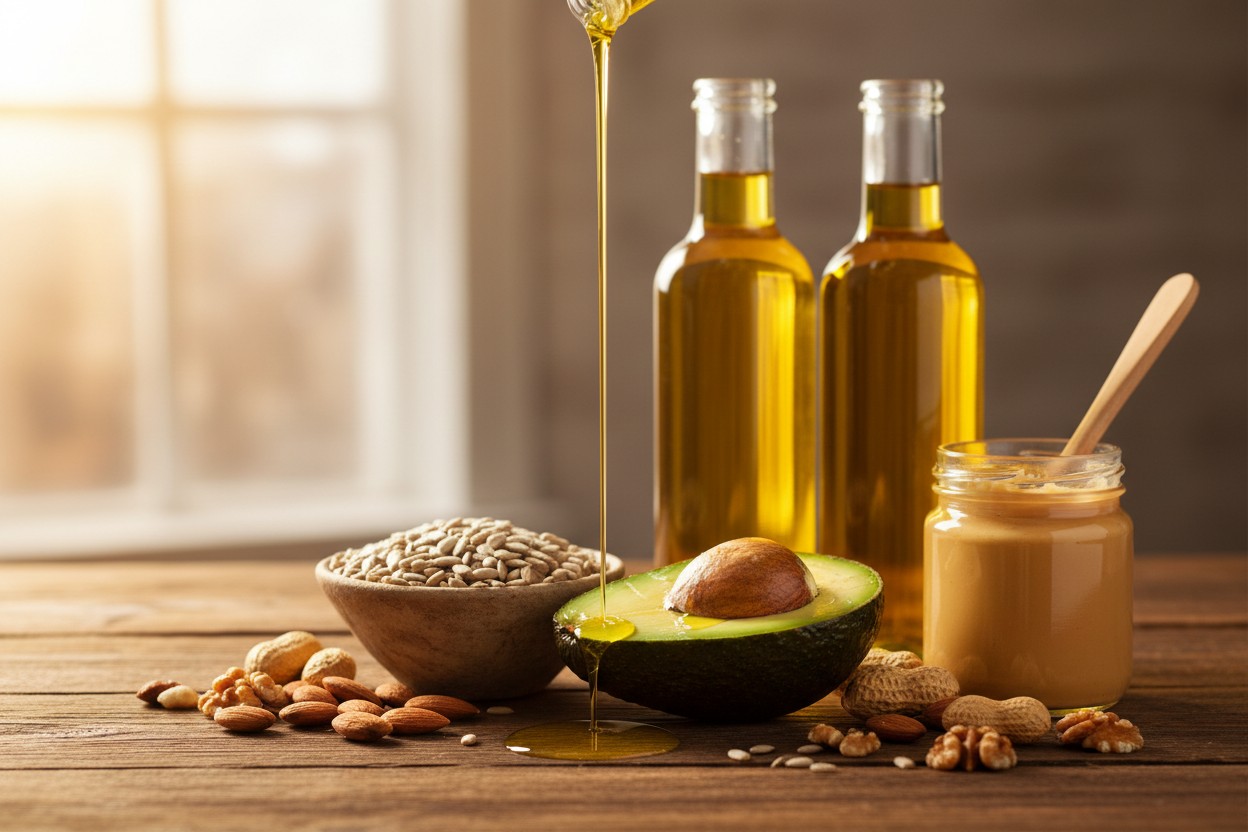
Avocados have become a widely recognized source of healthy fats, providing about 9.5 grams of monounsaturated and polyunsaturated fats per half-fruit serving, according to USDA nutrition data. Healthy fats, including monounsaturated and polyunsaturated fatty acids, are associated with improved cholesterol levels and support the absorption of fat-soluble vitamins, according to the American Heart Association.
However, several other common foods offer higher amounts of healthy fats per standard serving, based on government and academic nutritional databases. Unsaturated fats, which remain liquid at room temperature, are considered beneficial compared to saturated fats, according to the book "Build Your Running Body" by Pete Magill [1]. The Dietary Guidelines for Americans recommend that total fat intake range from 20 to 35 percent of daily calories, with saturated fat limited to less than 10 percent, as stated in "Understanding Nutrition" [2]. The following list details those foods with their fat content and serving sizes, drawing on USDA data and other authoritative sources.
Sunflower Seeds
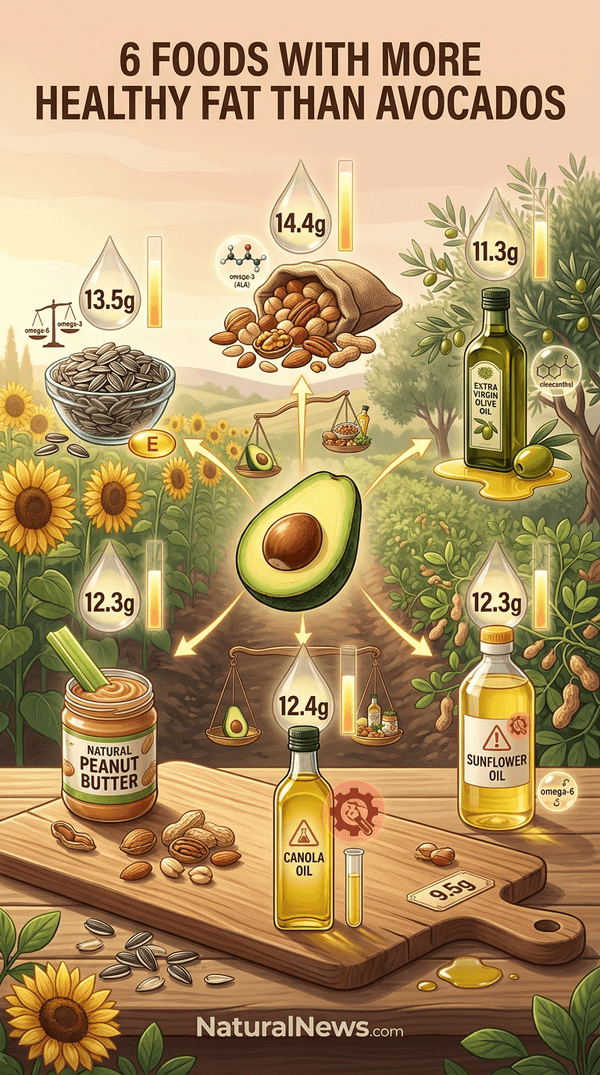
A quarter-cup serving of sunflower seeds contains 13.5 grams of healthy fats, according to the USDA Nutrient Database. The fat profile includes 10.5 grams of polyunsaturated fats and 3 grams of monounsaturated fats, per the same source. Polyunsaturated fats, which include omega-3 and omega-6 fatty acids, must be obtained from the diet because the human body cannot synthesize them, as noted in nutritional science literature.
Sunflower seeds also provide vitamin E and selenium, according to USDA data. The Academy of Nutrition and Dietetics lists a half-ounce of hulled, roasted sunflower seeds as a protein food equivalent [3]. However, some alternative health sources caution that sunflower oil, when highly processed, may contribute to an imbalance of omega-6 fatty acids, as noted in the book "Fat Is Not Your Fate" by Susan Mitchell [4]. The seeds themselves, consumed in whole or minimally processed form, are a dense source of healthy fats.
Mixed Nuts
A quarter-cup serving of mixed nuts (with peanuts) provides 14.4 grams of healthy fats, according to USDA data. The breakdown includes 10.75 grams of monounsaturated and 3.68 grams of polyunsaturated fats, the agency reported. Peanuts alone offer about 11 grams of healthy fats per ounce, according to the Peanut Institute.
Nuts are also a source of fiber and protein, dietary guidelines state. Unsaturated fats in nuts have a liquid consistency at room temperature, which distinguishes them from more solid saturated fats, as described in "Build Your Running Body" [1]. The Dietary Guidelines for Americans emphasize that diets with up to 35 percent of calories from fat can be compatible with good health when saturated fat intake is low, as noted in "Understanding Nutrition" [2]. Including a variety of nuts in the diet can increase intake of monounsaturated fats.
Peanut Butter
A two-tablespoon serving of peanut butter contains 12.3 grams of healthy fats, according to USDA figures. The fat breakdown is 8.3 grams monounsaturated, 4.0 grams polyunsaturated, and 3.3 grams saturated, the data state. Peanut butter is often paired with vegetables such as carrots and celery, dietary recommendations suggest. It also provides protein and vitamin B3, according to nutrition labels.
The Academy of Nutrition and Dietetics lists one tablespoon of peanut butter as a protein food equivalent [3]. Unsaturated fats in peanut butter are considered beneficial compared to saturated fats from animal sources, as noted in "Understanding Nutrition" [8]. Choosing natural peanut butter without added sugars or hydrogenated oils can help avoid trans fats, which are associated with negative health effects according to "The Heart Revolution" by Kilmer McCully and Martha McCully [9].
Olive Oil
One tablespoon of olive oil has 11.3 grams of healthy fats, primarily monounsaturated, per USDA data. Olive oil is nearly 75 percent monounsaturated fat, compared to avocados at 67 percent, the article notes. It contains 9.9 grams of monounsaturated and 1.4 grams of polyunsaturated fats, according to the USDA. Olive oil is widely used in salad dressings and marinades, culinary sources indicate.
Research highlighted in an article on Mercola.com notes that olive oil contains oleocanthal, a phenolic compound that may inhibit COX1 and COX2 enzymes involved in inflammation, and antioxidants that help prevent cell damage [10]. The book "Alternative Medicine: The Definitive Guide" recommends substituting unsaturated fats like olive oil for saturated ones such as butter, while noting that some healthcare experts advise keeping total fat intake between 15 and 20 percent of daily calories for long-term health [11]. When selecting olive oil, first-press varieties are processed mechanically without chemical intervention, according to a Brighteon Broadcast News report [12].
How to Add Healthy Fats to the Diet
Healthy fats are calorie-dense, the USDA notes, and portion control is recommended to avoid excessive calorie intake. Dietary guidelines suggest limiting total fat to about 30 percent of daily calories, with saturated fats below 6 percent, according to the 2020–2025 Dietary Guidelines for Americans. For a 2,000-calorie diet, this equates to roughly 53 grams of healthy fats per day, the guidelines state. Incorporating these foods in place of saturated fat sources may support heart health, the American Heart Association says.
The book "Understanding Nutrition" states that the DRI and Dietary Guidelines recommend a diet providing 20 to 35 percent of daily energy from fat, with less than 10 percent from saturated fat [13]. A report on NaturalNews.com noted that eating a diet rich in healthy fats alters gut microbiota composition to reduce inflammation [14]. Avocado consumption itself has been linked to heart health benefits, including improved cholesterol and lower glycemic load, according to recent news reports [15][16]. Consumers can diversify their fat sources by using olive oil for dressings, adding nuts and seeds to meals, and selecting natural nut butters.
References
- Magill, Pete. "Build Your Running Body A Total-Body Fitness Plan for All Distance Runners From Milers to Ultramarathoners—Run Farther Faster".
- Whitney, Eleanor Noss. "Understanding nutrition for Pima Community College".
- Duyff, Roberta Larson. "Academy of Nutrition and Dietetics complete food and nutrition guide".
- Mitchell, Susan. "Fat Is Not Your Fate Outsmart Your Genes and Lose the Weight Forever".
- Mercola.com. "Evidence Is Mounting That Standard Nutritiona". April 16, 2014.
- Adams, Mike - Brighteon.com. "Health Ranger Report - Canola oil toxic to your brain!".
- Mercola.com. "Is There Propane in Your Nonstick Avocado Oil". September 20, 2023.
- Whitney, Eleanor Noss-8. "Understanding nutrition".
- McCully, Kilmer; McCully, Martha. "The Heart Revolution".
- Mercola.com. "Latest Research on Best Cooking Oils". June 18, 2018.
- Trivieri, Larry. "Alternative Medicine The Definitive Guide 2nd Edition".
- Adams, Mike - Brighteon.com. "Brighteon Broadcast News - PATRIOT REVOLT ". March 11, 2025.
- Whitney, Ellie; Rolfes, Sharon Rady. "Understanding Nutrition Selected Chapters Thirteen Edition 2013".
- NaturalNews.com. "Reduce gut inflammation with a high-fat diet". June 22, 2021.
- NaturalNews.com. "Avocado Consumption Linked to Heart Health Benefits, Research Shows". June 25, 2026.
- NaturalNews.com. "Daily avocado consumption linked to lower glycemic load in study". June 8, 2026.
Explainer Infographic











Please contact us for more information.