



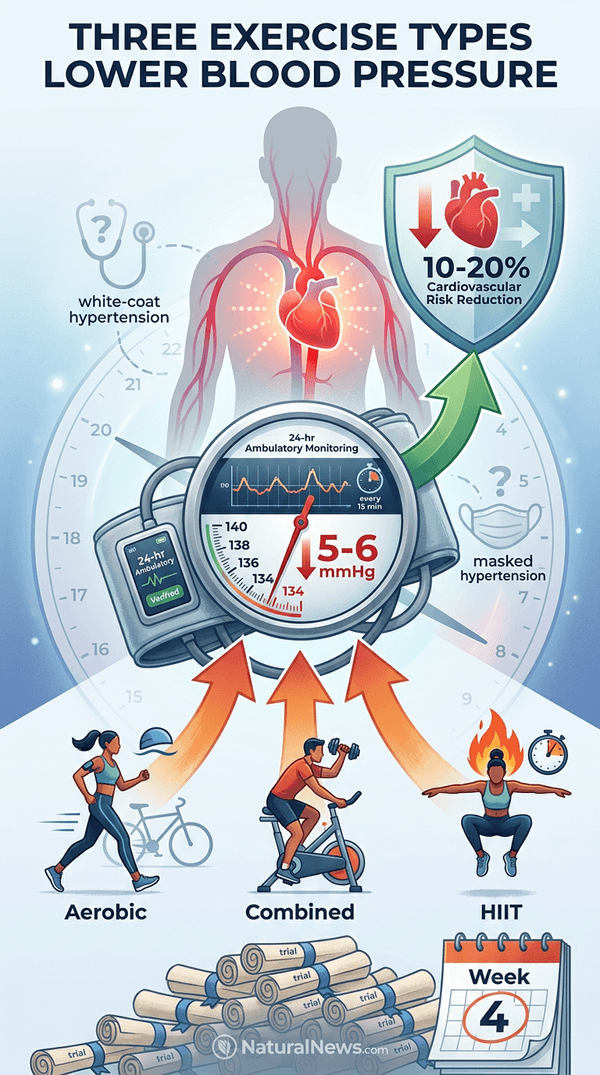
A review published May 12, 2026, in the British Journal of Sports Medicine found that aerobic exercise, a combination of aerobic and strength training, and high-intensity interval training each lowered systolic blood pressure by an average of 5 to 6 points in adults with hypertension. The review included 31 separate trials with a total of 1,345 participants and measured blood pressure using 24-hour ambulatory monitoring, a method that tracks readings every 15 to 30 minutes over a full day. This approach provides a more accurate prediction of heart-related risks than office readings, the study authors stated.
The pooled results compared these three exercise patterns to no exercise or other activities and showed consistent reductions across all three regimens. The findings are based on a meta-analysis of randomized trials lasting at least four weeks. Previous research, including a 2023 meta-analysis published in the same journal, also found exercise interventions effective for blood pressure reduction. [1]
Study Methodology and Context
Researchers only included trials that lasted at least four weeks and compared different exercise types using 24-hour ambulatory blood pressure monitoring, according to the review. Twenty-four-hour monitoring checks blood pressure every 15 to 30 minutes over a day and better predicts heart-related risks than single office measurements, the study authors explained. This methodology reduces the masking effect and white-coat hypertension that can skew results.
The review pooled data from 31 trials involving 1,345 participants, all adults with hypertension. The included studies compared aerobic exercise, combined aerobic and strength training, HIIT, and other modalities. The analysis found that combination programs -- those mixing cardio and strength elements in a single session or consecutive workouts -- produced similar reductions to aerobic-only or HIIT regimens. The use of ambulatory monitoring is considered a strength of this analysis, as it captures blood pressure variations during daily activities and sleep. [2]
Detailed Exercise Descriptions and Evidence
Aerobic exercise includes activities such as brisk walking, biking, and swimming that raise heart and lung activity, according to the Harvard Heart Letter. The review confirmed that aerobic training alone lowers systolic blood pressure by 5 to 6 points. HIIT alternates short bursts of intense aerobic work with gentle recovery periods and produced comparable reductions, the study authors noted. HIIT has been recognized by the U.S. Department of Health and Human Services as an effective method to improve insulin sensitivity and blood pressure. [3]
The study authors also noted that limited but promising evidence suggests potential benefits from resistance training alone -- using body weight, dumbbells, or bands -- and isometric exercises such as planks and wall sits. Isometric exercise was highlighted in a 2024 analysis as the most effective mode for reducing both systolic and diastolic blood pressure. [4] Other activities with emerging evidence include yoga, Pilates, and recreational sports, but the review stated these require further study. Aerobic activities can enhance muscle performance and help patients manage daily life, according to Carlos Ayan Perez's book on aerobic exercise in special populations. [5]
Perspectives and Implications
Exercise is a foundational, drug-free approach that addresses underlying causes of hypertension, according to Joseph Mercola in his book "The Surprising Cause of High Blood Pressure." [6] Some health professionals argue that lifestyle interventions like exercise are often underutilized compared to medication, though they acknowledge the need for individual medical guidance. The review's authors emphasized that patients should consult a healthcare provider before starting any new exercise regimen, especially those with existing health conditions.
The Harvard Health article stated that regular exercise is one of the best ways to prevent and treat high blood pressure, aligning with the review's conclusions. A 2018 analysis estimated that lack of physical activity contributes to billions of dollars in healthcare costs and lost productivity worldwide, and that exercise may act as an alternative to common drugs for conditions like heart disease and depression. [7] The findings reinforce the value of incorporating structured physical activity into daily routines as a primary prevention strategy.
References
- Mercola.com. "Forget Cardio This Is the Best Exercise for." Mercola.com. August 11, 2023.
- NaturalNews.com. "The 24-hour, non-emergency blood pressure fix that doctors aren't ordering." NaturalNews.com. May 19, 2026.
- NaturalNews.com. "Why HIIT should be part of your workout routine." NaturalNews.com. December 11, 2018.
- Mercola.com. "Just 8 Minutes The Easiest Way to Beat High." Mercola.com. February 15, 2024.
- Carlos Ayan Perez. "Aerobic exercise in special populations."
- Joseph Mercola. "The Surprising Cause of High Blood Pressure."
- Mercola.com. "The Scientific 7 Minute Workout." Mercola.com. May 24, 2013.
Explainer Infographic













Please contact us for more information.