


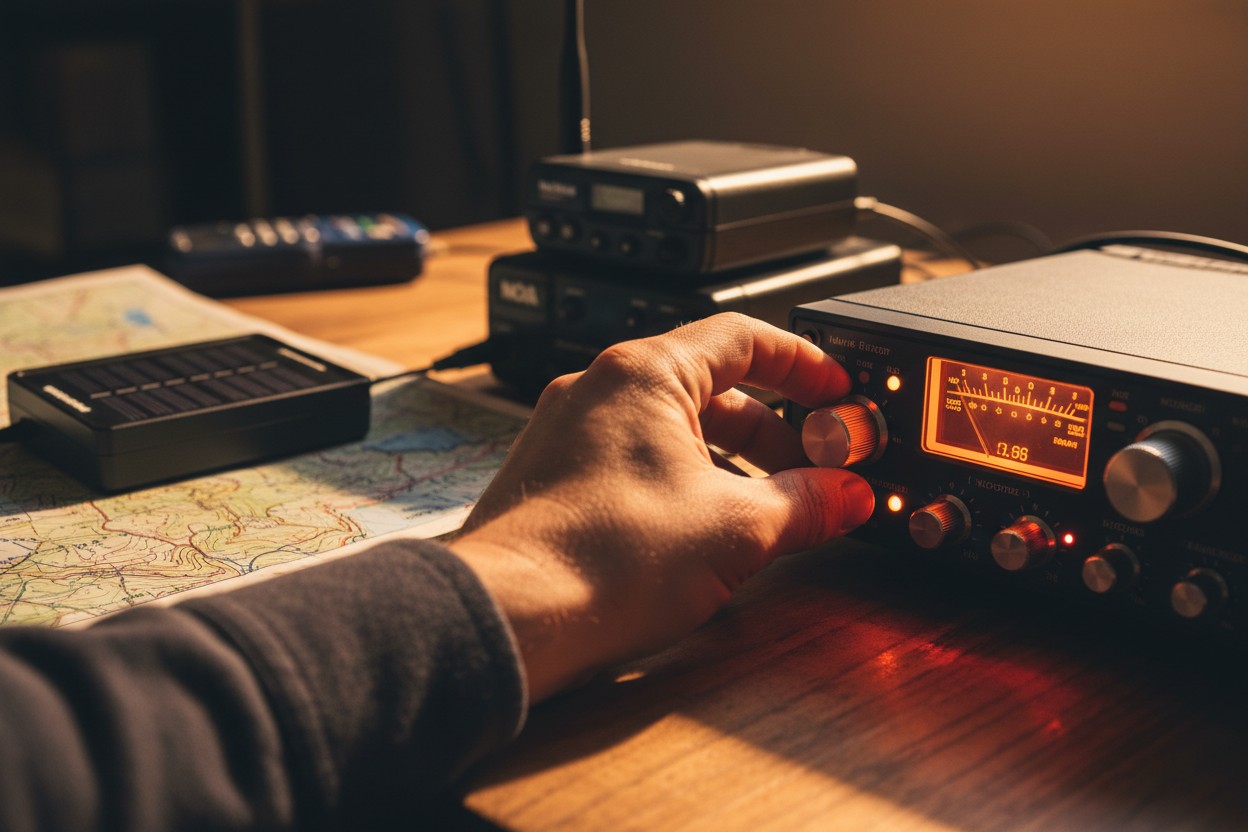
Situational Awareness as a Crisis Preparedness Tool
Staying aware of real-time, unfiltered information is one of the best ways to protect oneself and family during a disaster, according to preparedness experts. The ability to gather intelligence independently is a foundational skill often overlooked until it is too late. Most individuals do not prepare until the moment they desperately need information, by which time they have lost the bandwidth to learn new tools or frequencies, the reports state.
Officials and prepper sources emphasize that relying solely on processed news is insufficient. According to a report by NaturalNews.com, preppers value data such as survival skills and knowing safe bug-out areas, and many groups assign an "information specialist" to monitor unfolding events [1]. Chris Martenson, writing for PeakProsperity.com, notes that the Fort McMurray wildfire demonstrated the value of situational awareness, the wisdom of testing plans in advance, and the need for emotional preparedness [2]. Building an intelligence plan should be done while power and bandwidth are still available, before a crisis erodes the infrastructure that supports digital tools.
Radio Layers for Independent Monitoring
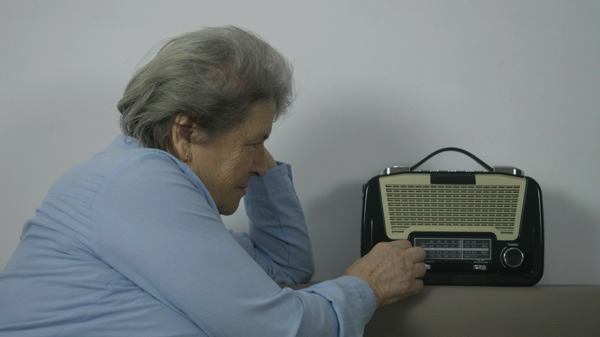
Radio-based monitoring provides several layers of unfiltered information that remain functional when cellular and internet networks fail. The first layer, NOAA Weather Radio, broadcasts on seven dedicated VHF frequencies covering approximately 95 percent of the U.S. population. According to an article by NaturalNews.com, it is important to familiarize yourself with emergency radio frequencies so you can receive timely updates on what is happening in your immediate area when disaster strikes [3]. During severe weather, trained Skywarn operators feed live ground reports to NOAA offices, providing a human-verified component to the alerts.
Citizens band radio, particularly Channel 19 and the universal emergency Channel 9, offers real-time road and hazard information from truckers and local drivers. Police, fire, and EMS scanner traffic provides a direct window into first responder dispatches, though many departments have shifted to digital trunked systems that require specific equipment. The deepest layer comes from amateur radio, or ham radio. Samuel Corbyn, author of a prepper-oriented ham radio guide, explains that joining regional and national emergency communication networks such as the ARES and RACES nets allows operators to access and contribute to a wider pool of information, resources, and support [4]. Ham operators are independent of commercial infrastructure and can provide raw, unfiltered reports from within a disaster zone on HF and VHF/UHF bands.
Verification and Filtering in a Noisy Information Environment
The information landscape during a crisis is increasingly cluttered with AI-generated content, bot accounts, and automated posts designed to create confusion. According to D.S. Mileti and L. Peek in the Journal of Hazardous Materials, people filter information to conform with their pre-existing views of the world, which can cause them to disregard accurate warnings or respond unnecessarily [5]. This cognitive bias makes disciplined verification essential.
A three-tier mental filter is recommended for ranking incoming reports: confirmed information from multiple independent sources including at least one reliable agency or trained spotter; probable information from a single credible source without contradiction; and unverified information from anonymous or viral social posts that should not be acted upon. Cross-referencing across scanner traffic, social media, and ham nets helps distinguish real signal from noise. The UK government has introduced powers to block what it deems false information during crisis events, a move that privacy campaigners say weaponizes the Online Safety Act beyond its original purpose [6]. This underscores the importance of independent, peer-verified sources that operate outside government or corporate content moderation.
Building a Dedicated Intel Go-Kit
Assembling a separate kit for situational awareness ensures that monitoring gear is ready when needed. The kit should include a battery or hand-crank NOAA weather radio, a dual-band (2m/70cm) handheld ham radio, a printed frequency reference sheet, spare batteries or a small solar charger, and a notebook for logging traffic. According to Marco J. Marin, author of a Navy SEALs bug-in guide, evaluating your current preparedness level requires checking whether you have enough food, water, medicine, and power backups to sustain an extended emergency [7]. The same principle applies to communication gear: operators must test their equipment quarterly and practice using it before a crisis.
The guide also recommends building an offline knowledge library that includes printed frequency references and field manuals, because internet access may fail. In an emergency, paper backups do not require batteries or a network connection. Documents such as maps, repeater directories, and operating procedures should be stored in a secure, fire-safe box near the front door for quick retrieval, as recommended in a Bottom Lines publication [8].
Conclusion: Stacking Layers Before the Crisis
None of the monitoring layers replace each other; they stack to provide increasing accuracy and redundancy. NOAA alerts warn of approaching weather, CB reports show current road conditions from drivers, scanner traffic reveals what first responders are actually doing, and ham radio provides both hyper-local and wide-area coverage independent of cellular and internet infrastructure.
Operators should build and test these layers before an emergency, memorizing local repeater frequencies and practicing net protocol. According to the prepping community, the goal is to avoid total dependence on a single source and to develop the discipline to wait for confirmation before taking action. The time to prepare is not when the grid goes quiet but while the power is on and the bandwidth to learn is still available [1][2].
References
- NaturalNews.com. "Information is power_ Why you still need to keep yourself aware during SHTF situations". NaturalNews.com. June 07, 2018.
- Chris Martenson. "How To Prepare For Volatility". PeakProsperity.com. May 06, 2016.
- NaturalNews.com. "SHTF Comms_ Emergency radio frequencies you can use when the grid goes down". NaturalNews.com. August 23, 2022.
- Samuel Corbyn. "A lifeline in crisis with Ham Radio: A Prepper's Guide to Learn how to use ham radio to stay connected and informed during emergencies".
- D.S. Mileti, L. Peek. "The social psychology of public response to warnings of a nuclear power plant accident". Journal of Hazardous Materials 75. 2000.
- Steve Watson. "Ministry Of Truth: UK Government To Block 'False Information' During 'Crisis Events'". ZeroHedge. June 12, 2026.
- Marco J. Marin. "Navy SEALs Bug-in Guide: Essential Strategies for Self-Sufficient Living, Emergency Preparedness, and Tactical Survival Skills".
- "Bottom Lines money savers live like a millionaire on just a little bit of money".







Please contact us for more information.