


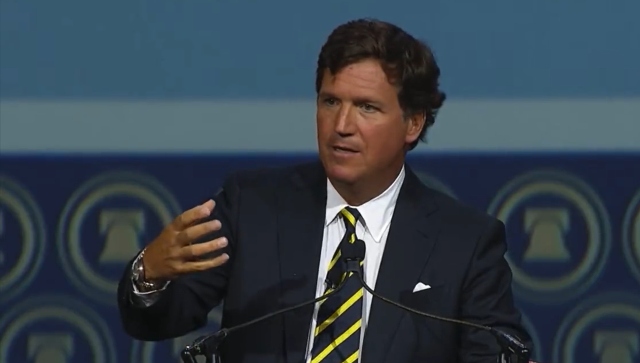
A growing number of Americans no longer see much of a difference between the two major political parties, and a recent conversation on Decentralized TV between host Mike Adams, co-host Todd Pittner, and journalist Tucker Carlson gave voice to that frustration in stark terms. Carlson, discussing everything from dollar hegemony to government secrecy, argued that Republican and Democratic leadership share a common flaw, a basic indifference to the people they claim to represent, and that this shared flaw may matter more than any policy label. Carlson suggests that political identity in America is shifting away from party lines and toward a more fundamental question of trust, transparency, and whether leaders actually serve the public or merely manage it.
Key points:
- Tucker Carlson told the hosts he feels the same lack of concern for ordinary families from leadership in both parties.
- Carlson pointed to government secrecy, including unresolved questions about gold reserve audits, the 9/11 files, and the Kennedy assassination records, as evidence of a broken system.
- Carlson said global trust in the dollar has eroded since the effort to remove Russia from the SWIFT payment system.
- Host Mike Adams described himself as politically homeless, noting he has written in other names on recent ballots.
- Carlson emphasized decentralization, personal debt freedom, and physical assets like gold as forms of individual sovereignty.
- Carlson said he hopes for a peaceful, electoral path forward rather than escalating unrest.
Consent, not control
Much of the discussion centered on power, and how it is actually maintained. Carlson argued that no government, no matter how forceful, can rule purely by coercion. Nations, like families, ultimately function on consent, he said, comparing global monetary dominance to authority within a household or a marriage. When that consent erodes, he suggested, so does the underlying system, regardless of military or financial might behind it.
Carlson traced the decline of confidence in the dollar to the decision to cut Russia off from the SWIFT international payment network. In his view, that action signaled to other nations that dollar access could be weaponized, prompting countries to look for alternatives. He noted that people use dollars because it is convenient and familiar, not because they are compelled to, and once the perceived risk outweighs the benefit, nations will look elsewhere, even if the transition takes years.
This theme connected directly to the discussion of party politics. Carlson said "the difference between the two parties on that foundational question is zero", referring to whether leadership genuinely cares about the families it governs. He compared the emotional distance he feels from Republican House Speaker Mike Johnson to the distance he feels from Democratic Senator Chuck Schumer, arguing that partisan branding obscures a shared detachment from ordinary concerns.
Secrecy at the root
Carlson also pointed to institutional secrecy as a warning sign, arguing that healthy relationships, whether in a family or a government, depend on straightforward answers. He noted that decades after events like the Kennedy assassination or the September 11 attacks, many government records remain unavailable to the public, and that a full accounting of national gold reserves has never been completed. For Carlson, that pattern of withheld information points to deeper dysfunction rather than isolated bureaucratic delay.
He credited, somewhat ironically, the current political moment with exposing rather than hiding these dynamics. Actions taken openly in recent years, he said, revealed underlying arrangements that had previously stayed behind closed doors, giving the public a clearer view of how governance actually operates.
Even so, Carlson was careful to frame his outlook around nonviolent, electoral change. He said his hope, as a matter of personal conviction, is for the country to resolve its dysfunction through voting rather than conflict, warning that the alternative to a peaceful political solution is far worse.
Host Todd Pittner picked up on this thread by suggesting that a genuinely independent political movement, one built around basic honesty and accountability, could find broad appeal precisely because so many Americans already feel unrepresented by the existing options.
The conversation did not settle on a specific third-party platform or candidate, and Carlson stopped short of endorsing any particular political project. Still, the exchange reflects a wider undercurrent in American political life, one where voters increasingly describe themselves as independent or unaffiliated, and where trust in both major parties has fallen in various public surveys over the past several years. Whether that frustration translates into a durable political alternative, or simply reshapes how existing parties compete for disaffected voters, remains an open question heading into future election cycles.
Watch the full interview on Decentralize.TV.
Relevant discussion begins in the video at 31:49.








Please contact us for more information.