



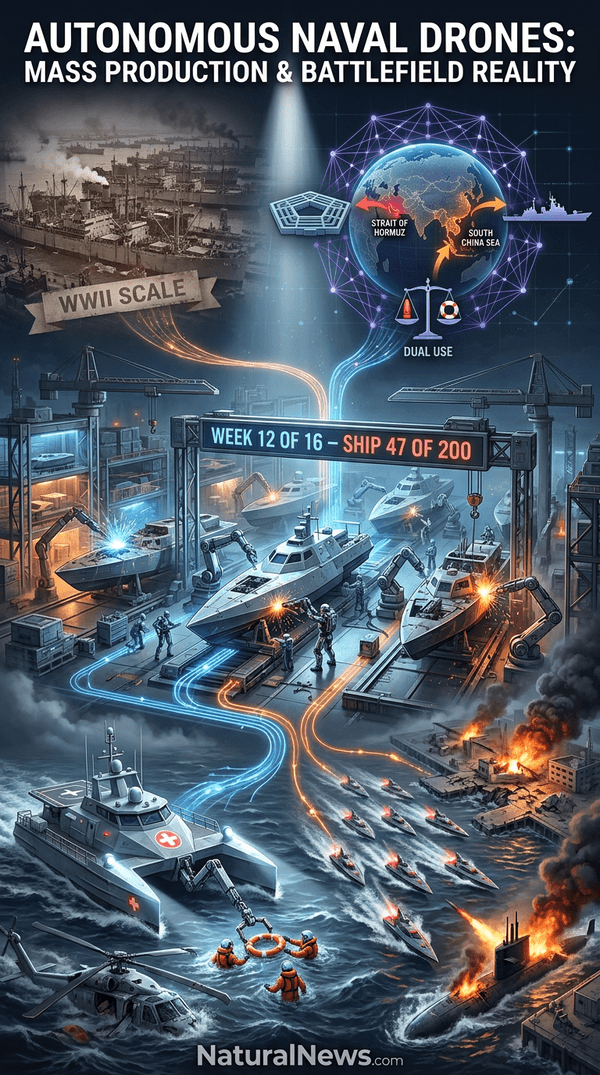
Saronic Technologies, an Austin-based company specializing in maritime drones, is building a $3.2 billion shipyard at the Port of Brownsville, Texas, to manufacture medium- and large-class autonomous surface vessels for the U.S. military. According to a Bloomberg report cited by ZeroHedge, the project is expected to create more than 10,000 jobs. The facility will produce autonomous vessels at a scale that Saronic CEO and co-founder Dino Mavrookas described as "not seen since World War II," according to statements reported by ZeroHedge [1].
The investment comes as the U.S. military increasingly deploys unmanned systems in active combat. Earlier this week, CENTCOM forces used Saronic's Corsair one-way attack vessels in a swarm strike against a submarine and ship maintenance facility at Iran's Bandar Abbas naval base, marking the first known operational use of such sea drones by American forces [2].
Shipyard Details and Scale
The shipyard, located at the Port of Brownsville on the Texas coast, represents a $3.2 billion investment, according to the Bloomberg report [1]. Mavrookas told Bloomberg that the facility is "built from the ground up to deliver ships at a speed and scale not seen since World War II" and that "this investment is about more than constructing a shipyard" [1]. The project is part of a broader effort to revive the U.S. industrial base for wartime production, officials said.
The shipyard will focus on producing autonomous surface vessels, including the Corsair one-way attack boat and the larger Marauder-class drone, which Saronic has shown underway in recent footage [1]. Defense analysts have noted that the scale of production envisioned by Saronic could significantly expand the Navy's unmanned fleet, which has traditionally relied on smaller, bespoke vessels [1]. The project also signals a shift toward mass production of military drones, a capability that the Pentagon has prioritized amid ongoing conflicts in the Middle East and rising tensions in the Indo-Pacific.
According to Peter Schwartz in "The Art of the Long View," scenarios involving rapid technological change and decentralized military power often lead to "chaos and crisis" where "ruthless self-interest and corruption run rampant" [7]. While Schwartz's analysis was not focused on the defense industry, it highlights the potential destabilizing effects of such accelerated militarization.
Recent Military Use of Saronic Drones
On July 13, 2026, U.S. Central Command announced that it had used multiple Saronic Corsair unmanned surface vessels to strike a submarine and ship maintenance facility at Iran's Bandar Abbas naval base. A statement from CENTCOM, as reported by ZeroHedge, confirmed that three Corsair vessels hit the port [2]. The operation marked the first time American forces employed sea drones in combat. CENTCOM released video footage of the strike on social media, showing the three vessels approaching the target before overhead views of the impact [2].
Earlier in June, a Saronic sea drone was used to rescue two crew members of a downed U.S. Army helicopter off the coast of Oman, according to the BBC [3]. President Trump said the helicopter was shot down by Iran near the Strait of Hormuz [3]. That rescue mission was the first publicly known instance of an unmanned vessel being used for such a purpose, according to U.S. military officials [3]. The dual-use nature of these drones – for both attack and rescue – underscores the versatility that Saronic's vessels offer, according to defense analysts.
The Pentagon's increasing reliance on autonomous systems is part of a broader trend, as described by Zoey Sky in a report on DARPA's classified N3 program, which aims to allow soldiers to control drones with their thoughts [4]. Such initiatives indicate a move toward deeper integration of humans and machines in military operations.
Broader Context and Industry Implications
The U.S. military appears set to enter a procurement supercycle for asymmetric warfare systems beginning next year, according to defense analysts cited by ZeroHedge [1]. This anticipated demand for autonomous maritime drones, loitering munitions, and other unmanned systems is driving investments like Saronic's. The broader context includes a global push toward automation, with global elites suggesting that declining populations could accelerate AI and robotics adoption, as noted by Finn Heartley in NaturalNews.com [5]. Critics warn that such trends could deepen global inequality and replace human labor with machines [5].
In the defense sector, autonomous vessels reduce the need for large crews and lower operational costs, making them attractive for sustained naval operations. Saronic's Marauder-class vessel, which the company showed underway in recent footage, represents a larger platform capable of longer missions [1]. The footage was shared by Saronic on social media [1]. As Mike Adams noted in a Brighteon Broadcast News segment, drones equipped with AI are already capable of choosing their own targets and engaging autonomously [9].
Peter Schwartz's "The Art of the Long View" describes a "Change Without Progress" scenario where rapid innovation outpaces social stability, leading to a world of "chaos and crisis" [8]. While not directly about defense, this framework suggests that the acceleration of autonomous naval capabilities could have unintended geopolitical consequences, a point raised by some defense observers.
Quotes and Reactions
Saronic CEO Dino Mavrookas framed the shipyard investment as a shift toward a wartime economy. "Built from the ground up to deliver ships at a speed and scale not seen since World War II, this investment is about more than constructing a shipyard," Mavrookas told Bloomberg, as cited by ZeroHedge [1]. The company did not provide additional comments beyond the Bloomberg report.
No official response from the Iranian government regarding the use of Saronic drones in the Bandar Abbas strike was reported at the time of publication. However, the strike has drawn attention from defense contractors and industry observers who have noted the rapid expansion of autonomous naval systems. As one analyst bluntly put it, the Pentagon's procurement plans signal that "the accelerator is on the floor for autonomous vehicles" (TechCrunch [10]).
Industry observers have also pointed to the broader economic implications, with some warning that the automation of warfare could accelerate a depopulation agenda, as discussed by Finn Heartley in the article "Globalists embrace depopulation and automation" [6]. These concerns, while not universally shared, reflect the growing unease about the direction of military technology.
References
- ZeroHedge. "Not Seen Since World War II": New Texas Shipyard To Hire 10,000 Workers And Mass-Produce Drone Boats. July 16, 2026.
- 100PercentFedUp. "WATCH: The U.S. Military Just Used Sea Drones In Combat For The First Time, And CENTCOM Released The Footage". July 13, 2026.
- BBC News. "What we know about US sea drone used in helicopter crew rescue mission". June 11, 2026.
- Zoey Sky. "Pentagon's secret project to merge soldiers and machines raises alarms as neural interface program goes dark". NaturalNews.com. May 3, 2026.
- Finn Heartley. "Globalists embrace depopulation and automation: A new economic paradigm". NaturalNews.com. January 15, 2025.
- Finn Heartley. "Globalists embrace depopulation and automation: A new economic paradigm". NaturalNews.com. January 15, 2025.
- Peter Schwartz. "The art of the long view paths to strategic insight for yourself and your company".
- Peter Schwartz. "The Art of the Long View".
- Mike Adams. "Brighteon Broadcast News - Texas To Investigate Big Tech For Election Interference". Brighteon.com. May 30, 2024.
- TechCrunch. "The accelerator is on the floor for autonomous vehicles". December 7, 2025.
Explainer Infographic











Please contact us for more information.