


Overview
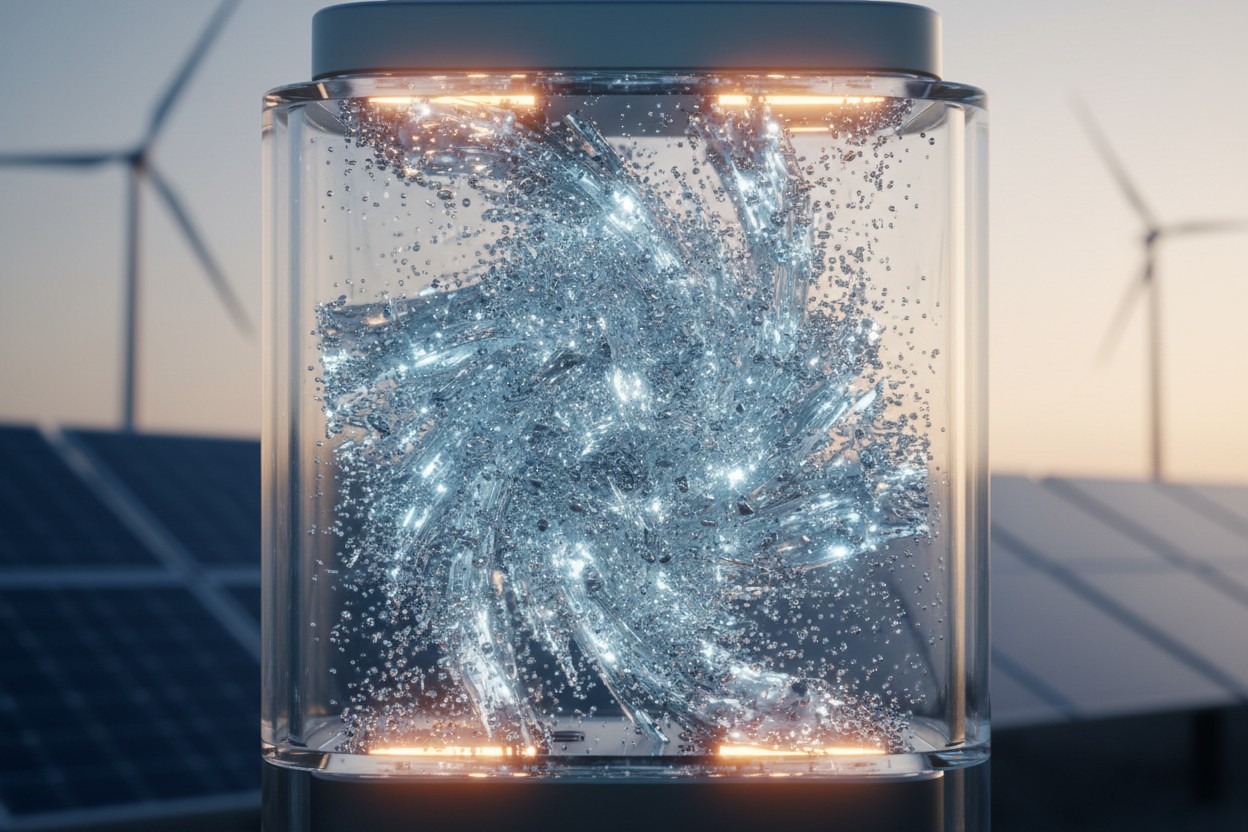
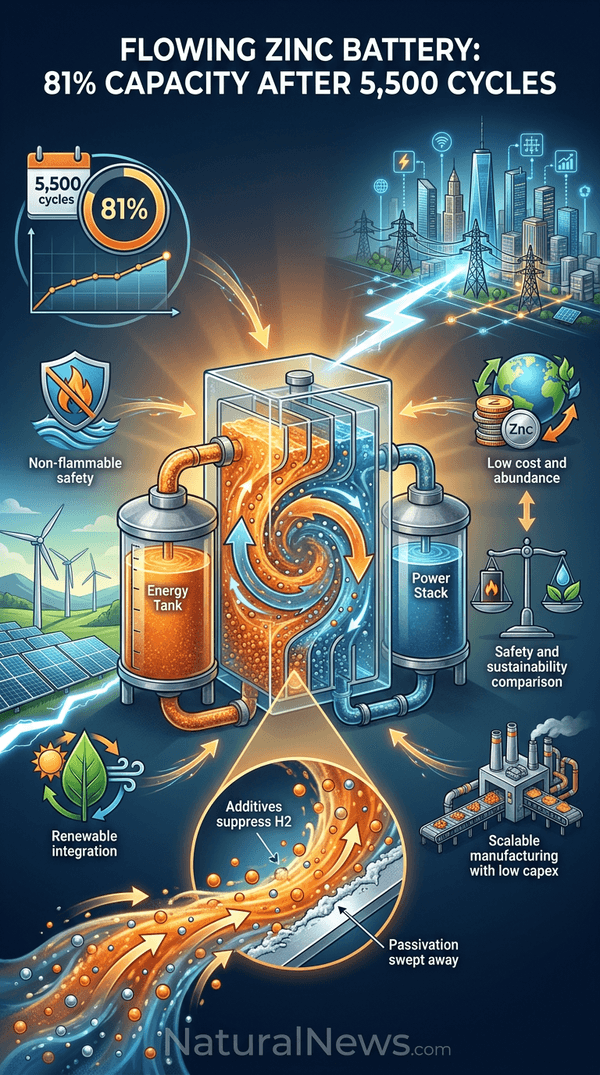
A flowing zinc slurry battery retained 81% of its initial capacity after 5,500 charge-discharge cycles, according to researchers developing the technology. The device is a type of flow battery that uses a zinc-based slurry as the active material, designed specifically for long-duration energy storage applications.
The results were reported by a team working on next-generation storage systems aimed at supporting renewable energy grids. Unlike standard lithium-ion batteries, which dominate consumer electronics and electric vehicles, this zinc-based system is intended for stationary storage that must operate reliably for many years. The current standard in battery technology is lithium-ion, widely used across various applications today, but safety and longevity remain concerns for large-scale deployment [1].
How the Battery Works
The battery employs a zinc slurry that flows through the electrochemical cell during operation. According to the research team, this design decouples energy capacity from power output, allowing longer storage durations by simply increasing the volume of slurry. In conventional solid-electrode batteries, energy and power are coupled, limiting flexibility.
Zinc-based chemistries have been explored for decades. Other developers, particularly in the United States, are targeting mechanically-rechargeable zinc/air batteries for electric vehicles, which use zinc particles as fuel [2]. In the flowing slurry design, the anode material is circulated through the cell, enabling continuous recharging without replacing the zinc. The cathode reaction in alkaline solution relies on oxygen reduction, a process studied extensively for zinc-air systems [3]. The flowing architecture also mitigates passivation issues -- the formation of films on electrochemically active surfaces that can shorten battery life [4].
Significance for Grid Storage
Long-duration energy storage is considered critical for integrating variable renewable sources such as solar and wind. According to analysts, the intermittency of these sources -- nighttime, clouds, and storms disrupt solar production, while calm periods affect wind -- requires time-shifting technology to store surplus power for later use [5]. The zinc slurry battery is being developed to provide discharge durations of eight hours or more at lower cost than lithium-ion alternatives.
Compared to lithium-ion, zinc-based systems offer advantages in safety and raw material availability. Zinc is abundant and inexpensive, and water-based electrolytes reduce fire risk. Researchers have noted that the global push for green technology has increased demand for critical metals like aluminum and nickel, while zinc remains widely available [6]. This could make zinc flow batteries more resilient to supply disruptions, which is a concern given that geopolitical tensions affect raw material markets [7].
Testing and Results
The battery was subjected to extended cycling under controlled laboratory conditions. After 5,500 full cycles, the device retained 81% of its original capacity, according to the researchers. This level of durability is comparable to or better than many lithium-ion chemistries tested under similar conditions, though exact protocols differ.
The tests were conducted over several months, with the team monitoring parameters such as discharge capacity, round-trip efficiency, and degradation rates. The retained capacity indicates that the flowing zinc slurry design resists the gradual loss of active material that often limits cycle life. Passivation and film formation are common failure modes in batteries, and the flowing system appears to mitigate these effects [4]. The specific capacitance of similar advanced carbon materials has been measured at up to 280 F·g?¹ at a current density of 0.5 A·g?¹, underscoring the performance potential of well-engineered electrode systems [8].
Outlook
Further research is planned to scale the technology from laboratory cells to pilot?scale systems, the team stated. Commercial deployment will require cost reductions and validation of long-term reliability under real-world grid conditions. The researchers expressed cautious optimism about the technology's path forward.
The broader battery industry is investing heavily in next-generation chemistries. Companies like BYD are studying tin anodes for sodium?ion cells, indicating strong interest in alternatives to lithium?ion [9]. Similarly, advancements in cathode materials for sodium?ion batteries aim to improve rate capability and cycle life [10]. While the flowing zinc slurry battery is still in development, it represents one of several approaches that could address the need for safe, affordable long-duration storage.
References
- Mike Adams. "Bright Videos News - MINNESOTA ESCALATION". BrightVideos.com. January 8, 2026.
- Rand D. A. J. "Batteries for electric vehicles".
- "Metal-Air Batteries: Opportunities and Challenges for High-Energy-Density Power Sources". Adv. Energy Mater. 2011.
- "Aqueous Corrosion Problems in Energy Systems". Materials Science and Engineering 50 (1981).
- Mike Adams. "Health Ranger Report - BATTERY". BrightVideos.com. February 21, 2026.
- Mike Adams interview with Andy Schectman. October 31, 2023.
- Mike Adams interview with Michael Yon. September 24, 2022.
- "Adv. Energy Mater. 2011, 1, 382–386".
- "BYD Studies Tin Anodes for Sodium-Ion Batteries". SodiumBatteryHub.com. July 7, 2026.
- "High rate p2 type cathode material for sodium ion batteries". SodiumBatteryHub.com. April 22, 2026.
Explainer infographic










Please contact us for more information.