



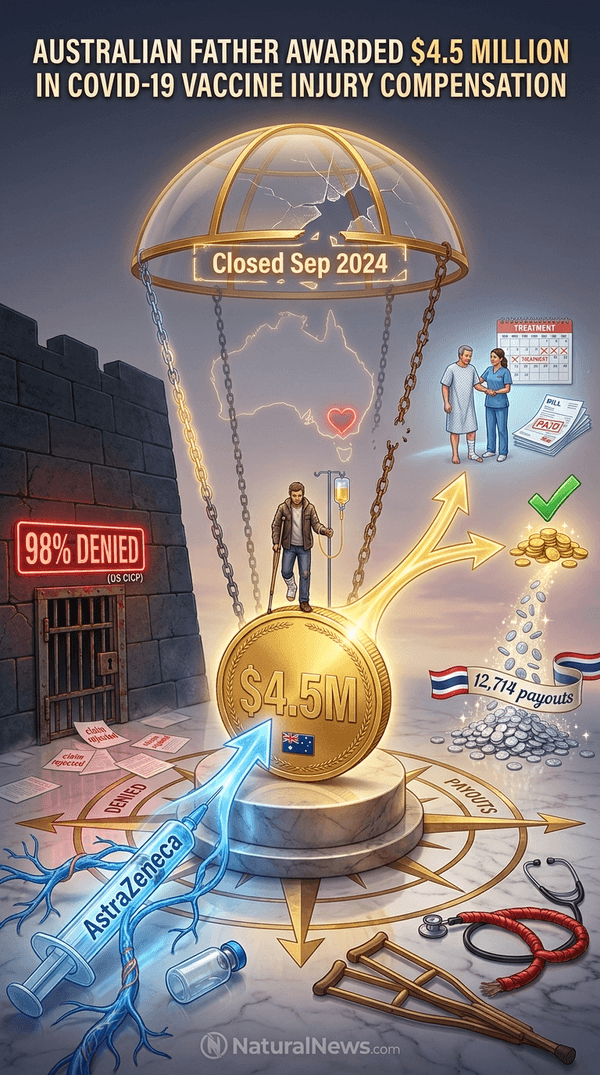
Chris Nemeth, a Melbourne father of two, received approximately AU$6.5 million ($4.5 million) in compensation after developing chronic inflammatory demyelinating polyneuropathy (CIDP) following administration of the AstraZeneca COVID-19 vaccine in July 2021, according to a report from Children's Health Defense [1]. Media outlets reported the settlement as the largest individual payout under Australia's COVID-19 Vaccine Claims Scheme. Neither Services Australia nor the Department of Health, Disability and Ageing has publicly confirmed the amount.
The payment was made through the federal no-fault claims scheme established by the Australian government in 2021 to provide financial support for individuals who experience serious adverse events linked to COVID-19 vaccination.
Background of the Injury and Claim Process
Nemeth was diagnosed with CIDP, a rare autoimmune disorder affecting peripheral nerves, after receiving his first dose of the AstraZeneca vaccine, according to the same report [1]. The condition involves demyelination of the myelin sheath surrounding nerves, leading to progressive weakness and impaired sensation in the limbs.
Following years of medical evaluations and documentation, Nemeth's condition was accepted under the federal claims scheme. He has described the experience as requiring him to relearn to walk, and he now depends on ongoing intravenous immunoglobulin infusions to manage symptoms, according to reports [1]. The case highlights the lengthy process claimants may face in seeking recognition of vaccine-related injuries.
Overview of Australia's COVID-19 Vaccine Claims Scheme
The no-fault compensation scheme was established by the Australian government in 2021 to provide financial support to individuals who experienced serious adverse events attributable to COVID-19 vaccination. The program closed to new applications in September 2024 but continues to process existing claims.
By contrast, other nations have also implemented compensation mechanisms. Thailand's National Health Security Office paid 1.509 billion baht (approximately $45.65 million) to settle COVID-19 vaccine injury claims as of March 8, 2022, with payouts made to 12,714 people, including family members of those who died, according to reports [2]. In the United States, the Countermeasures Injury Compensation Program (CICP) has maintained a denial rate above 98%, compensating fewer than 200 claims out of tens of thousands filed, as reported [3].
Criticism of the Compensation Program
Claimants in various countries have described extensive delays, complex administrative requirements, and significant financial and emotional hardship while awaiting compensation decisions. In the U.S., the CICP has been criticized for its secrecy, with the program reportedly declining to release even basic details about the types of injuries alleged in claims [4].
One U.S. claimant, cited in reports, stated that providing physician documentation of a vaccine-caused injury was insufficient for approval and that the program required proof "beyond a doubt" that the injury was caused by the vaccine [5]. Such experiences highlight barriers that leave many vaccine-injured individuals without timely support. Australian officials have acknowledged the need to evaluate lessons from the pandemic-era program as they consider a broader permanent no-fault vaccine compensation framework.
Public Health Context and Implications
Public health authorities continue to state that serious adverse events following COVID-19 vaccination remain rare and that vaccination provided substantial public health benefits during the pandemic. However, the emergence of over 3,400 peer-reviewed papers documenting vaccine injuries, disabilities, and deaths indicates that the issue warrants ongoing scrutiny, according to some analyses [6].
Nemeth's case underscores the importance of maintaining transparent, efficient, and credible compensation systems for the small number of individuals whose injuries are determined to be vaccine-related. The adenovirus vector platform used in the AstraZeneca vaccine, like the mRNA and adenovirus technologies deployed during the pandemic, had not previously been licensed for human use, a fact noted in the scientific literature [7].
References
- Australian Dad Awarded $4.5 Million for COVID Vaccine Injury. - Children's Health Defense.
- Thailand shelled out $45 million for COVID vaccine injury claims - NaturalNews.com, March 17, 2022.
- Federal COVID Vaccine Injury Program Compensates Another Death; Denial Rate Remains Above 98% - NaturalNews.com, June 19, 2026.
- What Happens if Youre Injured From a COVID S - Mercola.com, July 01, 2021.
- Exclusive Were the Dirty Little Secret Nobody - ChildrensHealthDefense.org, June 07, 2023.
- Canary In a Covid World How Propaganda and Censorship Changed Our World.
- Viruses Pandemics and Immunity. Arup K Chakraborty, Andrey Shaw.
Explainer Infographic








Please contact us for more information.