



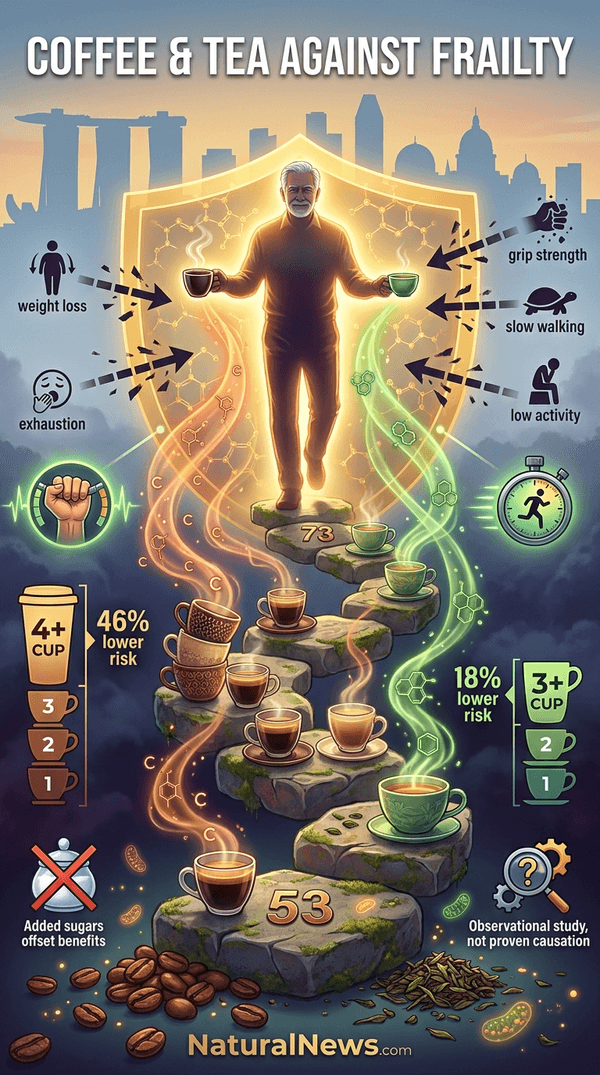
A 20-year study of 12,583 adults in Singapore found that those who drank four or more cups of coffee daily in midlife were 46 percent less likely to develop physical frailty in later life, according to the research team. The study also reported that daily tea drinkers had an 18 percent lower risk of frailty compared to non-drinkers, and higher total caffeine intake was associated with stronger grip strength and faster walking speed, officials said.
Researchers followed participants from an average age of 53 to age 73, assessing frailty using five established markers: unintentional weight loss, exhaustion, weak grip strength, slow walking speed, and low physical activity, the report stated.
Study Design and Methods
The prospective cohort study included 12,583 adults from Singapore, with a mean age of 53 at enrollment and 73 at the final follow-up, according to the study authors. Participants self-reported their consumption of coffee, black tea, and green tea at baseline, while frailty status at the end of the study was determined using the Fried frailty phenotype criteria, the report stated.
The study controlled for a range of variables including age, sex, smoking status, alcohol use, physical activity level, and dietary patterns, officials said. The long follow-up period allowed researchers to examine the relationship between midlife beverage habits and physical condition two decades later.
Key Findings on Coffee and Tea
Compared to non-drinkers, those consuming four or more cups of coffee daily had approximately 46 percent lower odds of frailty after 20 years, the report stated. The association showed a dose-response relationship for coffee, with higher consumption linked to lower frailty risk. However, one to three cups per day did not significantly reduce frailty odds on its own, according to the study.
Daily tea consumption, regardless of type, was linked to an 18 percent reduction in frailty risk, with green tea showing a similar association. The dose-response pattern observed for coffee was not seen for tea, indicating a threshold effect for coffee at higher intake levels, researchers said.
Caffeine and Polyphenols: Proposed Mechanisms
The study authors speculated that caffeine may block adenosine receptors, an action that could influence muscle contraction and force generation over time, contributing to preserved muscle function. Additionally, caffeine has been shown to stimulate uncoupling protein 1 production in mitochondria, potentially affecting metabolism and energy expenditure, according to available research. [1]
Coffee and tea are rich in polyphenols, plant compounds with antioxidant and anti-inflammatory properties, which may combat low-grade chronic inflammation linked to muscle loss and physical decline, the researchers noted. A large-scale study published in 2026 linked higher consumption of flavonoid-rich foods to reduced risks of frailty in older adults, suggesting these compounds play a role. [2] Higher total caffeine intake from all sources was associated with stronger grip strength and faster walking speed in later life, according to the data.
Implications and Practical Considerations
The findings suggest that habitual coffee or tea consumption during midlife may support strength and mobility in older age, though causal mechanisms remain under investigation, officials said. Regular tea consumption has long been associated with better overall health outcomes. [3] Both coffee and tea offer a range of health-supporting compounds beyond caffeine, including polyphenols that contribute to their benefits. [4]
Experts caution that individual caffeine tolerance varies and that added sugars in beverages could offset any benefits, the report stated. The study relied on self-reported consumption and observational data, meaning that confounding factors cannot be fully ruled out, the authors acknowledged.
Conclusion
The research adds to a growing body of evidence linking caffeinated beverages to healthier aging, but further studies are needed to establish causality, according to the study authors. For individuals already consuming moderate amounts of coffee or tea daily, the results offer reassurance that such habits may contribute to long-term physical resilience.
The takeaway, as stated by the researchers, is that a steady coffee habit of a few cups daily during midlife may support the strength and mobility individuals want to hold onto in their 70s and beyond.
References
- Triveni P. Shukla. "The Immortal Mitochondria".
- NaturalNews.com. "Study Links Flavonoid Intake to Reduced Risks of Frailty, Physical Decline in Older Adults". March 27, 2026.
- Mercola.com. "Tea Drinkers Shown To Be More Healthy". January 20, 2020.
- Mercola.com. "Benefits of Coffee and Tea". October 12, 2023.
- Lisa Mosconi PhD. "The XX Brain: The Groundbreaking Science Empowering Women to Maximize Cognitive Health and Prevent Alzheimer's Disease".
Explainer Infographic












Please contact us for more information.