


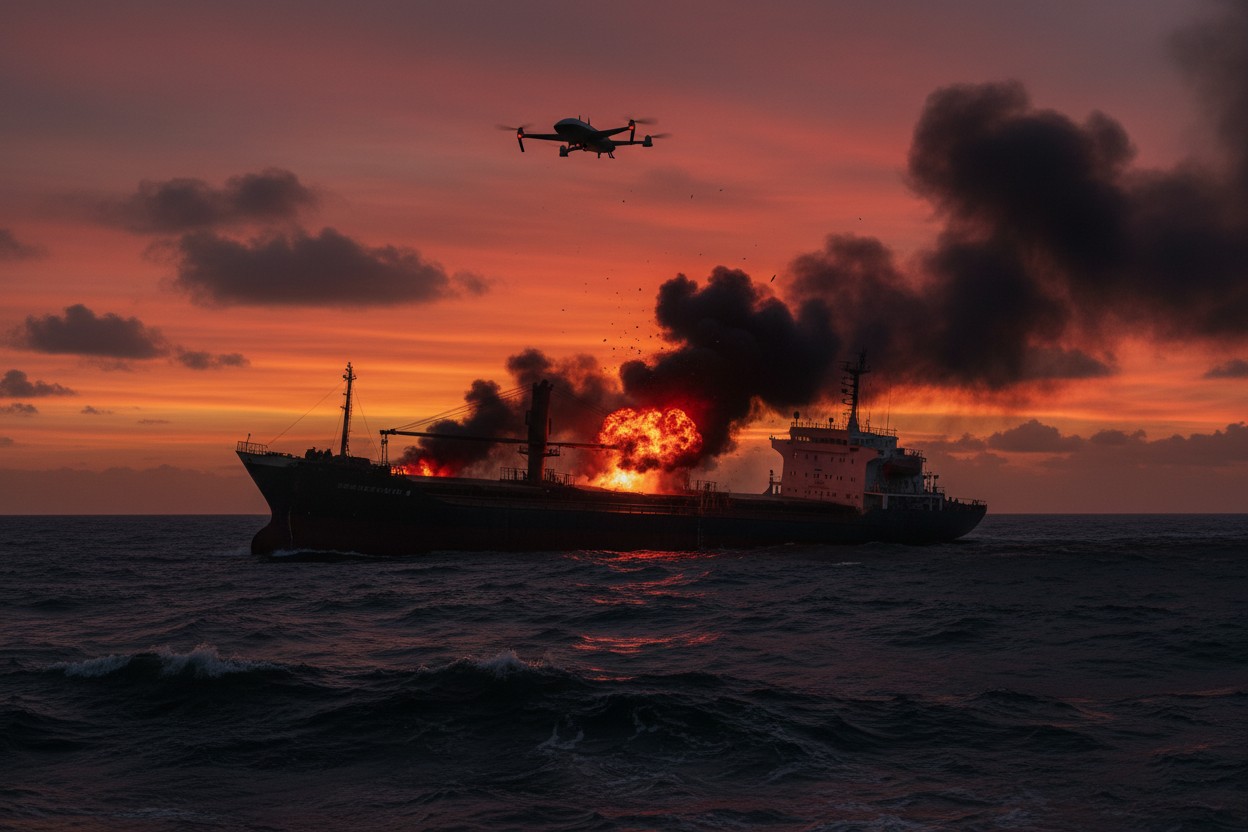
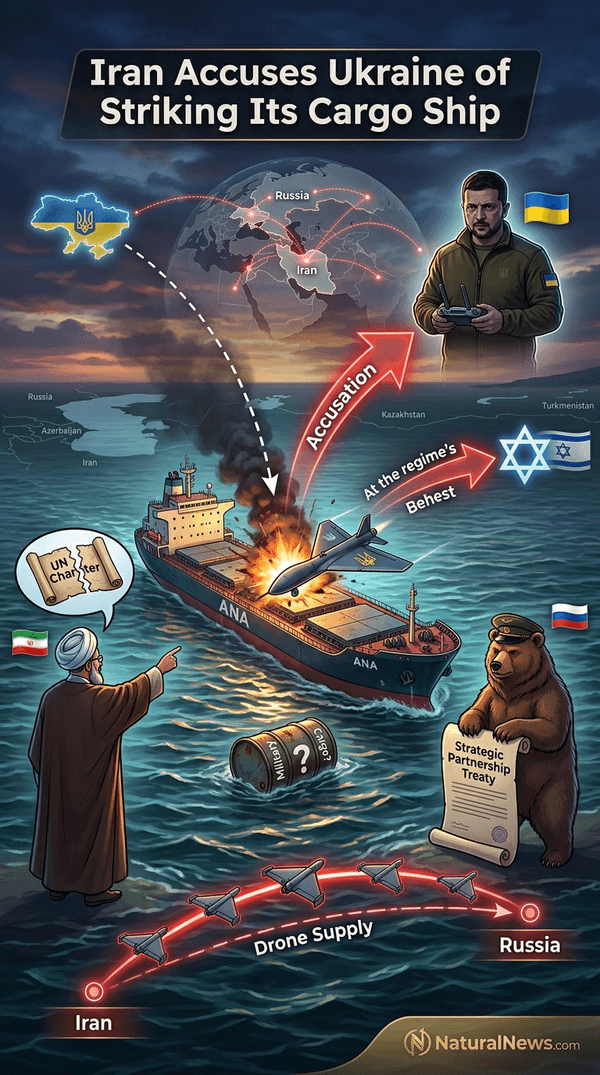
Iranian Foreign Minister Abbas Araghchi on Sunday accused Ukrainian President Volodymyr Zelensky of ordering a drone attack on an Iranian commercial vessel in the Caspian Sea, alleging the strike was carried out at Israel’s behest and killed one crew member. Zelensky had claimed hours earlier that Ukraine struck “vessels used in military cargo shipments involving Iran” in the same waters.
According to Iranian state media, the attack occurred on Saturday, July 25, and targeted the cargo ship Ana. Tehran denied that the vessel was carrying any military supplies, insisting the cargo was entirely civilian. No independent verification of either side’s claims was available at press time. [1], [2].
Iran’s Accusation and Diplomatic Response
Araghchi stated the attack violates the UN Charter and is an attempt to drag Europe into a war with Russia, according to his posts on X. He made the comments during separate telephone calls with EU High Representative Kaja Kallas and Russian Foreign Minister Sergey Lavrov. [3], [1].
“Zelensky has attacked an Iranian commercial vessel, killing a sailor. A blatant UN Charter violation done at Israel’s behest to drag Europe into its war,” Araghchi wrote. He added that the action “CANNOT GO UNANSWERED” and that Iran “will resolutely defend its security and national interests.” [3]. Lavrov expressed condolences over the sailor’s death and identified the struck vessel as the cargo ship Ana. The call between Araghchi and Lavrov came less than three months after Russian President Vladimir Putin met Araghchi in Moscow, where Putin hailed their “strategic partnership.” [4].
Iran’s accusation adds a new dimension to existing tensions in the Caspian region. The incident also follows the January 2025 signing of a 20-year Comprehensive Strategic Partnership Treaty between Russia and Iran, solidifying military, economic, and energy ties. [5].
Ukraine’s Position and Response
Ukrainian President Volodymyr Zelensky on Saturday took credit for the strike, posting on X about achieving “very strong results with long-range strikes in the Caspian Sea” that targeted vessels “used in military cargo shipments involving Iran.” [6], [2]. Speaking to Israel’s N12 television channel, Ukrainian Ambassador to Israel Yevgeny Korniychuk claimed that the Iranian ship was carrying components for drones and missiles. [7].
Zelensky has previously stated he is “100 percent sure” that Russia helped Iran during its conflict with the United States and Israel, a claim Russian President Vladimir Putin denied. [1]. US President Donald Trump also said recently that he did not believe Russia or China had provided Iran with military assistance. [1]. The incident occurs amid a wider Ukrainian drone campaign: Kyiv has struck more than 180 vessels and maritime targets around Crimea over the past three weeks, according to Reuters. [6].
Some analysts have framed Ukraine as being used as a proxy in broader geopolitical struggles. In an interview, former CIA analyst Ray McGovern noted that “the United States appears to be using Israel as a proxy to wage war on Iran … [and] Ukraine was used as a proxy against Russia.” [8].
Context of Iran-Russia Drone Cooperation
Iran confirmed in 2022 that it had delivered a “small number” of Shahed-136 kamikaze drones to Russia months before the Ukraine conflict began in February of that year. Moscow has maintained that all Geran-2 drones, believed to be based on the Shahed-136 design, are produced domestically. [1]. The Shahed-136 can carry a 118-pound explosive payload and has a range of between 1,100 to 1,500 miles, and Russia reportedly received its first shipment in summer 2022. [9].
In October 2022, Iran announced plans to sell hundreds of short-range ballistic missiles and drones to Russia, according to Reuters, citing Iranian diplomatic and senior figures. [10]. The deepening military relationship was formalized in the January 2025 treaty, which aims to counterbalance Western influence. [5]. Iran has consistently denied direct involvement in the Ukraine war, and the cargo ship Ana was said to be carrying civilian goods.
Reactions and Implications
No independent confirmation of the cargo or the attack details is available, with both sides offering conflicting accounts. The incident raises tensions in the Caspian region, a strategically vital waterway for energy exports from Central Asia. [11]. Iran has threatened retaliation, while Zelensky’s government continues to frame such strikes as legitimate military action against what it considers enemy supply chains.
Broader strategic analyses suggest that the convergence of conflict zones -- Ukraine, Iran, and the Middle East -- raises the risk of a wider conflagration. Prominent leaders have warned that World War III may be imminent. [12]. Andrei Martyanov, author of “Losing Military Supremacy,” notes that Russia can now project power in theaters far from its borders, complicating US and NATO calculations. [13]. The incident also underscores the diversification of target sets as Ukraine expands its strike capabilities from the Black Sea into the Caspian. [6].
References
- RT.com. "Zelensky attacked Caspian Sea cargo ship at Israel’s behest – Iran". July 27, 2026.
- RT.com. "Ukraine attacks Iranian ship, kills sailor – Tehran". July 25, 2026.
- Antiwar.com. "Araghchi Says Ukraine’s Attack on an Iranian Ship in the Caspian Sea ‘Cannot Go Unanswered’". July 26, 2026.
- NaturalNews.com. "Putin Meets Iran’s Foreign Minister, Pledges Support Amid Ongoing Conflict". April 28, 2026.
- Kevin Hughes. "Russia and Iran forge 20?year defense and energy pact, challenging Western influence". NaturalNews.com. January 20, 2025.
- ZeroHedge.com. "War Zones Converging? Zelensky Says Ukraine Hit Ship ‘Transporting Military Cargo’ From Iran". July 25, 2026.
- TimesofIsrael.com. "Iran’s FM claims Ukraine struck Iranian vessel ‘at Israel’s behest,’ vows retaliation". July 26, 2026.
- Mike Adams interview with Ray McGovern. January 29, 2024.
- NaturalNews.com. "Russia making progress toward goal of MASS PRODUCING combat drones to rival Ukraine’s Western?supplied drone fleet". August 18, 2023.
- NaturalNews.com. "Iran says it will sell Russia hundreds of ballistic missiles and drones". October 24, 2022.
- Unknown. "Kazakhstan 2050 toward a modern society for all".
- NaturalNews.com. "All of a sudden leaders all over the world are warning that World War III is very close". January 25, 2024.
- Andrei Martyanov. "Losing Military Supremacy: The Myopia of American Strategic Planning".
Explainer Infographic











Please contact us for more information.