


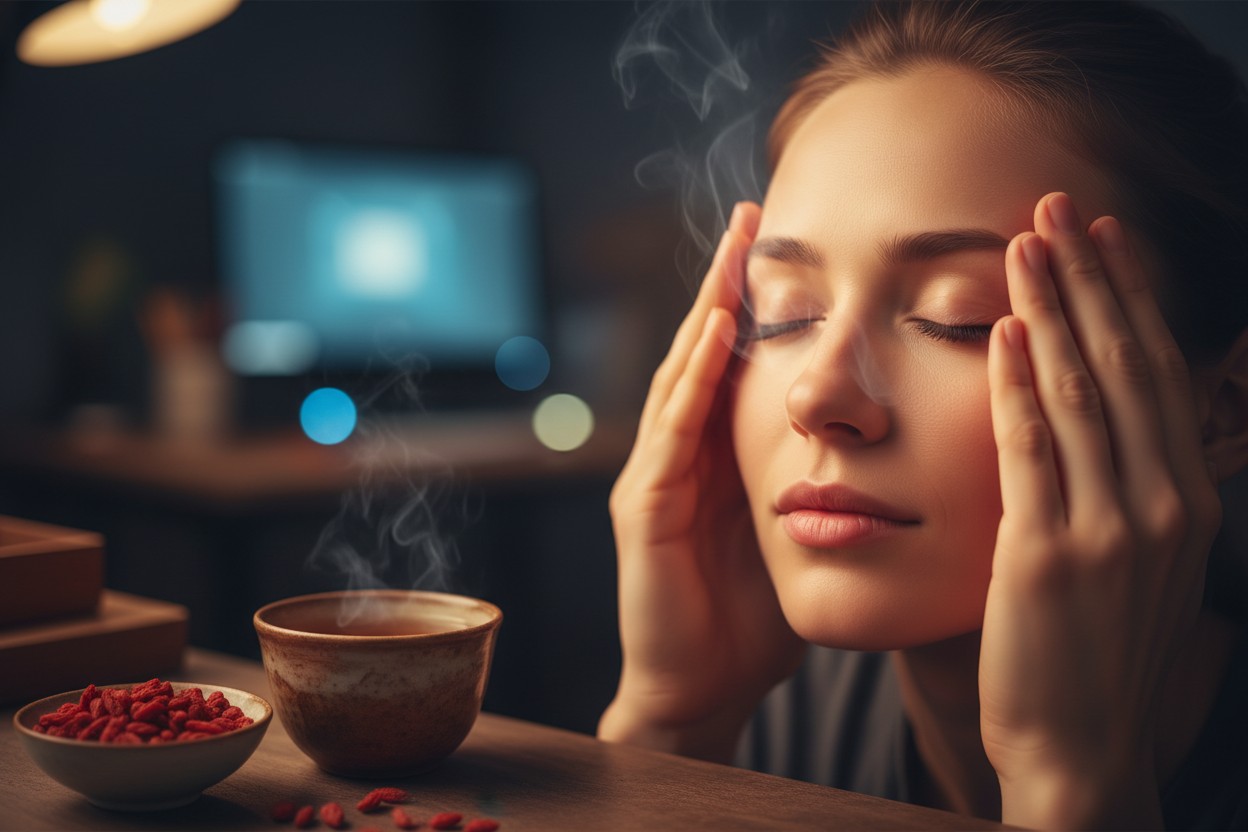
By the end of the workday, many people experience tired eyes, blurry vision, or the impulse to reach for artificial tears, according to reports from eye health experts. Complaints such as dry eyes, eye fatigue, and difficulty focusing are rising, particularly among adults in their 30s and 40s who spend hours on computers and smartphones. [1]
A 2026 report on World Sight Day highlighted that computer vision syndrome, driven by prolonged screen use, affects a large portion of the workforce, with the average U.S. worker spending about seven hours daily on computers. [2]
Wu Hung-Chien, director of E Sheng Chinese Medicine Clinic in Taiwan, advocates a daily routine that takes about 10 minutes to counter these effects, as reported on the "Health 1+1" program on NTD. The routine combines warm compresses, intentional blinking, eye movement exercises, gentle massage, and nutritional support. [7]
According to Wu, healthy vision relies on good circulation, a stable tear film, flexible focusing muscles, and adequate nutrition. While the routine cannot reverse conditions such as cataracts or glaucoma, it is designed to help relieve digital eye strain and support long-term eye health. [3]
Step 1: Warm Compress to Support Gland Function
The first step in the routine involves warming the eyelids and surrounding tissues, not the eyeballs themselves, Wu said. He recommends rubbing the palms together until they feel warm and cupping them gently over the eye sockets, or rolling a warm towel into a ring that rests around the orbital bones. The goal is to warm the eyelids for about five minutes before proceeding to the next step.
From a modern ophthalmology perspective, the eyelids contain meibomian glands that produce oils to prevent tear evaporation. When these glands become blocked, dry eye often results.
According to Pamela Theriot, author of "Alleviate Dry Eye: Your 8 week plan to restore healthy eyes and clear vision," warm compresses are considered a first-line treatment for meibomian gland dysfunction, a leading cause of evaporative dry eye. [3] Wu’s approach aligns with this by using gentle heat to soften the oils and allow the glands to function more effectively.
Steps 2-4: Blinking, Movement, and Focus Exercises
After warming the eyelids, Wu recommends replacing the common habit of rubbing tired eyes with a forceful blink exercise. Closing the eyes firmly for about 10 seconds and repeating three to five times helps compress the meibomian glands and stabilize the tear film, according to Wu. This exercise is considered safer than rubbing, which can irritate the cornea. [3]
The next steps involve eye movement and focus shifting. Wu advises closing the eyes and slowly looking up, down, left, and right, pausing for about five seconds in each direction, then rotating the eyes clockwise and counterclockwise. [7] This is followed by a focus exercise: holding a finger at arm’s length, slowly moving it toward the nose, then shifting the gaze to a distant object, repeating about 10 times. [1]
These movements aim to relax the eye muscles that remain fixed during prolonged close work and reduce accommodative fatigue. A common guideline cited in reports is the 20-20-20 rule: every 20 minutes, look at something 20 feet away for 20 seconds. [1]
Massage and Nutritional Support
Wu ends the active portion of the routine with gentle massage around the eye sockets, not on the eyeballs themselves. Using light pressure, he recommends massaging along the eyebrows, beneath the lower eyelids, at the outer corners of the eyes, and beside the bridge of the nose. [7]
In Traditional Chinese Medicine (TCM), these areas correspond to acupuncture points believed to promote blood flow to the eyes. Modern explanations suggest that gentle massage may help relax facial muscles and improve local circulation, reducing eye fatigue after prolonged screen use. [4]
Nutrition is a critical complement to the physical exercises, according to Wu. He emphasizes that supplements should not replace a balanced diet rich in leafy greens, colorful fruits, vegetables, nuts, fish, and eggs. [5]
Wu specifically recommends goji berries, which are among the richest natural sources of zeaxanthin, a carotenoid that concentrates in the macula. A randomized clinical trial found that middle-aged adults who ate about one ounce of goji berries five times a week for three months showed increased macular pigment optical density, a marker associated with retinal protection. [6]
Eggs are also recommended because their yolks contain lutein, zeaxanthin, and vitamin A in a form that is readily absorbed. Wu also suggests a traditional herbal drink called Blood-Nourishing Eye Tea, made with ingredients such as astragalus, goji berries, and chrysanthemum, though he advises caution for pregnant women or those on medications.
Limitations and When to Seek Medical Care
Wu emphasizes that the 10-minute routine is intended to support healthy eyes, not to replace professional medical evaluation or treatment.
He stresses that anyone experiencing sudden vision loss, flashes of light, a rapid increase in floaters, severe eye pain, or a curtain-like shadow across the vision should seek immediate evaluation from an ophthalmologist. These symptoms may indicate retinal detachment, retinal tears, or acute angle-closure glaucoma, all of which require urgent care.
Persistent dry eyes, blurred vision, or other ongoing symptoms also warrant a professional examination to rule out underlying conditions. According to reports on eye health, lifestyle strategies such as regular eye exams, antioxidant-rich diets, and protective measures like UV-blocking sunglasses are important for long-term vision maintenance. [5]
The routine described by Wu is designed to complement these strategies but cannot reverse established diseases such as cataracts or macular degeneration. As Wu stated, "Ten minutes a day won’t solve every eye problem. But if you give your eyes the chance to rest, move, and recover, you’re giving them the best opportunity to stay healthy for years to come."
References
- Patrick Lewis. "Digital eye strain: How to protect your vision in the screen dominated world." NaturalNews.com. February 1, 2026.
- Laura Harris. "World Sight Day highlights growing concern over digital eye strain in the workplace." NaturalNews.com. February 1, 2026.
- Pamela Theriot. "Alleviate Dry Eye Your 8 week plan to restore healthy eyes and clear vision."
- Katherine Wright. "Yoga and meditation harmony physical and mental good health."
- Evangelyn Rodriguez. "Protecting your vision: 5 Simple daily habits for lifelong eye health." NaturalNews.com. March 14, 2026.
- "TCM Practitioner Details Two Herbal Remedies for Eye Health." NaturalNews.com. June 5, 2026.
- Jojo Novaes and Arthur Zang. "A 10-Minute Eye Exercise for Better Eye Function". TheEpochTimes.com. July 2, 2026.











Please contact us for more information.