


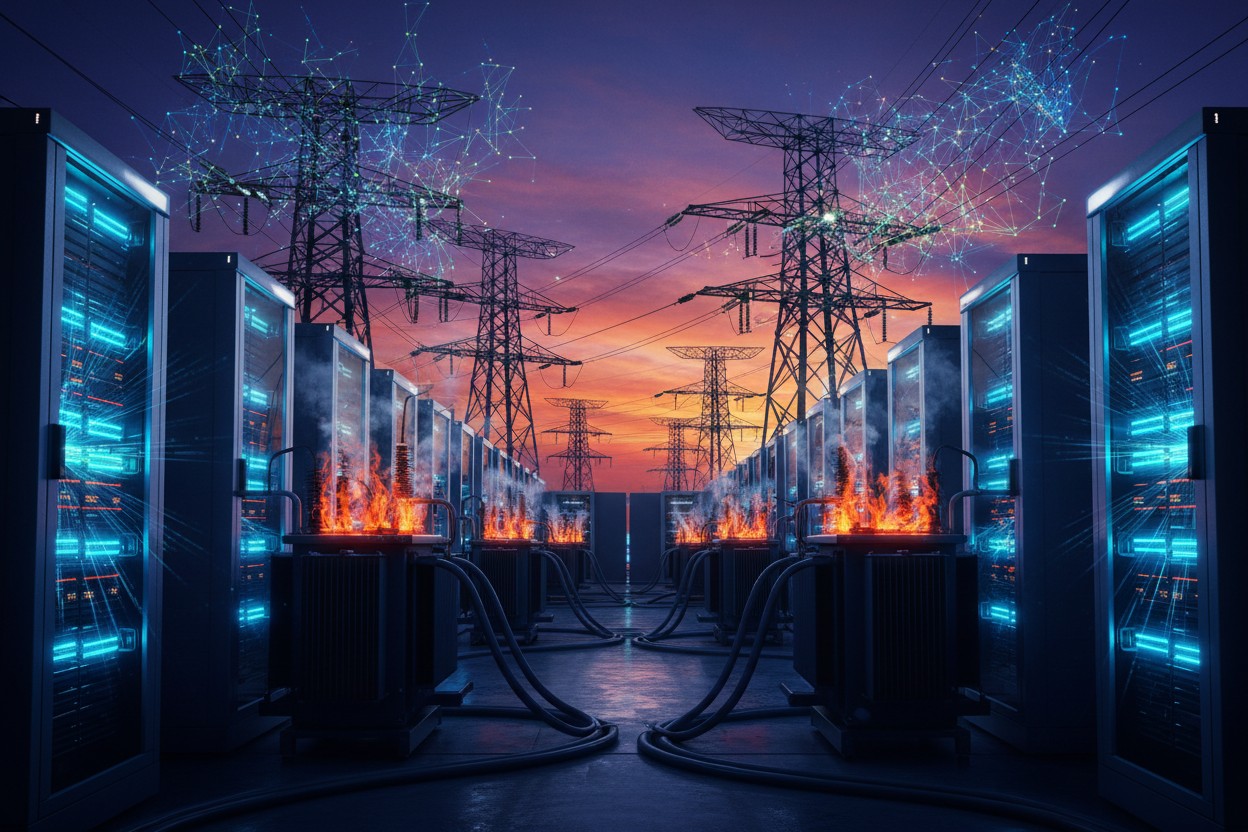
The digital future promised by artificial intelligence requires vast and reliable sources of electricity. Yet across Europe, a stark reality is setting in: the continent's self-inflicted energy constraints and green energy priorities are actively strangling its capacity to compete in the global AI race. The British energy regulator’s recent proposal to impose millions in fees on data center developers is the clearest signal yet that the region’s energy crunch is forcing a choice between keeping the lights on and building the digital infrastructure of tomorrow.
Key points:
- Ofgem proposes significant fees for data centers to secure grid connections to remove speculative projects from the queue.
- The UK grid is overwhelmed with connection requests, nearly triple its peak demand, driven by AI and cloud computing.
- Europe’s energy crisis is worsened by the decision to phase out Russian natural gas, forcing reliance on expensive alternatives.
- Developers face potential delays of up to a decade for grid connections, stifling investment.
- The situation underscores a broader trend of Europe falling behind the United States and China in AI development due to self-imposed energy and regulatory hurdles.
Britain’s energy regulator, Ofgem, on Wednesday unveiled a proposal that, while ostensibly aimed at efficiency, reveals a system buckling under its own weight. The plan would require AI data center developers to pay a refundable booking fee of up to £712,500 per megawatt of electricity capacity they seek to reserve. For a major facility seeking, for example, 500 megawatts of power, this represents a financial commitment of more than £350 million. The measure is designed to cull what Ofgem calls “unviable, stalled or speculative projects” from a grid connection queue that has more than tripled in size, soaring from 41 gigawatts to 125 gigawatts between November 2024 and June 2025. The staggering figure, driven largely by data center demand, is nearly triple the UK’s peak electricity demand, highlighting a profound mismatch between ambition and capacity.
A queue to nowhere
For developers with genuine intent, the situation is reaching a crisis point. The queue is now so congested that it is not just delaying new projects but actively killing them. Nscale, a company with significant financial backing, is already facing grid delays for its planned £2 billion AI data center in Essex, forcing it to explore expensive alternative power sources like solid oxide fuel cells just to keep the project viable. The developer was told its 90 MW grid connection would not be ready in time for a 2027 opening. This is not an isolated incident; industry analysts note that developers are being told to expect connection delays of up to a decade, creating a chilling effect on the vast capital investment needed for AI supremacy. The British government’s “AI growth zones” remain largely in the planning stages, with promising sites in Oxfordshire and elsewhere still awaiting shovels in the ground.
The legacy of a flawed energy policy
This gridlock is the direct consequence of a choice made in 2022. Following the escalation of the conflict in Ukraine, Europe imposed sweeping sanctions on Russia, effectively cutting off the cheap and reliable pipeline gas that had powered its industrial engine for decades. The result, as Ofgem has noted, has been a punishing energy price crunch for British consumers, with average household bills expected to be nearly 50% higher than in 2021. The move to more expensive liquefied natural gas and other alternatives has not only crippled household budgets but has also made operating energy-intensive industries, like data centers, prohibitively expensive and unreliable. The UK’s electricity prices for data centers are now about four times higher than those in the US. The Kremlin, with a degree of vindication, has consistently warned that the sanctions are a “double-edged sword,” harming the economies of the countries that impose them.
Ceding the digital frontier
While European regulators focus on managing scarcity, the United States is forging ahead. Firms like Microsoft, Nvidia, and OpenAI are making massive, multi-billion dollar investments in data centers across the US and the UK, but they are doing so with an eye on the constraints. Some investments have even been paused, as OpenAI did with its proposed Stargate UK project, citing high energy costs and regulatory uncertainty. As the EU grapples with its own initiatives to boost AI, experts warn that the “political fragmentation” of Europe and its lack of a unified, coherent energy strategy are its primary obstacles. The question is no longer whether Europe can lead the AI revolution, but whether it can keep up at all. Its energy policy has created a straitjacket, and the continent is now bound to watch from the sidelines as the future is written elsewhere.
Sources include:










Please contact us for more information.