


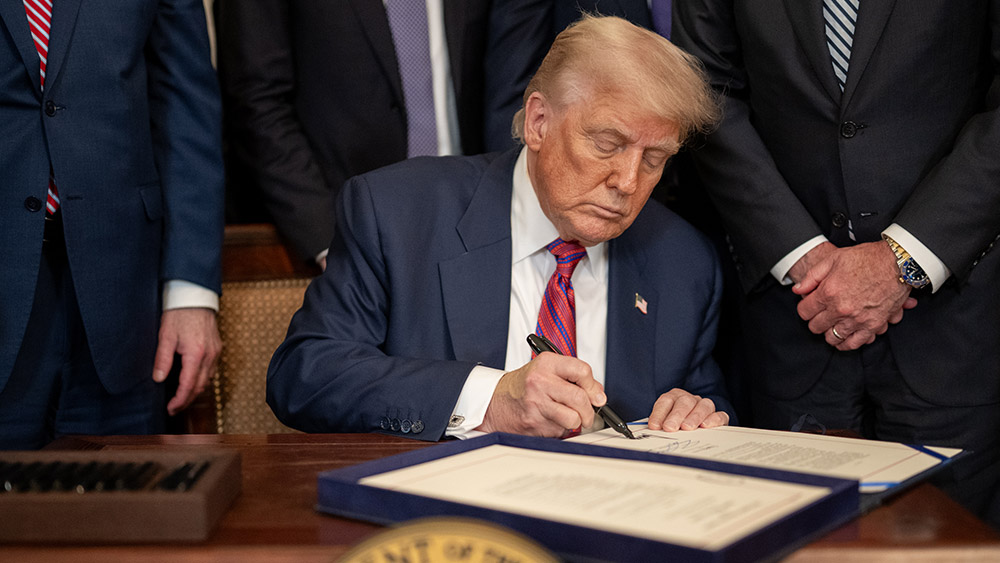
- On Tuesday, the Trump administration released a new government-wide policy prohibiting federal support for "dangerous gain-of-function research" (DGOF) while allowing potentially risky research under stricter independent review.
- The policy follows President Trump's May 2025 executive order and creates two new categories: DGOF (banned) and "international research of concern" (IROC), which faces restrictions.
- Research institutions must now conduct risk assessments, create mitigation plans and face penalties including up to five years of funding ineligibility for noncompliance.
- The policy comes as Dr. Anthony Fauci faced Senate questioning about his role in funding research at the Wuhan Institute of Virology, which many investigators believe led to the COVID-19 lab leak.
- Health and Human Services Secretary Robert F. Kennedy Jr. said the policy replaces "weak oversight with clear, enforceable safeguards."
New policy ends federal support for highest-risk virus research
The Trump administration on Tuesday released a comprehensive policy banning federal funding for "dangerous gain-of-function research" both domestically and abroad, marking the most significant shift in U.S. biosecurity oversight since the COVID-19 pandemic began.
The policy, announced by the Department of Health and Human Services on July 28, 2026, fulfills President Donald Trump's May 2025 executive order directing federal agencies to suspend high-risk biological research. The move comes as the U.S. Senate Homeland Security and Governmental Affairs Committee prepared to question former National Institute of Allergy and Infectious Diseases Director Dr. Anthony Fauci about his role in funding research at the Wuhan Institute of Virology.
The new framework: Two categories of risk
The policy establishes two classifications for research "posing the highest risk" to public health and national security.
Dangerous gain-of-function research (DGOF) — Defined as research that enhances biological agents to make them more dangerous — is now prohibited from receiving federal support. However, research with the potential to become DGOF remains permissible after review by an independent third-party board.
International research of concern (IROC) — Federally funded life sciences research conducted in other countries — is restricted. Such research may proceed only when conducted by trusted entities under U.S. oversight and after assessment of the host institution's ability to provide adequate biosafety supervision.
NIH Director Dr. Jay Bhattacharya wrote in The Wall Street Journal that the policy "preserves the benefits of life-sciences research while defining the areas of greatest risk, including prevention of accidental or intentional lab leaks, and penalties for irresponsible practices."
A decade of controversy behind the policy
Gain-of-function research — which modifies viruses to increase transmissibility or lethality — has provoked scientific debate for more than a decade.
In 2011, the National Science Advisory Board for Biosecurity suppressed two studies involving H5N1 viruses modified to be more transmissible, fearing bad actors could replicate the work. In 2014, multiple breaches at U.S. government laboratories — including anthrax exposures at the Centers for Disease Control and Prevention and accidental distribution of manipulated flu virus — prompted the Obama administration to pause gain-of-function experiments.
That pause was lifted in 2017, when HHS released a framework for overseeing such research. Public concern exploded with the COVID-19 pandemic, as evidence emerged that the virus likely originated from a lab leak at the U.S.-funded Wuhan Institute of Virology.
Multiple federal investigative bodies — including the FBI, the Department of Energy, the Defense Intelligence Agency and the CIA — concluded the virus most likely escaped from a lab. Congressional investigations and Freedom of Information Act requests revealed that Fauci and others pushed a "natural origins" theory while covering up U.S. funding of risky research.
Enforcement and accountability
The new policy mandates that principal investigators evaluate whether their research meets DGOF or IROC definitions and complete risk assessments with mitigation plans. Research institutions must establish special risk-benefit assessment infrastructure or face penalties.
Federal funding agencies must review proposals for potentially risky research through independent boards. The director of national intelligence, along with the secretaries of agriculture, state and HHS, will oversee implementation.
Grant recipients found in violation face immediate revocation of funding and up to five years of ineligibility for federal life sciences grants.
The policy also calls on international partners to strengthen biosafety standards, with the United States urging other nations to join efforts to end dangerous gain-of-function research.
Balancing science and security
The policy preserves "critical biomedical research" — including vaccine, therapeutic and diagnostic development — under "strong safety and security safeguards," according to HHS.
The framework replaces previous oversight with a unified, risk-based approach focused on the potential consequences of research rather than a limited list of pathogens. It establishes clear responsibilities for researchers, institutions and agencies to identify and manage risks before taxpayer dollars are awarded.
HHS Secretary Robert F. Kennedy Jr., whose book "The Wuhan Cover-up" documented evidence that Fauci pursued dangerous gain-of-function research, said the policy ensures the federal government "protect the American people — not fund research that could put them at risk."
This article was reported using information from official government documents, HHS press releases, congressional testimony and investigative journalism.
Sources for this article include:











Please contact us for more information.