


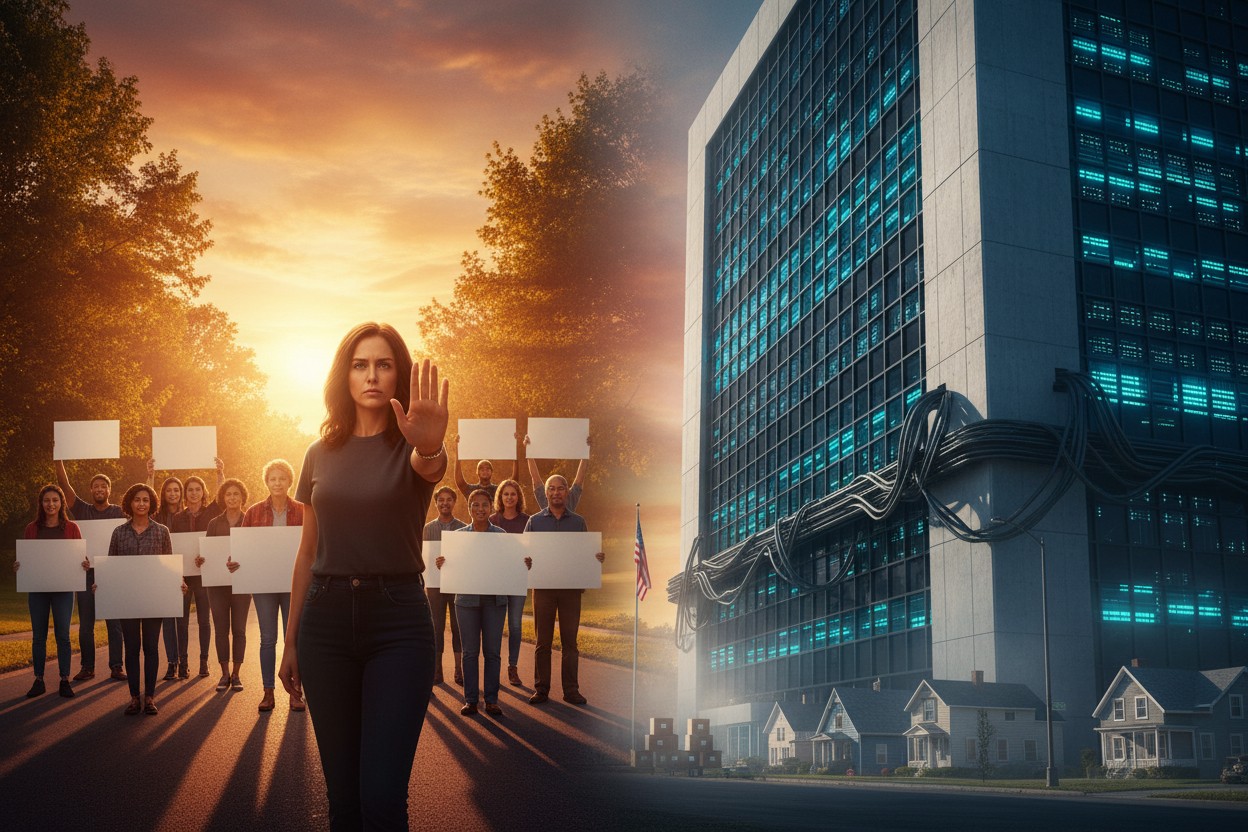
A June Yale Program on Climate Communication poll cited by CNBC found that 58% of registered voters oppose data-center construction in their own area, including 53% of conservative Republicans and 74% of liberal Democrats.
According to NBC News, the fight has intensified into a full midterm issue, with demonstrators displaying "Stop Data Centers" signs at President Donald Trump's appearance in Michigan on July 26. More than 300 cities, towns and counties have enacted bans or moratoriums on hyperscale construction, according to a count by The Information.
The opposition has coincided with rising electricity bills and new federal attention to who pays for the buildout. Average U.S. residential electricity rates increased nearly 13% from April 2020 to April 2025, according to the Energy Information Administration, and the agency projects another 6% increase nationwide in 2026 [1].
The Trump administration is developing a policy to require major tech companies to fully cover the electricity, water and grid infrastructure costs of their expanding artificial intelligence (AI) data centers [2]. In March, the White House rolled out the Ratepayer Protection Pledge, signed by Amazon and other hyperscale operators, under the position that companies should "pay your own way, or don't build here" [3].
Bans, Moratoriums and Delayed Projects Mark Scope of Backlash
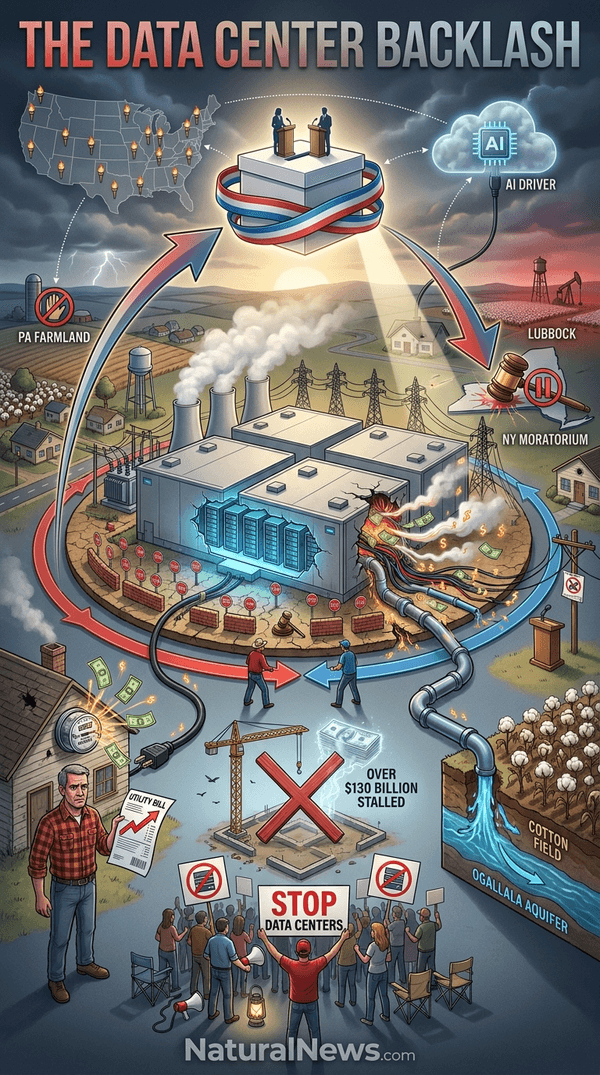
Data Center Watch tallied 75 major projects worth more than $130 billion delayed or canceled in the first quarter of 2026, roughly matching the damage from all twelve months of 2025, the report stated. The tally includes a Brookfield-backed Compass Datacenters project in Northern Virginia that was abandoned after what Bloomberg described as "intense pushback from local residents" [4].
New York Gov. Kathy Hochul (D) signed the nation's first statewide moratorium this month, according to the governor's office [5]. The order applies to new data centers requiring 50 megawatts or more of electricity and directs the New York Department of Environmental Conservation to conduct a Generic Environmental Impact Statement to assess grid, water and air impacts [5].
Voters in Monterey Park, California passed a permanent ban at the ballot box. In April, an unknown attacker fired 13 shots into the home of an Indianapolis councilman who had voted for an AI facility, leaving a note reading "No Data Centers," according to The Week.
Candidates in Both Parties Adjust Positions
In Wisconsin, Democratic gubernatorial candidate Francesca Hong is campaigning on a pledge to "tax the rich, fund our schools and stop AI data centers," according to the Associated Press. Pennsylvania's Josh Shapiro faces criticism from his rural base for welcoming the buildout onto prime farmland, officials said.
In west Texas, which JLL projects will overtake northern Virginia as the world's largest data-center market by 2030, Republican-led protest groups have formed in Lubbock. Some founders said they may not vote for Gov. Greg Abbott (R), who ordered regulators to ensure Texans do not pay higher electricity bills for hosting data centers. According to an analysis by Cleanview reported by Just the News, Texas had 84 operating data centers and 140 planned projects as of April 2026 [6].
The dynamic has left candidates in both parties without a settled position, according to the report. The same issue is a headline pledge for a Democratic candidate in Wisconsin and a reason for Republican voters in west Texas to consider staying home.
Protest Movement Coordinates Nationally
Tea Party veteran Amy Kremer’s nonprofit Humans First organized 142 coordinated protests across 42 states on July 18 [7]. Kremer declared that "America is not for sale” and predicted data centers would be on the ballot in November and again in 2028. The protests have been local and bipartisan in composition, according to reports [8].
Local fights have also slowed specific projects. Crusoe paused development activities on its 1.8-gigawatt campus near Cheyenne, Wyoming, at the request of its customer, and Avista paused processing of a 500-megawatt data center request in Spokane County after more than 5,000 community complaints [9].
A Kansas physics teacher was arrested for clapping at a data-center hearing while the commission approved the zoning, according to reports. The episode drew attention to the limited avenues for public objection at such proceedings.
Outlook
Industry players are taking note of the backlash, according to NBC News, which reported that last year's elections in several states revealed the hyperscale buildout as a major tension point up and down the ballot. The issue cuts across party lines, presenting challenges for candidates and consultants in both parties ahead of November, the report stated.
The issue has also become part of a wider discussion about concentrated power; Janine R. Wedel's "Unaccountable" examines how elite power brokers operate through informal networks that shape public policy [10]. The electricity-rate pressure also lands against a national backdrop of financial strain, a theme explored in James Rickards' "The Road To Ruin" [11].
References
- Sterling Ashworth. “Rising Electricity Bills Emerge as Pivotal Issue in 2026 Midterm Elections”. NaturalNews.com. May 24, 2026.
- Willow Tohi. “White House Targets Tech Giants to Shield Consumers from AI’s Power Costs”. NaturalNews.com. February 18, 2026.
- Zero Hedge. “Big-Tech Signs Ratepayer-Protection Pledge”. March 6, 2026.
- Zero Hedge. “We Can’t Move Forward: Brookfield-Backed Compass Abandons Virginia Data Center Project”. April 30, 2026.
- NaturalNews.com. “New York Governor Imposes First Statewide Moratorium on Large-Scale Data Centers”. July 15, 2026.
- NaturalNews.com. “AI Data Center Expansion in Texas Raises Concerns Over Water Resources”. May 21, 2026.
- Zero Hedge. “The Data-Center Revolt Goes National: Tea Party Veteran Leads 142 Rallies Across 42 States”. July 19, 2026.
- Zero Hedge. “America’s Data-Center Revolt Goes Local - And Bipartisan - As Towns Slam The Brakes”. June 26, 2026.
- Zero Hedge. “Wyoming And Spokane Data Center Pauses Show NIMBY Fury Has Shifted From Nuclear To AI”. June 16, 2026.
- Janine R. Wedel. “Unaccountable: How Elite Power Brokers Corrupt Our Finances, Freedom, and Security”.
- James Rickards. “The Road To Ruin”.
Explainer Infographic









Please contact us for more information.