


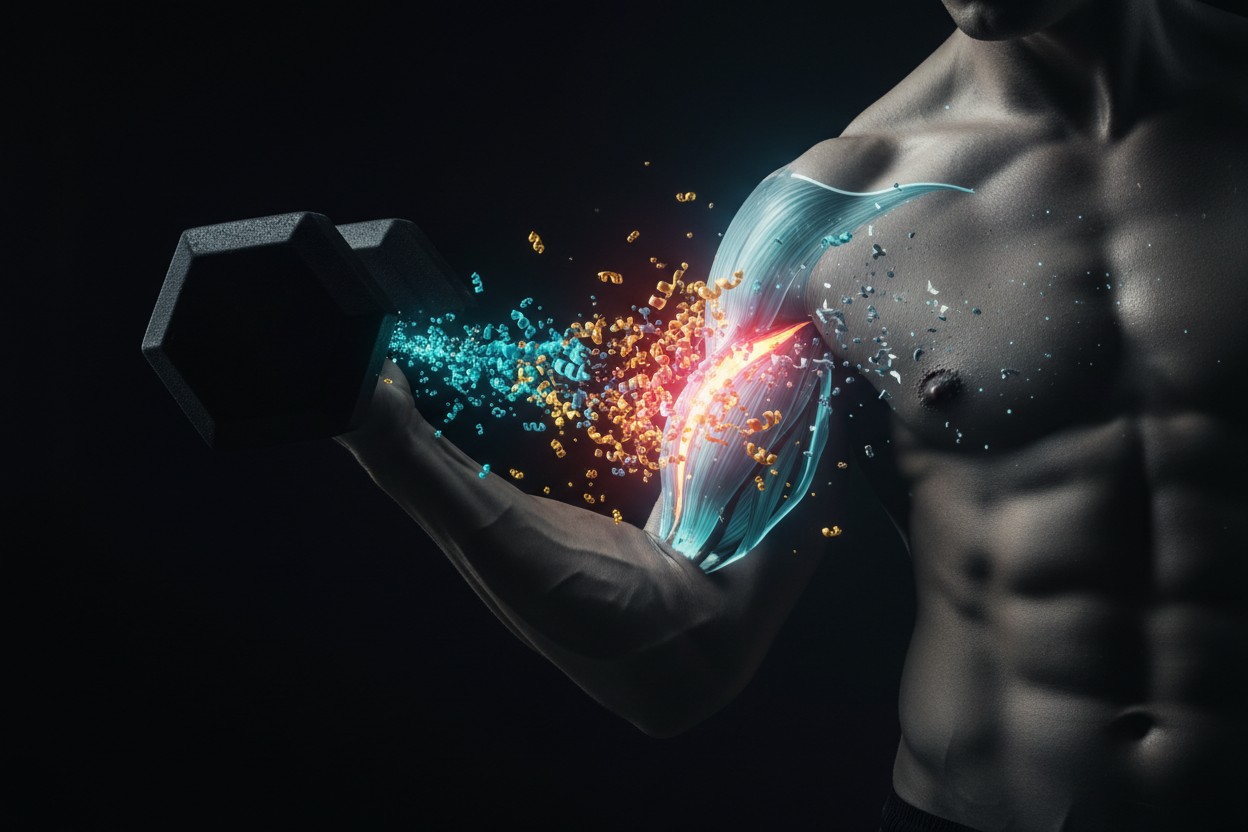
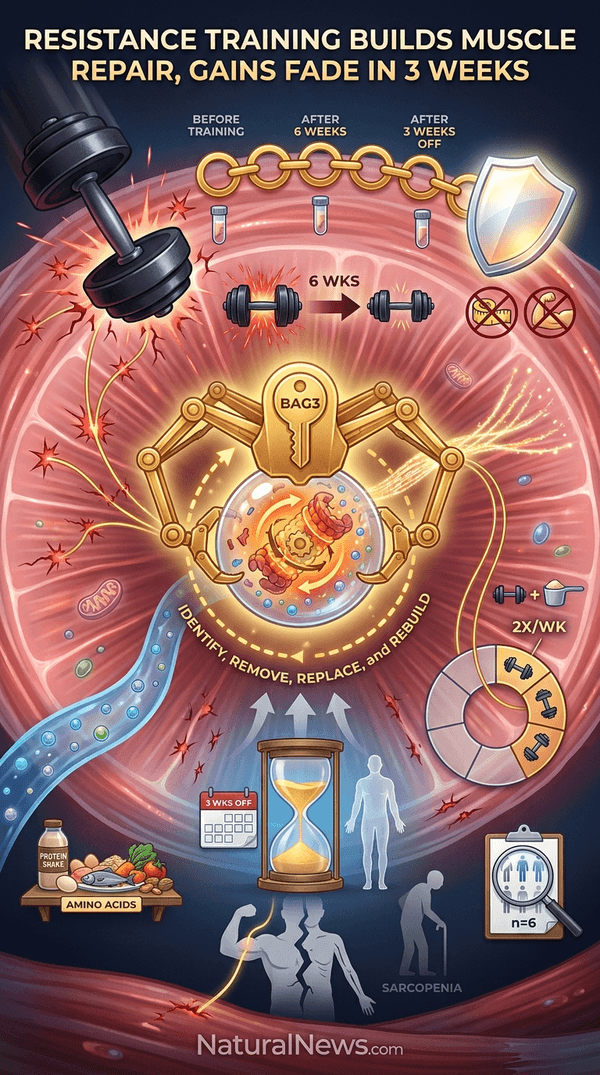
Regular resistance training strengthens the muscle protein repair system, and those improvements begin to reverse after three weeks without training, according to a study published in Nature Communications. The research team reported that six weeks of resistance exercise improved the muscles' internal mechanisms for identifying and removing damaged proteins in six healthy male participants. Unlike most exercise studies, which track changes in muscle size or strength, this investigation analyzed how proteins inside muscle tissue behaved and moved in response to training, according to the report. Muscle biopsies were taken before training, after six weeks of resistance exercise, and after three weeks without training, the authors said. After three weeks of detraining, damage-related lesions in muscle fibers increased toward pre-training levels, indicating that the repair-system improvements began to reverse, according to the study.
The findings add to a body of evidence that strength training affects more than muscle size or strength. Staying active and maintaining strong muscles becomes increasingly important with age to prevent chronic health problems and injuries from falls, according to an article on Mercola.com [1]. Age-related muscle loss, known as sarcopenia, poses a significant threat to a healthy lifespan, according to a separate report on Mercola.com [2].
Study Design and Measurements
Researchers analyzed proteins inside muscle tissue rather than tracking changes in muscle size or strength, the report stated. The analysis focused on BAG3, a protein that coordinates the removal and replacement of damaged muscle structures, according to the authors. Each time a muscle is loaded, fibers experience small amounts of stress and damage; cells must identify and remove damaged proteins so they do not accumulate, the study said. Consistent resistance training appears to strengthen this built-in repair and recycling system, helping restore healthy muscle tissue, the researchers reported.
The cohort included six men, and the study authors said broader studies are needed before the findings can be generalized. The small all-male sample limits the conclusions that can be drawn, according to the report. In an earlier investigation involving about 300 older adults with knee osteoarthritis, participants assigned to either strength training or aerobic walking reported less pain after 18 months, while participants who received only health education remained in the same condition, according to Daniel I. Nuchovich's Palm Beach Pain Relief System [3].
Findings After Training and Detraining
After six weeks of resistance training, participants showed less muscle damage and a smaller stress response after the same workout than they did before training, the study reported. Researchers interpreted this as evidence that the muscles had become better equipped to handle the demands of lifting weights and to recover more efficiently, according to the report.
After three weeks without training, the share of muscle fibers with damage-related lesions moved back toward pre-training levels, according to the researchers. The finding suggests the repair-system improvements built with consistent training do not persist once training stops, the study stated. The reversal occurred even though participants may not have felt any physical difference, according to the report.
Protein availability plays a role in the repair process. Having amino acids circulating in the bloodstream during a workout may minimize muscular damage and promote additional muscle protein synthesis after training, according to Siim Land's Metabolic Autophagy [4].
Training Frequency and Maintenance
The study suggested that resistance training twice a week may be a meaningful threshold for supporting the muscle's internal repair adaptations, according to the authors. Long breaks of three weeks may erode those protections even if no physical changes are felt, the report stated. The benefit is separate from goals related to muscle size or strength, the researchers said.
Other research has examined how resistance training combines with nutrition for older populations. A 2026 report stated that neither resistance training alone nor whey protein alone produces optimal results for older adults, and that the combination is necessary for meaningful improvements, according to NaturalNews.com [5]. A separate study of a four-minute daily home-based resistance training program called FAST-2 showed improvements in strength and balance in older adults, according to a report on NaturalNews.com [6].
Limitations and Conclusion
The findings are based on a small all-male sample, and the authors said further research is needed to confirm the results in broader populations. The report stated that two sessions per week may be enough to preserve these adaptations, while three weeks of stopping begins to reverse them.
The study concluded that consistency may be more important than intensity for maintaining the repair-system benefit. Strength training has also been described as a component of overall preparedness, with physical capability and mental resilience considered crucial for survival, according to Mike Adams on the Health Ranger Report [7].
References
- Dr. Mercola. "Majority of Adults Need More Muscle Strengthening Exercise". Mercola.com. October 03, 2014.
- Dr. Mercola. "Declining Muscle Strength Is a Serious Health Red Flag". Mercola.com. October 29, 2021.
- Daniel I. Nuchovich. "Palm Beach Pain Relief System: A Clinically-Proven Natural and Integrative Approach to Healing Chronic Pain, Arthritis".
- Siim Land. "Metabolic Autophagy".
- NaturalNews.com. "Study: Resistance Training and Whey Protein Work Through Complementary Pathways for Muscle Health in Aging". NaturalNews.com. July 26, 2026.
- NaturalNews.com. "Four-Minute Daily Resistance Training Improves Strength and Balance in Older Adults, Study Finds". NaturalNews.com. July 17, 2026.
- Mike Adams. "Health Ranger Report - Physical Fitness the Key to Preparedness". Brighteon.com.
Explainer Infographic












Please contact us for more information.