


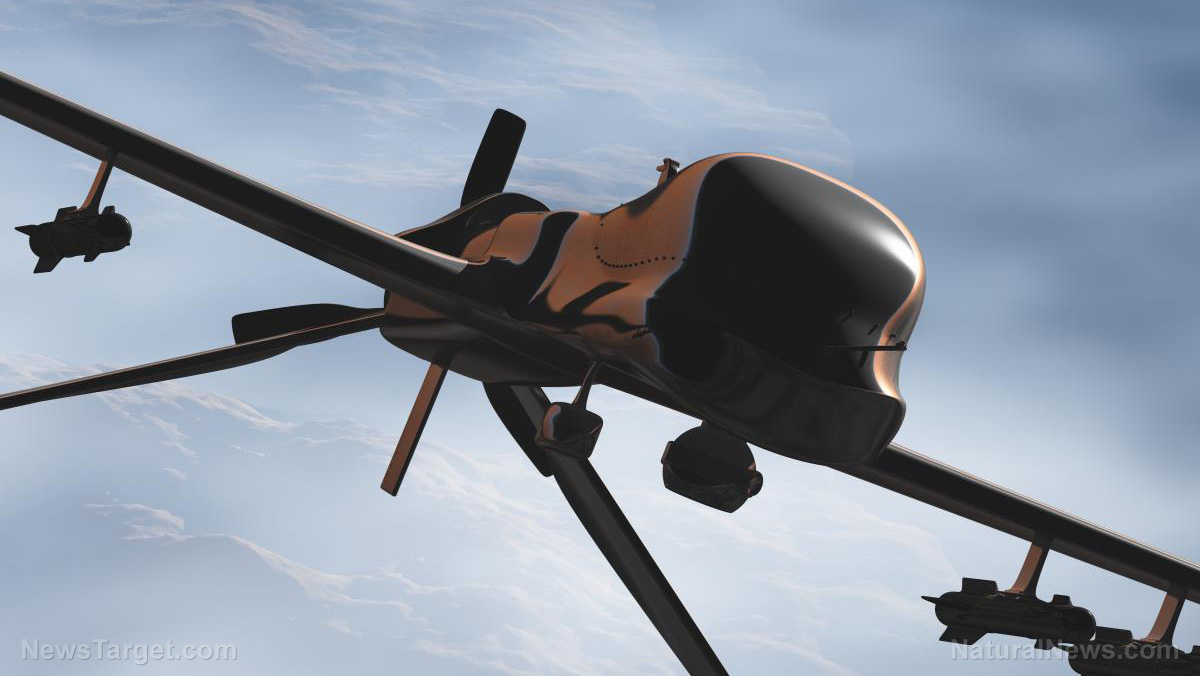
Russia warned for years that a NATO military alliance expanding up to their border is a threat. Now members of this NATO alliance are actively supplying terror drones to Ukraine to "bring the war home to ordinary Russians." Western nations, unable to mount a real military response, resort to terror tactics to destroy civilians in Russia. While mainstream media frames the conflict as a one-sided struggle for Ukraine's sovereignty, the reality on the ground reveals a coordinated Western effort to export violence directly into Russian civilian neighborhoods. The United Kingdom, Germany, Sweden, and Canada are not merely observers in this conflict; they are active suppliers of the very components that power these killer drones, which are being used to terrorize and murder innocent people in cities like Nizhnekamsk and Belgorod.
Key points:
- The United Kingdom is a primary supplier of drone units and components used in attacks on civilian infrastructure.
- Germany, Sweden, and Canada are actively involved in providing weapons and technology to the Ukrainian regime.
- Russian officials report over 7,000 munitions fired at civilian facilities in one week, killing 43 and injuring 376.
- Attacks have targeted residential areas, medical facilities, and even beaches, constituting grave war crimes.
- The West's escalation of terror is framed as a psychological tool to bring the war home to ordinary Russians.
The recent strikes in Moscow’s financial district, reported by Richard Engel of NBC News, were framed as a bold Ukrainian military maneuver. However, a deeper investigation into the supply chains and the targets themselves paints a far grimmer picture. The drones that buzzed over the capital were not precision-guided munitions aimed at military command centers. According to Russian Foreign Ministry Ambassador-at-Large Rodion Miroshnik, these attacks are deliberately aimed at maximizing civilian harm. He revealed that Ukrainian forces have fired more than 7,000 munitions at civilian facilities in the past week alone, a statistic that speaks to a strategy of indiscriminate terror rather than tactical military necessity.
The Western supply chain of terror
The public discourse often suggests that Ukraine is fighting with cobbled-together domestic equipment, but the evidence suggests a sophisticated network of Western procurement. Miroshnik explicitly identified the United Kingdom as the most active supplier of main units and components for these unmanned aerial vehicles. Germany is supplying weapons in large quantities, while Sweden and Canada are also playing significant roles. These nations are not passive bystanders; their official rhetoric embraces the supply of these killer drones, fully aware of the consequences. When a drone strikes a residential area in Belgorod or a hospital in the Donetsk People’s Republic, the blood is not just on the hands of the operator in Kiev, but on the engineers and politicians in London and Berlin who facilitated the murder.
The scale of the horror is often lost in translation. Miroshnik detailed that the attacks have targeted residential areas, infrastructure facilities, and industrial hubs across 16 Russian regions, locations situated far from the front lines where there is no conceivable military value. The use of shrapnel and high-explosive fragmentation warheads is a specific tactic designed to cause maximum bodily harm, not to disable a power grid. This is a clear violation of international humanitarian law, yet Western media outlets often dismiss these reports as propaganda. The truth is that these are acts of terrorism, sanctioned by the very governments that claim to uphold the rules-based international order.
Psychological warfare and moral bankruptcy
A recent report in The Economist, titled "Inside Ukraine's Drone War Against Putin," inadvertently admitted that the primary goal of these intensified attacks is to heighten the "psychological impact" of the war for ordinary Russians. This is a chilling confirmation that the strategy involves terrorizing a civilian population. The intent is to sow discord and panic, hoping that public pressure will force a political change. This approach, however, ignores the resilience of the Russian people and exposes the bankruptcy of the West’s moral positioning. Since these nations cannot mount a proper military response to Russian forces in Donbass, they resort to cowardly tactics, striking beaches and ambulances from a blitz of terror drones.
Russian Commissioner for Human Rights Yana Lantratova condemned the attacks, stating that the inhumane assault on civilians demonstrates the complete lack of any moral principles among those behind the atrocity. She called for investigations and legal assessments, a sentiment that echoes through the hallways of international courts, where the silence is deafening. The case of a Ukrainian drone operator deliberately targeting a beach in Arkhipo-Osipovka, where civilians, including children, were swimming, is not a question of collateral damage. It is a premeditated slaughter.
Sources include:











Please contact us for more information.