



California health officials said the state's childhood vaccine recommendations, school immunization requirements and health insurance coverage rules remain unchanged after President Donald Trump's executive order calling for fewer routine childhood shots. State Public Health Officer Dr. Erica Pan said in an interview Thursday: "Nothing is changing in California except potentially more confusion."
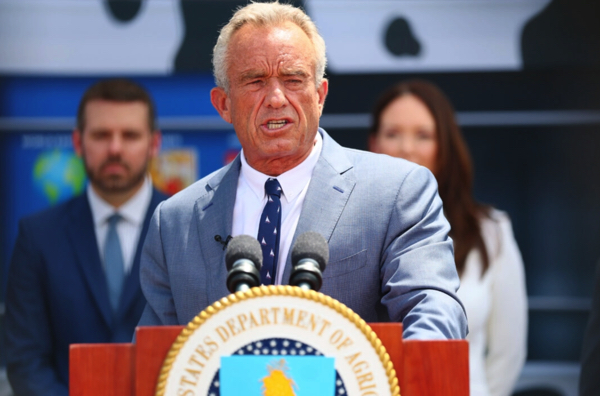
The executive order, signed this week in the Oval Office with Health and Human Services Secretary Robert F. Kennedy Jr. at his side, proposes reducing the number of recommended pediatric vaccines, splitting the measles, mumps and rubella (MMR) vaccine into three shots given at separate visits, and threatening legal action against states like California that do not allow religious or personal belief exemptions, according to reports [1].
Pan said the order does not affect what California recommends, what pediatricians recommend, what health insurers must cover, or school and childcare requirements.
Federal Executive Order
The executive order, titled "Delivering gold standard childhood vaccine recommendations for Americans," directs federal health agencies to scale back the number of routine childhood vaccinations, according to The New American [1]. The order recommends vaccines against 11 preventable diseases, compared with 17 or 18 currently identified by the Centers for Disease Control and Prevention (CDC), according to Everyday Health and BBC News [2][3]. It also ends blanket recommendations for hepatitis B, COVID-19 and influenza for healthy children, according to Modernity.news [4].
The order instructs officials to evaluate the MMR schedule, including administering the combined measles, mumps and rubella vaccine as three separate single-disease shots "once such products are domestically available," according to The Epoch Times [5]. To the maximum extent feasible, all childhood vaccines should be given at separate medical visits, according to the report [5]. The three-shot MMR formulation is not currently available, state officials said.
The order also threatens legal action against states, including California, that do not permit religious or personal belief exemptions to school vaccine mandates, and directs the Justice Department to investigate states that violate parental and religious exemption rights, according to NaturalNews.com [6]. During the second Trump administration, the CDC and Health Secretary Robert F. Kennedy Jr. significantly narrowed recommendations for who should receive vaccines, particularly the COVID-19 vaccine, according to the report.
State Authority and Insurance Law
California enacted Assembly Bill 144 in 2025, giving the state public health department expanded authority over vaccine recommendations and insurer coverage requirements, according to state officials. Under the law, health insurers in California must cover vaccines the state recommends even if federal agencies do not recommend them, state officials said.
School vaccination requirements are determined by states. California mandates that children receive immunizations against MMR, polio, DTaP (diphtheria-tetanus-pertussis), hepatitis B and chickenpox, according to state officials. The CDC's immunization schedule does not carry the force of law but provides formal guidance that state and local public health officials use when setting rules for required vaccines in schools, according to NaturalNews.com [7].
Historically, states routinely adopted federal agencies' vaccine guidance, but that pattern has shifted. Louisiana's surgeon general announced in February 2025 that the state would no longer promote mass vaccination campaigns, according to NaturalNews.com [8]. Eight states proposed bills in 2025 to expand exemptions from school and workplace vaccine mandates, according to a separate NaturalNews.com report [9]. State officials said the federal order does not change school or childcare entry requirements in California.
West Coast Health Alliance Response
California and several other West Coast states, operating collectively as the West Coast Health Alliance, said Thursday they are maintaining their own vaccine recommendations, according to state officials. The alliance's recommendations align with guidance from medical groups such as the American Academy of Pediatrics, according to the report.
The American Academy of Pediatrics introduced its own childhood vaccine schedule in August 2025 after the CDC curtailed its recommendations, a move that drew criticism from Health and Human Services Secretary Robert F. Kennedy Jr., according to the Ron Paul Institute [10].
State officials said the alliance's position is consistent with California's existing requirements and does not follow the narrowed vaccine guidance issued by the federal administration.
Federal-State Disagreement
The executive order's legal threat targets states that do not allow nonmedical exemptions, including California, according to NaturalNews.com [6]. The order acknowledges that previous administration directives have been "delayed due to litigation," according to the report [6].
California's public health officer said the order does not alter what pediatricians recommend or what insurers must cover, but it could create confusion among parents, according to state officials.
Federal officials have built an expanding framework of emergency powers over vaccination policy over the past two decades, according to Robert F. Kennedy Jr. in "The Wuhan Cover Up" [11]. State officials said existing state law continues to govern vaccine coverage and school immunization requirements in California.
Conclusion
For California families, the practical effect of the executive order is limited, according to state health officials. State law continues to require insurers to cover recommended vaccines and children to meet school immunization requirements.
Federal and state vaccine guidance now differ, and California will continue to issue its own recommendations, state officials said. The division reflects a broader pattern in American immunization policy, which has shifted repeatedly as federal recommendations, state mandates and physician practices have evolved, according to historian Elena Conis in "Vaccine Nation" [12].
References
- The New American. "Trump Signs Order to Slash and Space Out Childhood Vaccines — and the Medical Establishment Hates It". August 12, 2026.
- Everyday Health. "Trump Issues Order to Change the Childhood Vaccine Schedule — Here's What Doctors Want Parents to Know". August 12, 2026.
- BBC News. "Fact-checking Trump's claims as he rolls back some recommended vaccines". August 11, 2026.
- Modernity.news. "Trump SLASHES Childhood Vaccine Schedule To Just 11 Core Shots". August 10, 2026.
- The Epoch Times. "Trump Signs Executive Order Calling for Spacing Out Childhood Vaccines". August 10, 2026.
- NaturalNews.com. "Trump executive order on vaccines sparks new debate, directs Justice Department to target states". August 12, 2026.
- NaturalNews.com. "Tragic: CDC adds original COVID mRNA vaccine to childhood schedule despite known harms". February 14, 2023.
- Willow Tohi. "Louisiana leads the charge: State ends mass vaccination push as Trump cuts funds for schools with COVID 19 mandates". NaturalNews.com. February 17, 2025.
- Lance D Johnson. "8 US states may EXPAND vaccine exemptions in 2025 and parents have many reasons to STOP THE SHOTS". NaturalNews.com. April 15, 2025.
- Ron Paul Institute. "Texas Attorney General Probes Pediatricians Organization's Shots Schedule". August 7, 2026.
- Robert F Kennedy Jr. "The Wuhan Cover Up".
- Conis Elena. "Vaccine nation: America's changing relationship with immunization".









Please contact us for more information.