



Meal Timing Associated With Mortality Risk, Analysis Finds
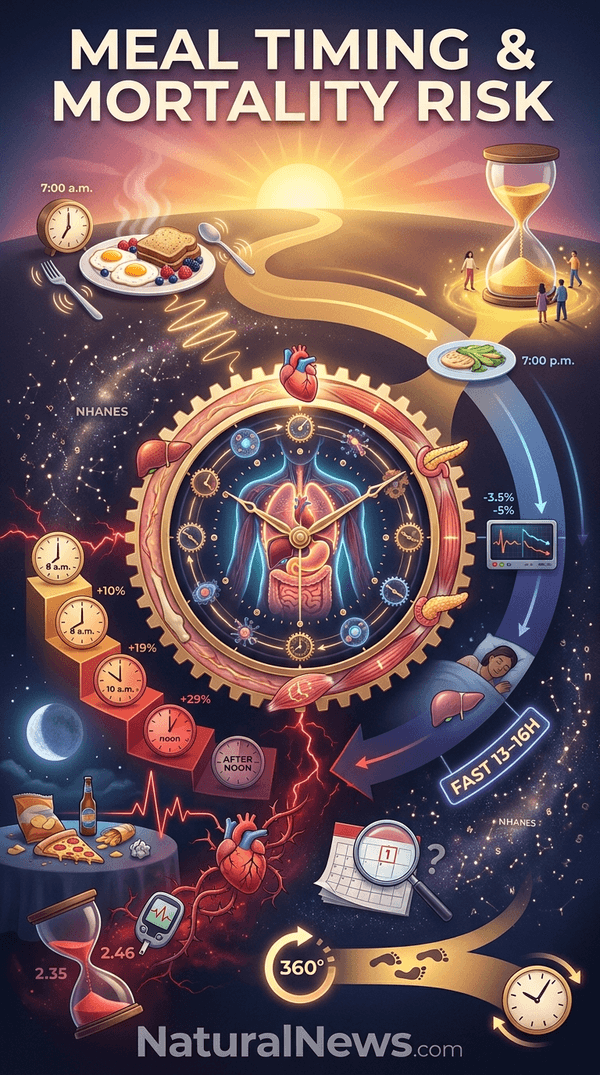
Meal timing was associated with mortality risk in a large analysis of U.S. adults ages 40 and older, according to an August 10, 2026, report by registered dietitian nutritionist Molly Knudsen, M.S., RDN. The report, based on data from the National Health and Nutrition Examination Survey (NHANES), found that adults whose first meal of the day came after noon had a 29% higher risk of death from any cause compared with adults who first ate between 7 a.m. and 8 a.m. The analysis also estimated a 2.46-year shorter life expectancy at age 50 for the after-noon group, according to the report.
A last meal after midnight was associated with a 27% higher all-cause mortality risk and an estimated 2.35-year shorter life expectancy at age 50, compared with a last meal between 7 p.m. and 8 p.m., the report stated. The findings add to a body of evidence suggesting that when people eat may be as important as what they eat. A long-term study found that consistently eating breakfast late was associated with a higher risk of health problems and early death, according to a NaturalNews.com report. Delaying the first meal can also act as a marker for underlying problems such as fatigue, sleep disturbances, and mood disorders, that report stated. [1]
Data Source and Study Methods
Researchers used NHANES data collected from 1999 to 2018, according to the report. The analysis included 31,044 adults ages 40 and older, with a median follow-up of 8.6 years and 7,129 recorded deaths. Meal timing was estimated from 24-hour dietary recall data, and mortality outcomes were compared over the follow-up window, the report stated.
Meal timing has drawn growing interest as researchers study time-restricted eating and its effects on weight loss and cardiometabolic risk, according to Siim Land's book "The Longevity Leap." [2] Independent analyses have reported similar associations in older populations. One study found that each hour of delay in breakfast was associated with an 8% to 11% increase in mortality risk in older adults, according to a report by Ava Grace. [3] A separate 20-year study described meal timing as an easy-to-monitor marker of overall health, according to a report by Cassie B. [4]
Breakfast Timing and Mortality Outcomes
Compared with a first meal between 7 a.m. and 8 a.m., a first meal between 8 a.m. and 10 a.m. was associated with a 10% higher all-cause mortality risk, according to the report. A first meal between 10 a.m. and noon was associated with a 19% higher risk, and a first meal after noon was associated with a 29% higher risk, the report stated. The associations extended to cardiovascular mortality, and the relationship between eating-window length and cardiovascular death shifted depending on when the first meal occurred, according to the report.
The pattern is consistent with research on meal timing and circadian biology. Circadian rhythm research has examined how the body's internal clock influences physiology, according to Max Lugavere's book "The Genius Life." [5] The new associations also align with the report's statement that eating later in the day can add strain to systems that manage blood sugar, inflammation, and heart function.
Evening Meal Timing and Chrononutrition
The analysis found that a last meal after midnight was associated with a 27% higher all-cause mortality risk and an estimated 2.35-year shorter life expectancy at age 50, compared with a last meal between 7 p.m. and 8 p.m., according to the report. Late-night eating has been linked to downstream effects on blood sugar regulation, the report noted.
The report described this area of study as chrononutrition, which is based on the idea that food does not only fuel the body but also sends timing signals to the internal clock. "Eating earlier in the day, when your metabolism tends to be most active, appears to work with that rhythm," the report stated. Eating against that rhythm may add strain to systems that manage blood sugar, inflammation, and heart function. Related research found that extending the overnight fast to 13 to 16 hours and stopping food at least three hours before bed lowered nighttime blood pressure by 3.5% and heart rate by 5%, according to a 2026 report. [6]
Limitations and Interpretation
The study was observational, and the report said it cannot prove that late meal timing directly causes earlier death. Dietary data came from a single 24-hour recall per participant, which may not reflect usual routines, according to the report. Factors such as sleep schedules, work hours, and overall diet quality can also shape the results, the report stated.
Broader longevity research has pointed to daily habits as a major factor in long-term health, according to a NaturalNews.com report on the science of longevity. [7] Breakfast composition has also been studied for its effects on blood sugar, which is linked to age-related diseases, according to a report on higher-protein breakfasts. [8] The new analysis did not account for all potential confounders, the report stated.
Long-Term Health Considerations
The report's takeaway, according to its author, was that eating earlier may be worth consideration when schedules allow. "You don't have to eat at 7:00 a.m. on the dot to benefit from earlier meals," the report stated. "But if your first meal regularly lands after noon, or you're eating past midnight, this research is a reason to nudge your eating window earlier when your schedule allows." The report concluded, "When you eat, it turns out, may be worth as much attention as what you eat."
Meal timing is a modifiable daily behavior, according to the cited reports. Simple lifestyle changes, including diet and meal timing, have been linked to longevity in populations that practice them. [7] Earlier eating windows may reduce strain on metabolic and cardiovascular systems, according to the report and the research cited in it. [4]
References
- NaturalNews.com. "The breakfast clock How your morning meals timing could be a lifesaver". NaturalNews.com. October 07, 2025.
- Siim Land. "The Longevity Leap: A Guide to Slowing Down Biological Aging and Adding Healthy Years to Your Life".
- Ava Grace. "The breakfast clock Early morning meal could be the key to longevity for seniors". NaturalNews.com. September 10, 2025.
- Cassie B. "Eating breakfast later in the morning could shorten your life shocking 20 year study reveals". NaturalNews.com. October 01, 2025.
- Max Lugavere. "The Genius Life: Heal Your Mind, Strengthen Your Body, and Become Extraordinary".
- Coco Somers. "Study Meal Timing Linked to Heart Health Improvements". NaturalNews.com. May 15, 2026.
- NaturalNews.com. "The science of longevity: How simple lifestyle changes can add years to your life". NaturalNews.com. March 12, 2026.
- NaturalNews.com. "Higher-Protein Breakfast Linked to Steadier Blood Sugar in Carriers of Common Diabetes Risk Gene". NaturalNews.com. August 5, 2026.
Explainer Infographic











Please contact us for more information.