


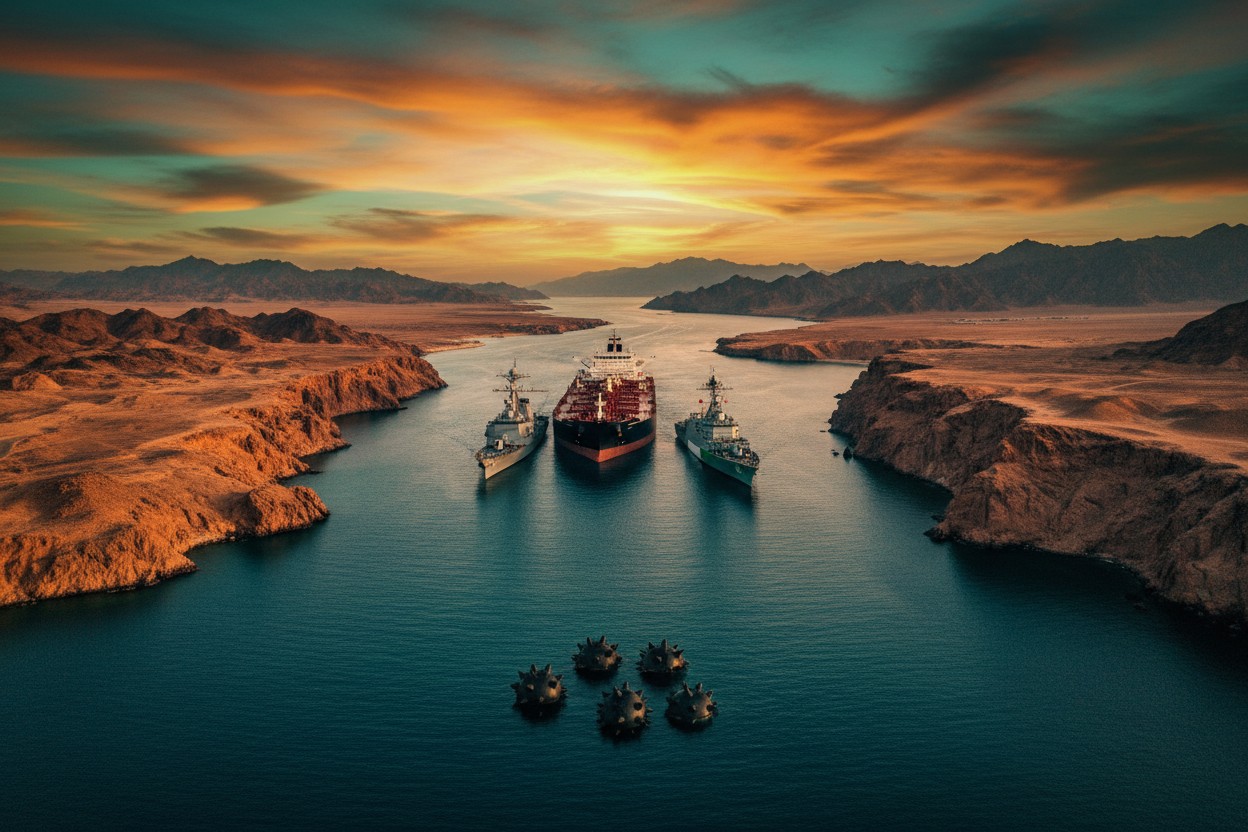
President Donald Trump claimed the Strait of Hormuz as U.S. territory on Tuesday in a Truth Social post, while Tehran said the waterway will remain closed until Washington fulfills its commitments under a memorandum of understanding (MOU). The post included a map of the strategic waterway with the caption “New U.S. Territory,” according to Middle East Eye [1]. The move revived a threat Trump made last week to declare the strait American territory after an Iranian “surrender” that did not occur, the report stated.
The standoff has left global shipping disrupted and drawn competing claims from Washington, Tehran, and regional mediators.
U.S. Declaration and Iranian Conditions
Trump first floated the territorial claim on Aug. 14 during a speech in Garden City, New York. “After we finish defeating Iran, which is being very badly defeated, pretty soon I’ll be declaring the Hormuz Strait a territory of the United States,” Trump said, according to 100PercentFedUp [3]. “Essentially that’s what we have. The blockade ? no ships get through,” he added.
Iranian parliament speaker and chief negotiator Mohammad Bagher Ghalibaf said Tuesday that the strait will remain closed until U.S. commitments are implemented. “Let me state clearly: Until the commitments made by the United States in the memorandum of understanding, including the lifting of the blockade, the release of frozen assets, the lifting of oil sanctions, the end of threats and military operations on all fronts, and other conditions to which America agreed in the memorandum, are implemented, the strait will not be opened,” Ghalibaf said [1].
Trump said in the same Truth Social post that no talks are underway or scheduled, and that the naval blockade remains in full force and effect. The post also said the Hormuz Strait is open and operating and that all water mines had been removed or destroyed, according to NTD [2].
Shipping Traffic and Reported Strike
Commercial traffic through the strait remained at reduced levels on Monday. Preliminary Kpler data recorded six commodity vessels crossing, evenly divided between inbound and outbound traffic, compared with a 10-day average of about 11 [4]. Only three vessels crossed on Saturday and two on Sunday. No supertankers or liquefied natural gas carriers passed through, although Kpler said ships operating without transponders may not appear in the figures [4].
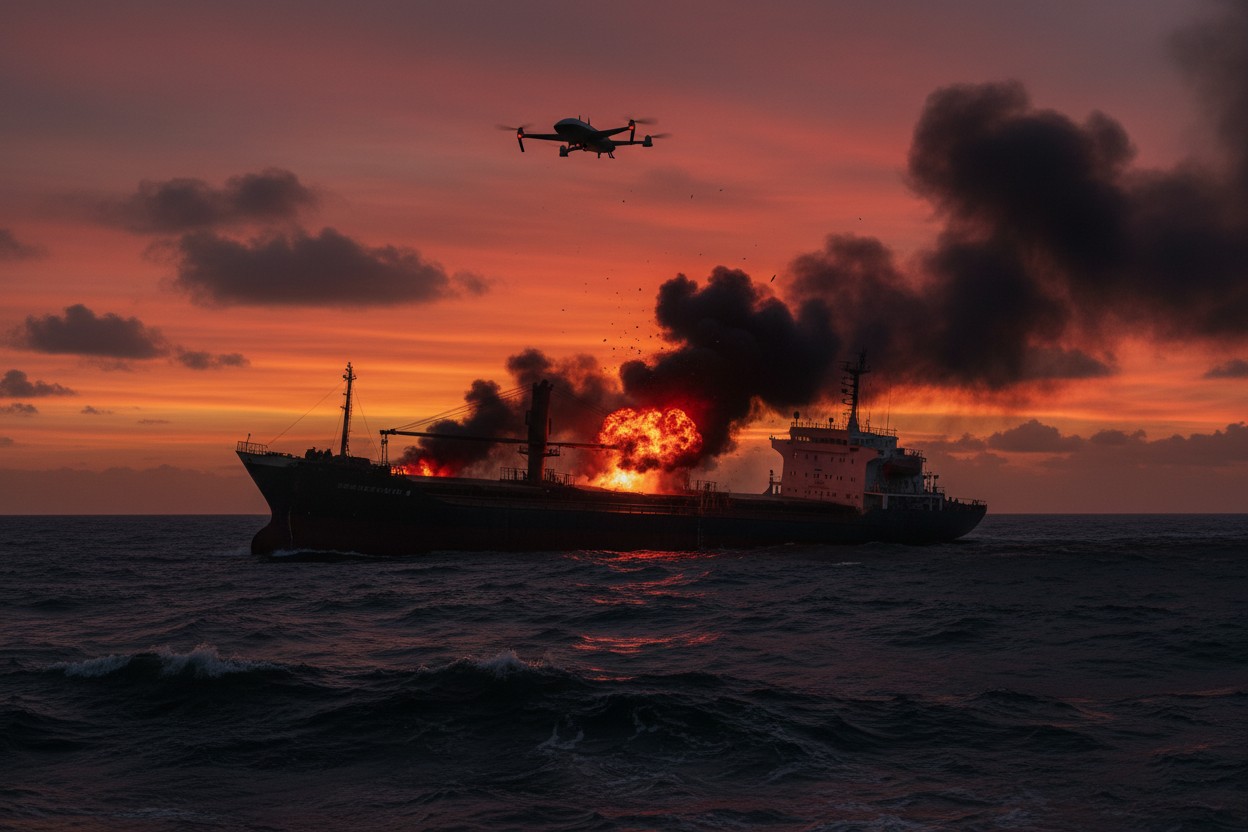
The UK Maritime Trade Operations agency reported Tuesday that a departing vessel was struck by an unknown projectile during an outbound transit of the strait. “The Company Security Officer has reported that the vessel was struck by an unknown projectile while conducting an outbound transit of the Strait of Hormuz,” the agency said. “The impact caused damage to the engine room and resulted in a crew casualty,” it added. The remaining crew were being assisted by the Omani coastguard, according to Zero Hedge [5].
Iran Accuses Israel of Blocking Negotiations
Iranian Foreign Minister Abbas Araghchi accused Israel of working to derail the agreement. “The Zionist regime was and remains the biggest opponent and obstacle to the implementation of the memorandum of understanding,” Araghchi said in comments carried by IRNA and reported by Middle East Eye [1]. “They made every effort to prevent such an agreement from being reached, every effort to make this agreement fail, and every effort to prevent it from being implemented,” he said.
Araghchi said Trump’s demand for Iran’s “unconditional surrender” had collapsed and that Tehran forced Washington to negotiate on Iranian terms. According to the report, he said those who “sought an unconditional surrender, within a short time of the war’s commencement, were begging for negotiations.” “It was us who said we would not accept a ceasefire and continued the war until we reached a point where they accepted a ceasefire and negotiations on Iran’s terms,” he said [4]. Israel is not party to the MOU, according to The Times of Israel [6].
Mediation and Economic Fallout
Qatar said an agreement between Iran and Oman over the Strait of Hormuz would make it easier to resume negotiations to end the war [7]. Iran and Oman, both coastal states bordering the waterway, have agreed on the geographical coordinates of a route, with Iran’s Foreign Ministry saying the joint statement was in its final review stage, according to Zero Hedge [8].
Democratic Senator Chris Murphy said the Trump administration has no current path to get Iran to give up its nuclear program. “It’s crystal clear that there is no current path to get Iran to give up its nuclear program,” Murphy wrote on X [4]. “They know they can get complete sanctions relief and all their frozen money without a single nuclear concession,” he added. China’s refined fuel exports rose 6.7 percent in July, while Iran’s annual inflation reached 66 percent and food and drink prices rose 128.1 percent year on year, according to the same report [4].
The standoff has also produced threats against Oman. Trump said Monday that if Oman “gets in the way” of U.S. efforts, “we’ll bomb the sh*t out of them,” according to Fox News remarks reported by Antiwar.com [9]. In May, Trump warned he would “blow up” Oman if it cooperated with Iran to impose a fee on ships transiting the strait, according to NaturalNews.com [10].
Conclusion
The Strait of Hormuz has been a critical maritime passage for millennia, linking Persian Gulf trade routes to the Indian Ocean, as Lewis Dartnell notes in Origins: How the Earth Shaped Human History [11]. U.S. administrations have long treated Gulf energy routes as strategic priorities; in 1983, President Ronald Reagan signed National Security Decision Directive 114, declaring the United States ready to deter attacks on critical oil infrastructure, according to Robert Bryce’s Gusher of Lies [12].
The current standoff follows U.S. military strikes on Iranian nuclear sites in June 2025, which drew warnings of escalation and regime change [13]. The 60-day negotiation window set by the MOU expired Monday with the two sides further apart than before, according to The Times of Israel [14]. Iran’s top security official, Mohsen Rezaei, said the gap between America’s inability to reopen the strait and its claim to own it is greater than the distance between Washington and the strait [15].
References
- Elis Gjevori. "Trump labels Strait of Hormuz ‘US territory’ as Iran says Israel biggest obstacle to negotiations". Middle East Eye. August 18, 2026.
- NTD. "Trump Says No Talks Are Taking Place With Iran and None Are Scheduled". NTD. August 18, 2026.
- 100PercentFedUp. "President Trump Says He Will Soon Declare New U.S. Territory". 100PercentFedUp. August 14, 2026.
- Middle East Eye. "Trump labels Strait of Hormuz ‘US territory’ as Iran says Israel is biggest obstacle to negotiations". Middle East Eye. August 18, 2026.
- Zero Hedge. "Trump Posts Map Depicting Hormuz As 'New' US Territory, Just After Latest Tanker Attack By Iranians". Zero Hedge. August 18, 2026.
- Times of Israel. "Report: Iran has spent 60-day MOU window getting ready to ‘widen the war’". Times of Israel. August 17, 2026.
- Middle East Eye. "Qatar says Hormuz agreement crucial for US-Iran talks to resume". Middle East Eye. August 18, 2026.
- Zero Hedge. "Iran-Oman Hormuz Route 'Agreed To' As Iran Warns Against US 'Interference'". Zero Hedge. August 5, 2026.
- Antiwar.com. "Trump Threatens To ‘Bomb the S**t’ Out of Oman Over Its Talks With Iran". Antiwar.com. August 17, 2026.
- NaturalNews.com. "Trump Threatens to Blow Up Oman Over Strait of Hormuz Fee". NaturalNews.com. May 28, 2026.
- Lewis Dartnell. "Origins: How the Earth Shaped Human History".
- Robert Bryce. "Gusher of Lies: The Dangerous Delusions of Energy Independence".
- Willow Tohi. "Trumps Iran strikes signal shift to regime change amid calls for caution and retaliation". NaturalNews.com. June 24, 2025.
- Times of Israel. "As 60-day MOU expires, the US and Iran are even further apart than before". Times of Israel. August 17, 2026.
- Middle East Eye. "Iran’s top security official ridicules Trump’s claims over Hormuz Strait". Middle East Eye. August 19, 2026.
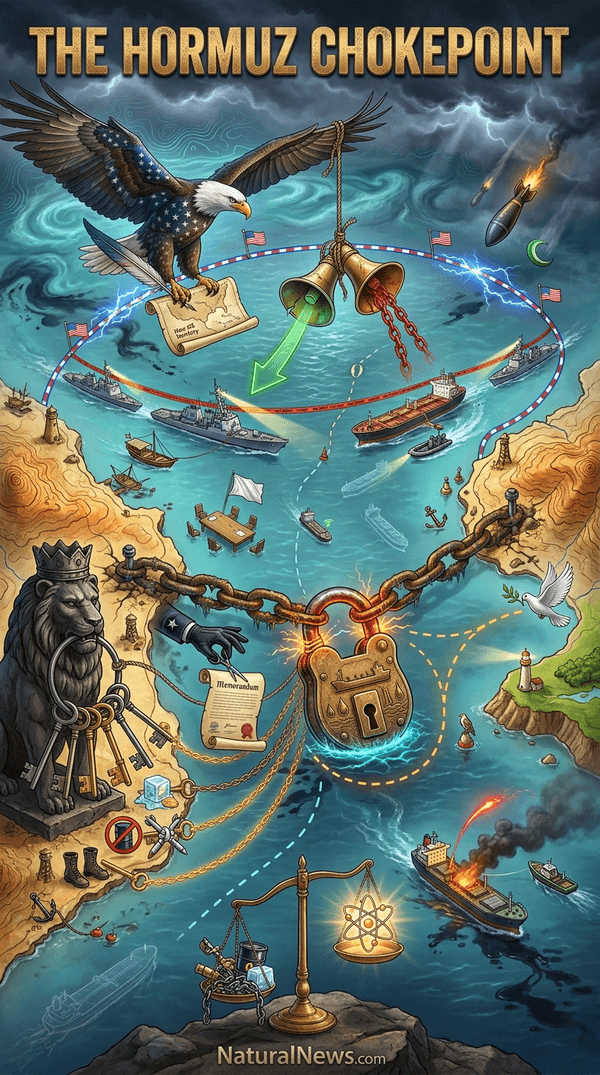
Explainer Infographic







Please contact us for more information.