



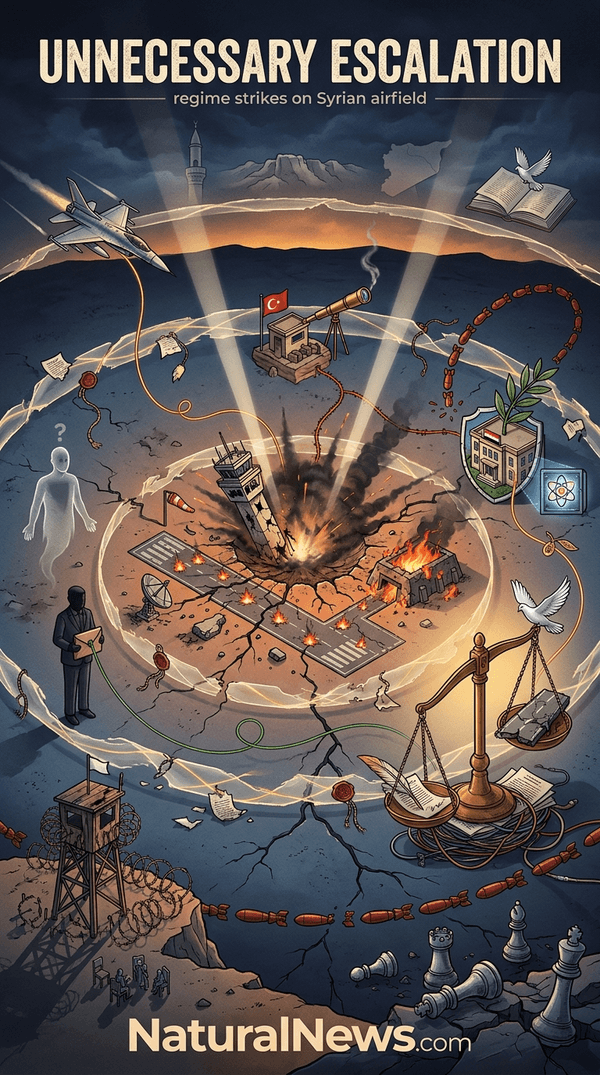
U.S. Special Envoy for Syria Tom Barrack condemned Israeli airstrikes on the Abu al-Duhur military airfield in Idlib province, northwestern Syria, saying the attack was an “unnecessary escalation” that threatens regional stability, according to published statements [1]. Syrian state media reported that eight strikes hit the airfield’s runway and storage facility on Tuesday, with no casualties reported [6][8].
The operation was the first major Israeli strike on Syrian territory in months and occurred against the backdrop of the broader conflict involving Iran, according to the report [7]. The airfield sits near the Turkish border, and the attack drew immediate diplomatic responses from Damascus and Washington [6][1].
U.S. Envoy Issues Rare Rebuke
Barrack said Washington was “deeply concerned” by the strikes, according to his statement on X [1][3]. In that statement, Barrack said the United States continues to believe that restraint and engagement offer the more constructive course, and he encouraged all parties to prioritize logical discourse over further military incidents [3].
The envoy’s comments were a rare pushback against Israel, according to Middle East Eye, which reported that Barrack said Syria did nothing to provoke the attack [2]. Barrack also defended the Damascus government. “The Al-Sharaa government has neither adopted a predatory posture nor maintained proxy forces,” he wrote. “It has, in fact, repeatedly indicated a preference for de-escalation with Israel” [5]. The Syrian Foreign Ministry called the strikes an “unjustified act of aggression” that imperiled regional security, according to statements cited by BBC News [6].
Israeli Position and Intelligence Disclosure
The Israeli government has not officially claimed responsibility for the operation or provided details, according to available records [8]. An unnamed senior Israeli official told Fox News that “highly sensitive intelligence was shared with the United States in advance, at the most senior levels of the various agencies and bodies.” The official added that al-Sharaa “understands that he cannot operate like the previous Syrian regime, which maintained proxy forces,” and said, “It’s possible that he didn’t understand what was going on, or didn’t know.” The official did not provide additional details because of the highly classified nature of the intelligence, according to the report [7].
Israel’s prime minister’s office later said Syria “was on the verge of breaching” a security status quo by permitting Turkish troops to deploy at an airbase near Aleppo, according to a statement cited by Middle East Eye [9].
Strategic Context and Unresolved Questions
Idlib province served as the headquarters of Hay’at Tahrir al-Sham during Syria’s civil war, and the post-Assad ruling faction’s leader, Ahmed al-Sharaa, previously commanded the Nusra Front in the region, according to historical records cited in the report. The report added that no evidence has been presented of Iran-linked militia operations in Idlib since Assad’s departure in December 2024, and it noted that Syria’s Foreign Ministry recently said it intends to keep nuclear material already in the country in its custody, subject to International Atomic Energy Agency monitoring and guarantees. The precise target of the strikes remains unclear, according to the report [7].
The U.S. position on Syria has shifted in recent months. In January, the Trump administration signaled an end to U.S. military support for Syria’s Kurdish-led forces and endorsed the new Damascus government under al-Sharaa, according to reports [12]. Washington has also weighed a full withdrawal as alliances in the country fracture [13].
Israeli troops currently occupy territory in southern Syria beyond the Golan Heights, according to reporting by Middle East Eye [11]. Syria’s place in regional diplomacy has drawn attention for decades; after a visit to Damascus, former President Jimmy Carter said, “If you are going to forget Syria you can forget permanent peace,” according to Douglas Brinkley’s account of Carter’s post-presidency [14].
Aftermath and Regional Implications
Hours after the initial bombardment, reports and video posted on social media indicated secondary explosions at the Abu al-Duhur base, according to eyewitness accounts cited in the report. Syrian authorities said only the runway was struck, though observers cited in the report noted that runways do not typically burn or explode hours after an attack [7].
Barrack warned that the strike carried a “real risk of rapid escalation into a direct military confrontation” with both Syria and Turkey, and he said Turkish forces received no warning that Israeli warplanes were approaching, according to an interview with The Jerusalem Post [10]. Turkey rejected Israeli claims that it posed a threat, saying the allegations aimed to legitimize attacks on Syria’s sovereignty and territorial integrity, according to a statement quoted by Anadolu [4].
The purpose of the strikes and the nature of the target remain unconfirmed, and the United States has urged restraint as regional tensions persist, according to Barrack’s statement [1]. More broadly, Janine R. Wedel writes that when “the old means of restitution no longer work, and it is impossible to hold responsible parties to account, that is a sure sign that the system has moved on” [15].
References
- The Epoch Times. “US Condemns Israeli Strikes on Syrian Airbase as ‘Unnecessary Escalation’”. August 18, 2026.
- Middle East Eye. “Trump envoy ‘deeply concerned’ by Israeli strikes on Syria air base”. August 18, 2026.
- Middle East Eye. “US Syria envoy says Israeli strikes on Syrian base ‘unnecessary escalation’”. August 18, 2026.
- Middle East Eye. “Turkey denies Israeli claims of posing a threat, says Netanyahu seeks to justify Syria strikes”. August 19, 2026.
- Middle East Eye. “Trump envoy ‘deeply concerned’ by Israeli strikes on Syrian air base”. August 19, 2026.
- BBC News. “US condemns ‘unnecessary escalation’ after Israeli airstrikes on Syrian airbase”. August 19, 2026.
- ZeroHedge. “US Issues Rare Condemnation Of Israeli Strikes On Syrian Airbase: ‘Unnecessary Escalation’”. August 18, 2026.
- The Times of Israel. “Damascus blames Israel for overnight airstrikes on military airport in northwest Syria”. August 18, 2026.
- Middle East Eye. “Israel says Syria acceptance of Turkish troops posed ‘threat’”. August 18, 2026.
- Middle East Eye. “US envoy says Israeli attack risked direct confrontation with Turkey”. August 19, 2026.
- Middle East Eye. “Smart borders, military gates and land seizures: How Israel is encroaching in southern Syria”. May 5, 2026.
- Belle Carter. “U.S. Shifts Syria Policy: Ends Support for Kurds, Backs New Damascus Government”. NaturalNews.com. January 21, 2026.
- “A Strategic Retreat: U.S. Weighs Full Syria Exit as Alliances Shift and Prisoners Are Moved”. NaturalNews.com. January 26, 2026.
- Brinkley Douglas. “The unfinished presidency Jimmy Carters journey beyond the White House”.
- Janine R. Wedel. “Unaccountable how elite power brokers corrupt our finances freedom and security”.
Explainer Infographic





Please contact us for more information.