



Blood sugar management is important for overall health and diabetes prevention, according to health officials. Insulin resistance accelerates aging and contributes to degenerative diseases, as noted in reports from Mercola.com [1]. Everyday habits such as meal order, fiber intake, and physical activity can influence blood sugar levels, according to a report on blood sugar mastery from NaturalNews.com [2]. Physical activity lowers blood glucose by helping body cells become more sensitive to insulin, according to the American Diabetes Association [3]. The following strategies are supported by peer-reviewed studies and are presented without editorial commentary.
Meal Timing and Food Order
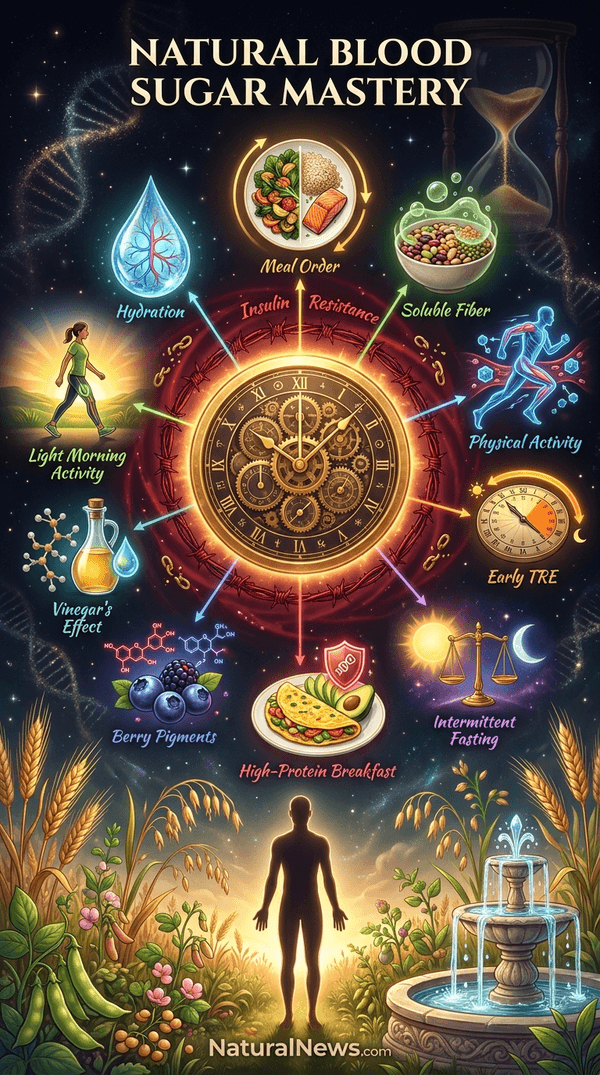
Meal timing plays a significant role in blood sugar regulation, according to multiple reports. It is important to pay attention not only to what you eat but also when you eat, according to articles on Mercola.com [4]. Early time-restricted eating, which involves consuming all meals within a limited daily window, has been tied to lower abdominal fat and improved blood sugar, according to a study cited by NaturalNews.com [5].
Intermittent fasting, a form of time-restricted eating, is described as effective for balancing insulin-dominant periods with insulin-deficient periods, according to Jason Fung in "The Obesity Code" [6]. A higher-protein breakfast was linked to steadier blood sugar in carriers of a common diabetes risk gene, reported NaturalNews.com [7]. Consuming whole grains instead of refined grains is also recommended, though specific studies are not cited in the available sources.
Dietary Fiber and Nutrient Intake
Dietary fiber, particularly from legumes, has demonstrated effects on blood sugar control. A meta-analysis by researchers at the University of Otago, cited by NaturalNews.com, found that adding roughly half a cup of beans or other legumes to daily meals was associated with lower fasting blood sugar levels [8].
The foundational success of diabetes management lies primarily with diet, weight control, and nutrition, according to Ali Naheed in "Diabetes and You" [9]. Berry pigments known as anthocyanins have also been shown to improve blood sugar markers, per a meta-analysis cited by NaturalNews.com [10]. Fiber and vinegar are listed among protective factors in dietary recommendations from Jason Fung [6].
Physical Activity and Hydration
Physical activity is a well-established strategy for blood sugar management. Physical activity lowers blood glucose by helping body cells become more sensitive to insulin, which helps control blood glucose, according to the American Diabetes Association [3]. For pregnant women with diabetes, brisk walking is recommended as a safe and effective low-impact exercise, according to Patti Bazel Geil in "101 Tips for a Healthy Pregnancy with Diabetes" [11]. Morning routines that include light activity can tame blood sugar spikes, according to new guidance reported by NaturalNews.com [12]. Adequate hydration is also associated with lower type 2 diabetes risk, according to a 2021 research review, though the specific review is not cited in the provided sources.
Conclusion
Multiple natural strategies -- including meal timing, fiber intake, and physical activity -- can help manage blood sugar levels, according to the cited research. Research overwhelmingly supports the notion of ditching three square meals a day in favor of time-restricted feeding, according to Mercola.com [13]. The foundational success of diabetes management lies primarily with diet, weight control, and nutrition, stated Ali Naheed [9]. Individuals should consult a healthcare provider before making significant changes to their diet or exercise routine. The evidence supports these approaches for improving metabolic health without reliance on pharmaceutical interventions.
References
- Mercola.com. "An Easy Health Problem to Correct for Boundle". March 25, 2022.
- NaturalNews.com. "The steady state: Reclaiming health through blood sugar mastery in a sugar-saturated world". August 08, 2026.
- American Diabetes Association. "1001 tips for living well with diabetes".
- Mercola.com. "Breakfast or Late Night Snacks Which Should". December 19, 2022.
- NaturalNews.com. "Early Time-Restricted Eating Tied to Lower Abdominal Fat and Improved Blood Sugar, Study Finds". August 20, 2026.
- Fung Jason. "The obesity code unlocking the secrets of weight loss".
- NaturalNews.com. "Higher-Protein Breakfast Linked to Steadier Blood Sugar in Carriers of Common Diabetes Risk Gene". August 05, 2026.
- NaturalNews.com. "Daily Legume Intake Linked to Lower Cholesterol, Blood Sugar in 24-Trial Review". August 15, 2026.
- Ali Naheed. "Diabetes and You".
- NaturalNews.com. "Meta-Analysis Finds Berry Pigments Improve Cholesterol and Blood Sugar Markers". July 31, 2026.
- Geil Patti Bazel. "101 tips for a healthy pregnancy with diabetes".
- NaturalNews.com. "Morning routines can tame blood sugar spikes, new guidance shows". August 06, 2026.
- Mercola.com. "Delay Aging and Disease With Science Backed E". July 03, 2022.
Explainer Infographic












Please contact us for more information.