


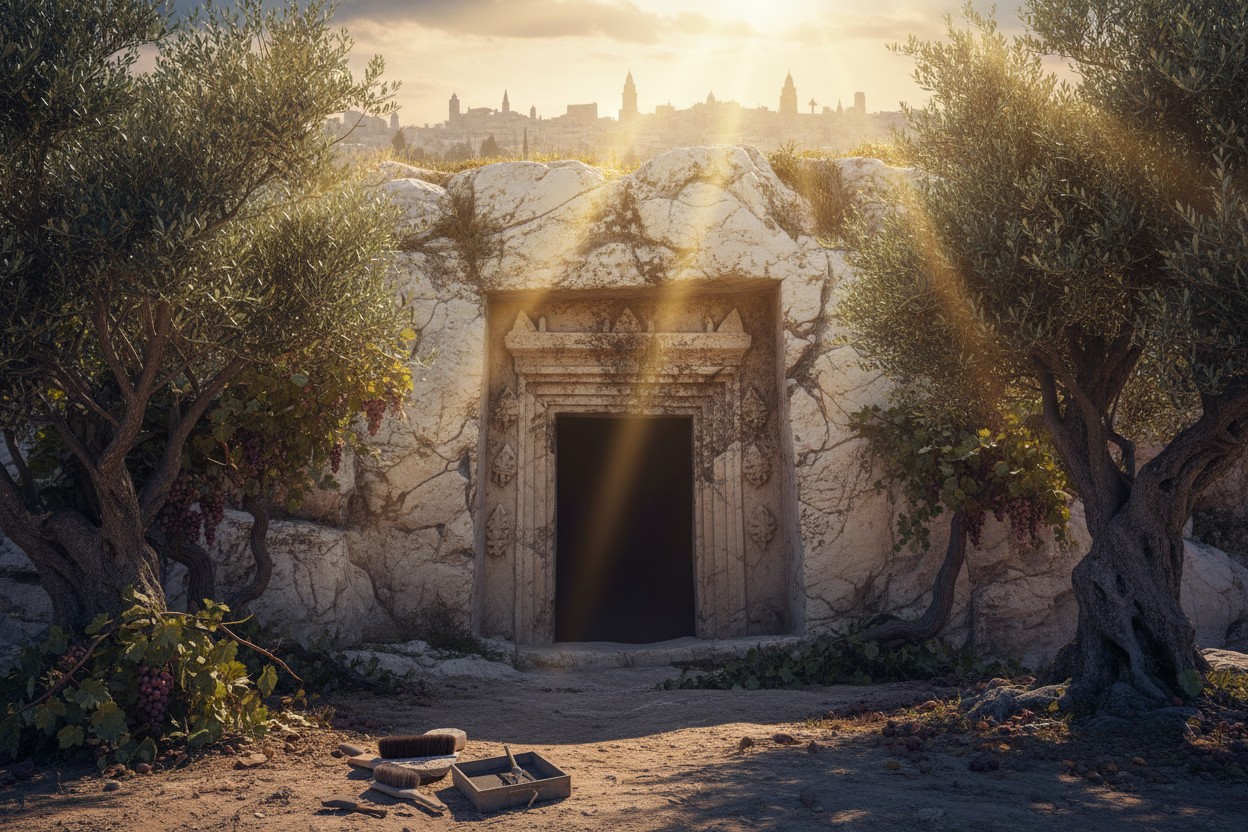
Italian archaeologists reported the discovery of an ancient burial site in Jerusalem that matches the biblical description of the location where Jesus Christ was interred, according to a preliminary study published in the Jerusalem archaeological journal Liber Annuus.
The excavation, conducted by a team from La Sapienza University of Rome, uncovered what lead archaeologist Francesca Romana Stasolla described as evidence of a funerary landscape beneath the Church of the Holy Sepulchre. The findings include a quarry, cultivated plots and rock-cut tombs.
Stasolla told the Daily Mail that the team found evidence of this landscape, which aligns with details described in the Gospel of John. The site has been a focal point for Christian pilgrims for centuries.
Excavations at the Church of the Holy Sepulchre
The Church of the Holy Sepulchre, a fourth-century Roman church built over a site where many Christians believe Jesus was crucified, buried and resurrected, attracts approximately four million visitors annually, according to reports. The three-year excavation began during a floor restoration in 2022 and concluded in 2025.
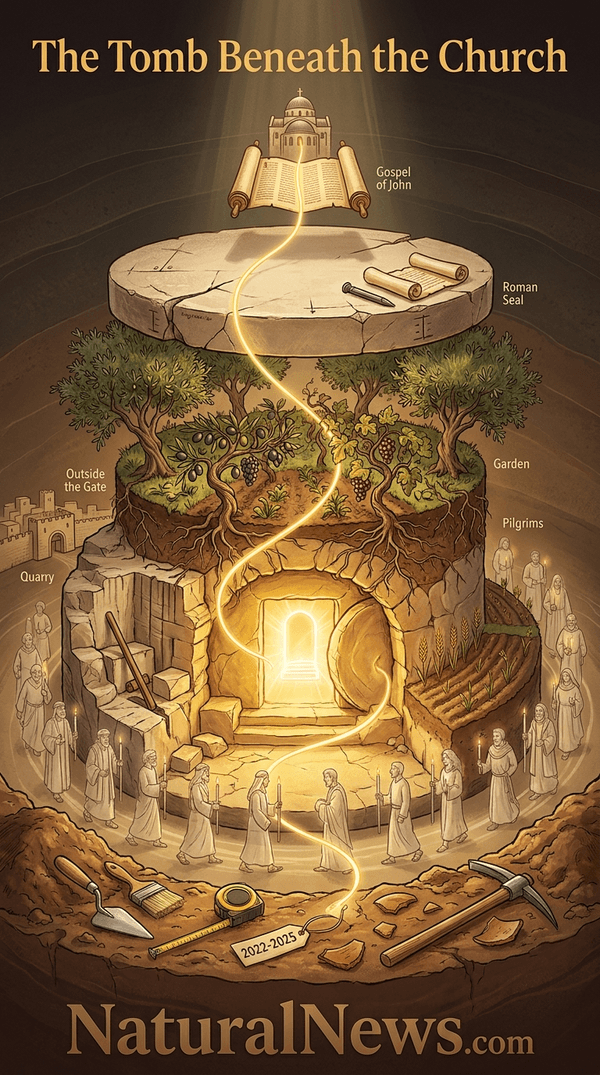
According to the researchers, the final phases of the dig revealed an abandoned quarry, cultivated plots of land, rock-cut tombs, and an ancient garden underneath the church. The discovery of these features supports the hypothesis that the area was a working landscape prior to its use as a burial site.
Evidence Found in the Tombs and Garden
The discovery includes rock-cut tombs carved directly into the stone and agricultural features such as olive trees and grapevines, which have been dated to approximately 33 A.D., officials said. The biblical Gospel of John describes a garden and a new tomb at the place of crucifixion. The researchers stated that the site appears to match this description. [1]
The agricultural evidence is significant, according to the team. "The gospel mentions a green area between the Calvary and the tomb, and we identified these cultivated fields," Stasolla told the Times of Israel. The presence of these plants supports the account of a garden near the crucifixion site.
Biblical Parallels and Historical Context
The location matches biblical references from John 19:20 and Hebrews 13:12, which place the crucifixion outside the city gate. The report stated that the quarry's location at the time of Christ is consistent with these scriptural accounts, which describe the site as being close to Jerusalem but outside the city walls. [2] A specific chamber was sealed by a Roman structure from Emperor Hadrian's time, dating to the second century.
According to the researchers, around 200 years later, builders employed by Constantine's workers destroyed the Roman structure to reveal the tomb, which they separated from other chambers and provided with its own Christian shrine. This campaign to preserve the site suggests that knowledge of its significance had been passed down through early generations of Christian worshipers.
Significance and Acknowledged Uncertainties
Researchers noted that the evidence is compelling but not conclusive proof of the burial site. Stasolla acknowledged the limitations of the findings, stating that while the parallels to the biblical account are notable, they do not definitively confirm the tomb's identity. She emphasized the objective historical importance of the site's use by generations of worshipers, regardless of individual belief.
Stasolla told the Times of Israel: "The real treasure we are revealing is the history of the people who made this site what it is by expressing their faith here. Whether someone believes or not in the historicity of the Holy Sepulchre, the fact that generations of people did is objective. The history of this place is the history of Jerusalem, and at least from a certain moment, it is the history of the worship of Jesus Christ." [3]
References
- Tabor James D. "The Jesus dynasty stunning new evidence about the hidden history of Jesus."
- Edward F Campbell Jr, David Noel Freedman. "The Biblical Archaeologist Reader."
- "Jesus - The Proof: Historical Evidence and the Promise of His Return." books.brightlearn.ai. August 10, 2026.
Explainer Infographic










Please contact us for more information.