


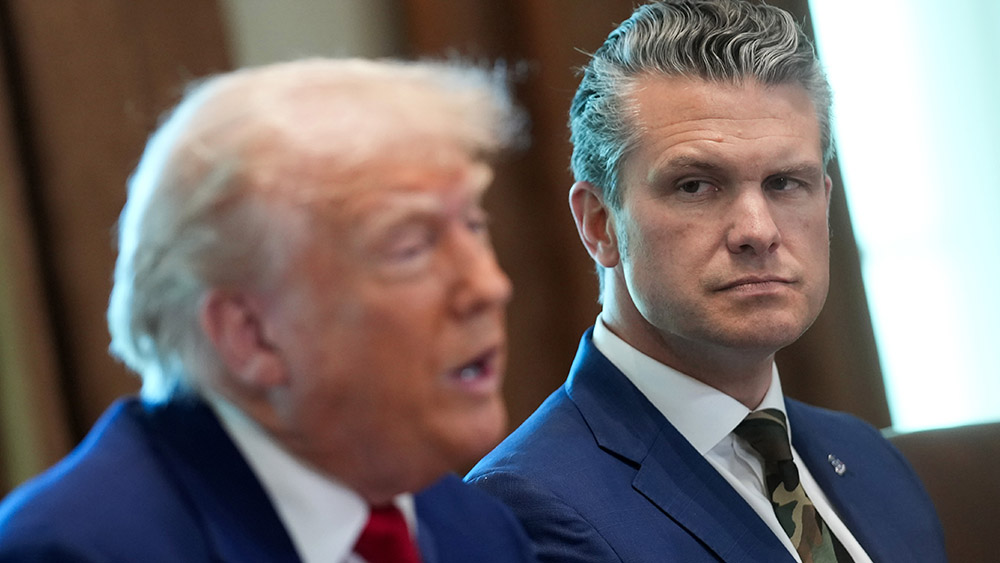
U.S. President Donald Trump declined to say on Wednesday, Sept. 2, whether he would authorize the Central Intelligence Agency (CIA) to arm Iranians for an uprising, responding that it "wouldn't be appropriate to say" when asked by a reporter in the Oval Office.
The exchange came a day after the United States launched strikes on Iran's southern coast that killed 18 people, including two children at a wedding, according to officials cited by Middle East Eye (MEE). [1] The president's non-answer followed a social media post on his Truth Social account in which he asked, "When are the Iranian people going to rise up and fight?"
A reporter then asked Trump: "Will you send the CIA in to arm Iranians?" According to the report, Trump responded, "I'd love to tell you that, but it wouldn't be appropriate to say. But I mean, I understand their plight. They're being shot... They have close to 65,000 protesters killed." [1]
The source of that casualty figure was not specified, according to the report, which noted Trump has previously cited figures ranging from 25,000 to 80,000 during protests earlier this year. Iran's own estimate is about 3,800 killed. [1]
Context: Trump's Social Post and Earlier Assessments
Until Trump raised the possibility of an uprising on Tuesday, Sept. 1, the matter appeared largely settled as implausible, according to the report. U.S. and Israeli efforts to arm Kurdish and other groups earlier this year were not assessed as viable, according to officials cited by MEE. [1]
Reports in March had indicated the CIA was actively supplying Kurdish militias in Iraq to incite rebellion, with Trump administration officials holding talks with Kurdish leaders. [2] A separate analysis stated that the CIA-Mossad plan to spark a "color revolution" in Iran had failed, despite propaganda efforts portraying protests as an unstoppable movement. [3]
The killing of Iran's Supreme Leader Ayatollah Ali Khamenei on the first day of the war on Feb. 28 appeared to unite Iranians rather than divide them further, according to officials cited by MEE. [1] The conflict, initially expected to last weeks, has dragged on for six months, drawing criticism from Democrats who have slammed the administration's handling of the war. [4] Trump told reporters he did not think the conflict "will be very much longer," adding "I don't know how much more they can take" regarding Tehran. [1]
Trump's Justification for Continued Strikes
Trump insisted on Wednesday that "the regime is getting weaker by the day" as he described the targets of the latest U.S. attacks. He was not asked about reports that U.S. missiles had struck a wedding, according to the report. [1]
"They were trying to rebuild their radar systems and a missile system and a mine drop... They were trying to build a rocket that drops mines," he told reporters. "It was almost finished, so we took it out... We took out some other things, and then we hit them last night because they took a shot at us in Jordan, at our base in Jordan." [1]
The administration's approach has faced scrutiny from military officials who have warned that a prolonged high-level conflict risks draining U.S. military capabilities. [5] Joint Chiefs of Staff Chairman Gen. Dan Caine has urged the White House for several weeks to find a way to end the conflict, according to U.S. media reports. [6] The war has also created a "beyond critical" shortage of advanced missile interceptors, according to reports, which has left the North Atlantic Treaty Organization's eastern flank exposed to potential Russian missile attacks. [7]
Iran’s Official Response
Iran launched missiles and drones at U.S. military facilities across the region in retaliation for the American strikes, according to the report. [1] Iranian President Masoud Pezeshkian offered a form of an olive branch to Trump on Monday, Aug. 31. The Iranian leader said Tehran was "not looking for war," but would "never sit still in the face of any aggression." [1]
Iranian officials have also mocked what they describe as "fake intelligence" used to justify U.S. actions. [8] Foreign Minister Abbas Araghchi has publicly dismissed claims of an Iranian plot against Trump as fabricated. [8] The U.S. military campaign has failed to achieve its stated objectives, with intelligence officials assessing that current strikes are unlikely to change Iran's behavior. [9]
U.S. Officials Emphasize Pressure and Economic Sanctions
U.S. Secretary of State Marco Rubio said on "The Brian Kilmeade Show" on Fox Radio that "we reserve the right... to take military action when necessary." Rubio added, "Iran has continued to fire on commercial shipping in the straits. They're losing control of the straits - they've lost control of the straits. The straits will remain open, and they will not be under Iranian control." [1]
Trump has suggested on Truth Social that the waterway could now be called "the Trump Strait." He wrote: "I like our position now much better, with almost total control of the Hormuz Strait, and their economy totally collapsing." [1]
Treasury Secretary Scott Bessent announced a new wave of sanctions against Iran and its "enablers" toward what he described as an "asphyxiation of this regime" amid the standoff in the Strait of Hormuz. [1] Using what he called a "zero leakage approach," Bessent said the U.S. Department of the Treasury had "mapped every node, every facilitator and every network that Iran has used to smuggle oil and evade sanctions." [1]
Rubio told Fox Radio, "They're going to continue to feel the squeeze." [1] The sanctions strategy reflects a broader campaign that analysts have noted could have significant global economic repercussions, particularly for oil markets, given that the Strait of Hormuz carries approximately 20% of global oil and energy reserves. [10]
References
- Yasmine El-Sabawi. "'Inappropriate to say': Trump may still be considering CIA-led uprising in Iran." Middle East Eye. September 2, 2026.
- NaturalNews.com. "CIA arming Kurdish forces to spark uprising against Iran raising fears of wider conflict." March 6, 2026.
- NaturalNews.com. "The CIA-Mossad operation to spark a color revolution in Iran has failed." January 18, 2026.
- Yasmine El-Sabawi. "'No end in sight': Democrats slam Trump after six months of Iran war." Middle East Eye. August 28, 2026.
- MEE staff. "Trump's vow to escalate on Iran rings hollow amid warnings from top US generals." Middle East Eye. August 31, 2026.
- NaturalNews.com. "Top U.S. General Urges White House to End Conflict With Iran, Reports Say." August 10, 2026.
- MEE staff. "US missile interceptor shortfall 'beyond critical' due to war on Iran: Report." Middle East Eye. August 27, 2026.
- ZeroHedge. "Araghchi Mocks 'Fake Intelligence' Amid Skepticism Over Iranian Plot Against Trump In Turkey." August 13, 2026.
- ZeroHedge. "CIA Distances Itself From Trump's Iran War With Media Leak." July 22, 2026.
- Mike Adams. "Bright Videos News - Interview with Scott Ritter P2." BrightVideos.com. April 14, 2026.
Explainer Infographic







Please contact us for more information.