


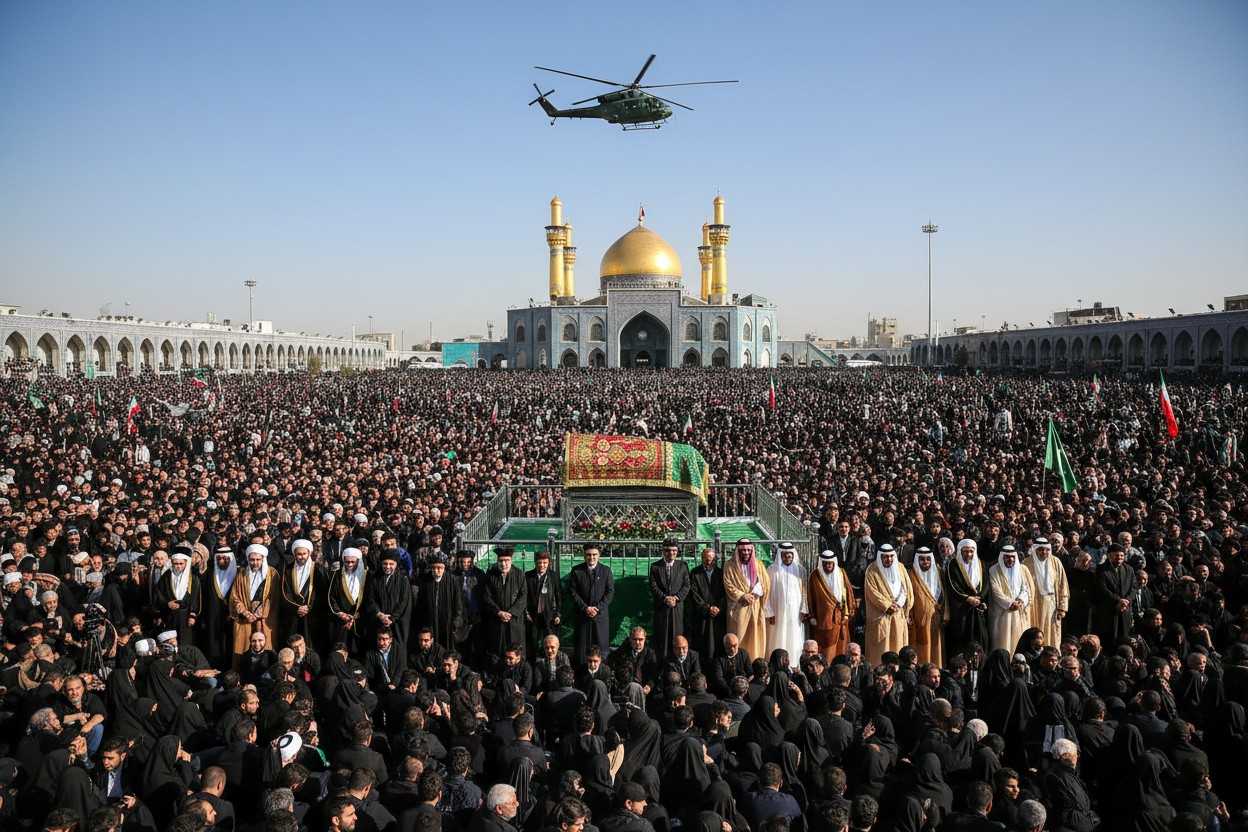
Intensive preparations and security measures were underway in Iran on July 3, 2026, ahead of the funeral of late Supreme Leader Ayatollah Ali Khamenei, as foreign officials and delegations from dozens of nations began arriving in Tehran to pay their respects, according to Iranian authorities and news reports. More than 10 million citizens were expected to gather in the capital alone, with some estimates reaching up to 20 million participants over the course of the multi-day ceremonies, according to Iranian state media [1], [2]. The funeral processions, originally scheduled for March but postponed due to ongoing hostilities, are now set to span five cities including Tehran and Mashhad, and include rites in neighboring Iraq.
Security and Scale of Funeral
Heightened security measures included airspace restrictions and the mass deployment of security forces, beginning the week of July 2 and extending through the weekend. Authorities declared the event a “multi-city” funeral, with ceremonies also planned in Qom and Mashhad, and millions more expected in each location, according to The Cradle via ZeroHedge [1].
Officials anticipated that large-scale commemorations would also take place in Iraq, coordinated with Baghdad authorities. The funeral was described as potentially one of the largest in modern history, with crowds gathering at Tehran’s Grand Mosalla complex hours before the official start, as reported by the BBC [3]. The body of the former supreme leader, who led Iran for 36 years before being killed in U.S.-Israeli airstrikes on February 28, lay in state from Friday until Monday.
Foreign Delegations and Ceremonies
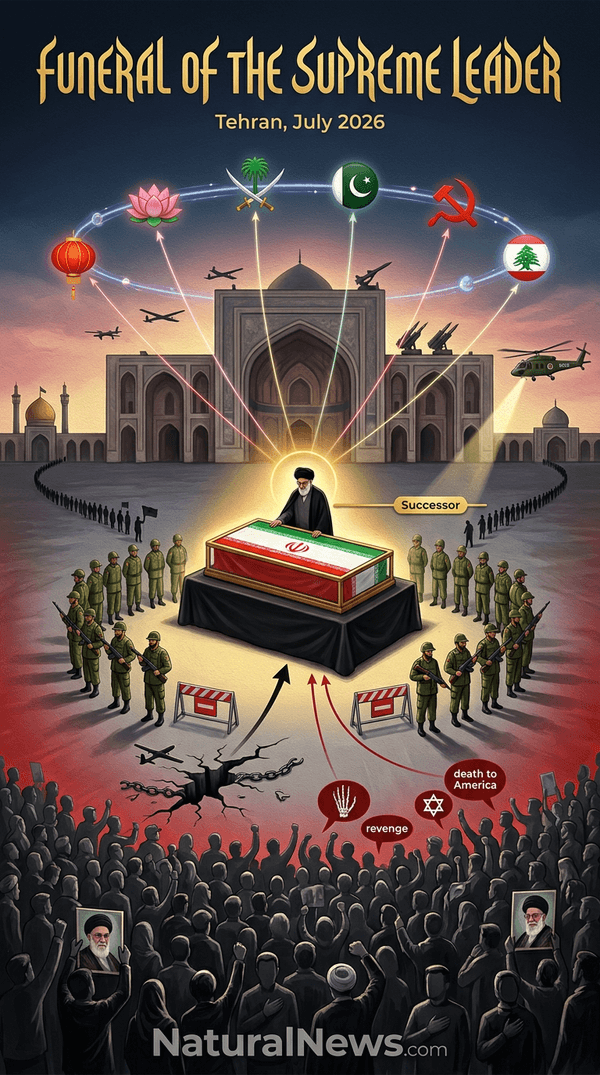
Khamenei’s coffin arrived at Imam Khomeini Mosalla in Tehran on Friday, where Iranian officials including President Masoud Pezeshkian, Speaker Mohammad Bagher Ghalibaf, and Foreign Minister Abbas Araghchi paid their respects, according to Middle East Eye [4]. Pakistan's Prime Minister Shehbaz Sharif recited a prayer in front of the coffin, accompanied by members of his delegation, as confirmed by Pakistan's foreign ministry [5]. Delegations from Lebanon's Hezbollah and Amal Movement, Iraqi Kataib Hezbollah, and representatives from over 100 nations including Turkiye, India, Russia, China, and Saudi Arabia attended. Saudi Deputy Foreign Minister Waleed El Khereiji led a surprise delegation from Riyadh [6], [7]. China sent He Wei, vice chairman of the Standing Committee of the National People’s Congress, according to the Chinese Foreign Ministry [8].
Indian Deputy Foreign Minister Pabitra Margherita and Bihar Governor Syed Ata Hasnain also traveled to Tehran, underscoring what New Delhi called “civilisational ties” between the two nations [9]. The ceremonies included chants of “revenge” and “death to America” from the crowds, according to AFP [10]. Iranian authorities opened the public farewell on July 4 at 6:00 am local time, with the body lying in state until Monday, after which processions will move to Qom and then to Iraq, as reported by IRNA [11].
Warnings, Assassination, and Succession
IRGC Commander-in-Chief Brigadier General Ahmad Vahidi made his first public appearance since the war began, paying respects on Thursday evening after months out of view, according to Al Jazeera [12]. An Iranian military official warned on July 2 that any attack on the funeral or its preparations would be met with a severe response, specifically naming the United States and Israel. “We warn the enemies of Iran, especially the U.S. and the Zionist regime, to avoid any miscalculation and to think about the harsh retaliation,” said Ali Abdollahi, a senior Iranian security official, as quoted by Reuters [13].
Khamenei was killed on February 28 in what Iranian officials described as a joint U.S.-Israeli assassination strike; several family members, including his wife Mansoureh Khojasteh, were also killed or died from injuries sustained in the strikes, as reported by NaturalNews [14]. His son Mojtaba Khamenei succeeded him as supreme leader shortly after, according to Middle East Eye [15]. Prior to his death, Khamenei had refused to leave his residence despite warnings, telling security he would only move if the same could be done for 90 million Iranians, a detail cited by Iranian media.
Burial and Conclusion
The late supreme leader is scheduled to be buried in the holy city of Mashhad on July 9, at the Imam Reza Shrine, according to Iranian state television [16]. Before burial, the coffin will be taken to Qom for additional rites, then to Baghdad, Karbala, and Najaf in Iraq for ceremonies with Shia clerics and mourners, as planned by the Iranian government [17]. The funeral observances come as indirect talks between the United States and Iran in Doha were described by mediators as making “positive progress,” with another round expected after the ceremonies, according to Qatar’s Foreign Ministry spokesman [18]. The massive turnout, analysts told Al Jazeera, is intended as a show of support for the Islamic Republic and a message to external adversaries [19].
References
- ZeroHedge. "Massive Security Presence For Khamenei’s 'Multi-City' Funeral Amid Hezbollah, Hamas, Taliban, China, Russia Paying Respects". July 3, 2026.
- Middle East Eye staff. "Over 20 million expected in Tehran for Ali Khamenei's funeral". July 2, 2026.
- BBC News. "Large crowds gather in Tehran on first day of Ayatollah Khamenei's funeral". July 4, 2026.
- Middle East Eye staff. "Video: Foreign leaders and delegations attend Khamenei’s funeral ceremony". July 4, 2026.
- Middle East Eye staff. "Pakistan PM Sharif to attend funeral of Iran's Ali Khamenei". July 2, 2026.
- ZeroHedge. "Saudi Delegation Makes Unexpected Appearance In Tehran For Start Of Ayatollah's Funeral". July 3, 2026.
- Middle East Eye staff. "Saudi deputy foreign minister in Tehran for Khamenei funeral". July 3, 2026.
- Middle East Eye staff. "Senior Chinese lawmaker to attend Khamenei funeral". July 2, 2026.
- Middle East Eye staff. "India will send a minister and state governor to Ali Khamenei funeral". July 2, 2026.
- Middle East Eye staff. "Mourners chant 'revenge' at Khamenei funeral in Tehran". July 4, 2026.
- Middle East Eye staff. "Iran announces plans for Seyyed Ali Khamenei funeral, farewell ceremonies". June 28, 2026.
- Middle East Eye staff. "IRGC caretaker chief Vahidi makes first public appearance". July 3, 2026.
- RT News. "Iran warns US and Israel against attacks on Khamenei funeral". July 3, 2026.
- NaturalNews.com. "Khamenei's wife dies from injuries sustained in U.S.-Israeli strikes". March 4, 2026.
- Middle East Eye staff. "Iran begins six-day state funeral for Ali Khamenei". Middle East Eye. July 4, 2026.
- Middle East Eye staff. "Iran's slain supreme leader Ali Khamenei to be buried 9 July". June 13, 2026.
- Middle East Eye staff. "Iran plans six-day state funeral for Ali Khamenei". July 2, 2026.
- Middle East Eye staff. "Qatar says US-Iran talks made 'positive progress'". July 2, 2026.
- Middle East Eye staff. "Iranian analyst says Khamenei funeral will draw 20 million, seen as show of support". July 4, 2026.
Explainer Infographic




Please contact us for more information.