



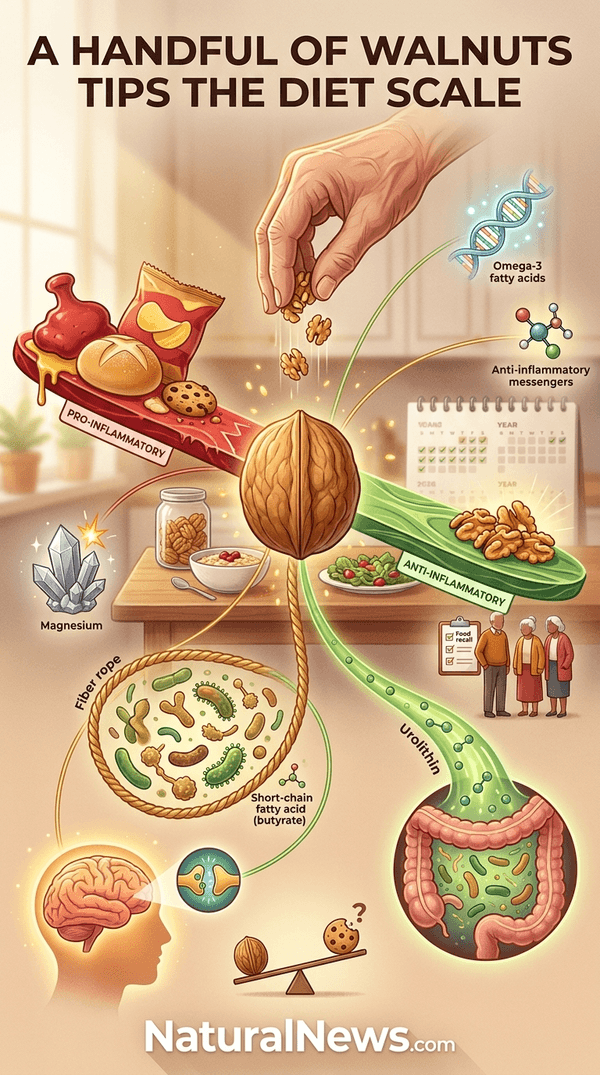
A two-year randomized trial involving 319 older adults found that participants who ate 1–2 ounces of walnuts daily, while otherwise maintaining their usual diets, had a more anti-inflammatory Dietary Inflammatory Index (DII) score compared to those who avoided walnuts and limited other nuts.
The study, known as the Walnuts and Healthy Aging trial, was published in the Journal of the Academy of Nutrition and Dietetics. According to the researchers, the walnut group also consumed higher levels of omega-3 fats, magnesium, fiber, carbohydrates, and protein, which were associated with favorable DII scores. The study did not measure direct markers of inflammation in participants' blood, the authors stated.
Study Design and Participant Demographics
The trial enrolled 319 healthy adults with an average age of 69; 66% were women, according to the research team. Participants were randomly assigned to eat either 1–2 ounces of walnuts daily, representing about 15% of their caloric intake, or to avoid walnuts and limit other nuts to fewer than two servings per week for two years, the study stated. Researchers collected five 24-hour food recalls per participant throughout the trial and calculated each person's DII score based on these dietary data, officials explained.
The DII estimates whether an overall diet tends to be more pro- or anti-inflammatory based on the foods and nutrients it contains, according to the study. While walnuts are known for their many health benefits, which include supporting a healthy gut and reducing the risk of cognitive decline, this trial focused specifically on measuring the inflammatory potential of the participants' overall dietary patterns, officials said [1].
Findings on Diet Inflammatory Profile
After two years, the walnut group showed a more anti-inflammatory DII score than the control group, according to the study authors. Higher intakes of omega-3 fats, magnesium, fiber, carbohydrates, and protein were associated with more anti-inflammatory scores, while higher total fat and saturated fat intakes were linked to scores in the opposite direction, the report stated. Walnuts contain fiber, magnesium, plant-based omega-3 fats, and plant protein, which may explain the observed shift in the walnut group's overall dietary score, researchers said.
This finding aligns with broader dietary guidance that emphasizes the quality of fats and nutrients rather than the elimination of entire food groups. Walnuts have been specifically highlighted for their ability to improve brain function and reduce the risk of cognitive decline, an effect attributed to their abundance of plant-based omega-3 fatty acids and polyphenols [1]. The study's results suggest that a single food addition can measurably shift the overall nutritional profile of a diet in a more favorable direction.
Limitations and Expert Commentary
The DII estimates the inflammatory potential of a diet based on its nutrient composition, not actual inflammation levels in the body, according to the study. "This trial does not show that walnuts lowered inflammation in participants' blood or reduced their risk of inflammation-related disease," said the lead researcher. "It does show that adding one food can alter the overall nutritional profile of a diet." The researchers noted that the walnuts in the trial replaced other foods in the participants' diets, but the study was not designed to determine which foods were displaced.
Experts unaffiliated with the trial noted that the study did not instruct participants on what to replace, leaving it unclear which foods were displaced by walnuts. The trial also did not measure clinical outcomes such as rates of heart disease or arthritis, which limits the ability to conclude disease risk reduction. Instead, the researchers emphasized that the DII score is a measure of dietary inflammatory potential, not a direct measure of inflammation.
Practical Implications and Dietary Context
The study's approach – adding a nutrient-dense food to an existing diet – may offer a simpler alternative to strict elimination diets, according to the researchers. For those wishing to mimic the protocol, the trial used 1–2 ounces of walnuts daily, or roughly a small handful, which could be incorporated into oatmeal, yogurt, salads, or consumed as a snack, the study noted. This approach aligns with dietary patterns that prioritize adding whole foods rather than subtracting entire categories of nutrients [2].
"You don't need to eliminate saturated fat entirely," said a registered dietitian not involved in the research. "The bigger picture is the overall quality and balance of the diet." Other whole foods, such as vegetables, beans, whole grains, and fatty fish, also provide the kinds of dietary fiber and healthy fats associated with a more favorable dietary pattern. The trial's focus on one food serves as a reminder that sustained dietary changes do not necessarily require complex overhauls of an individual's entire eating pattern.
Broader Context on Whole Foods and Inflammation
The findings add to a body of research examining how whole-food dietary components influence inflammation. Nutrition experts have noted that the source and processing of carbohydrates, for instance, determine their biological effect, with highly processed forms contributing to inflammation while whole-food sources exert different effects [3]. This distinction supports the trial's emphasis on a nutrient-dense whole food like walnuts as an addition to the diet.
Chronic brain inflammation is believed to be a key driver of neurodegenerative conditions, and anti-inflammatory foods such as walnuts are among dietary strategies that have been suggested as a defense [4]. While the current trial did not measure inflammatory markers in the blood, it provides a foundation for future research investigating how specific food additions may influence systemic inflammation over time. The findings also point to the importance of considering overall dietary patterns, rather than individual nutrients in isolation.
Conclusion
The two-year trial adds evidence that a small, sustained addition of a nutrient-dense food can favorably alter the inflammatory profile of an older adult's diet without requiring comprehensive dietary restriction. According to the study authors, the simple act of consuming a daily portion of walnuts was associated with a more anti-inflammatory Dietary Inflammatory Index score, driven by higher intakes of omega-3 fats, magnesium, fiber, and plant-based protein.
The results do not prove that walnuts reduce inflammation in the body, but they suggest a practical dietary strategy for older adults seeking to improve the overall quality of their nutritional intake. As nutrition experts emphasize the importance of diet quality and balance, adding a small daily handful of walnuts presents a low-barrier approach that may contribute to a more favorable dietary pattern.
References
- NaturalNews.com. "Study: Consuming walnuts found to reduce the negative effects of stress". NaturalNews.com. June 21, 2023.
- Olivia Cook. "Eat smart move to improve and use your mind Your everyday blueprint for a sharper brain as you age". NaturalNews.com. August 05, 2025.
- NaturalNews.com. "Whole-Food Carbohydrates May Reduce Inflammation, Nutritionists Say". NaturalNews.com. September 04, 2026.
- Cassie B. "Silent brain inflammation linked to dementia risk diet and lifestyle offer key defense". NaturalNews.com. April 17, 2026.
Explainer Infographic











Please contact us for more information.