


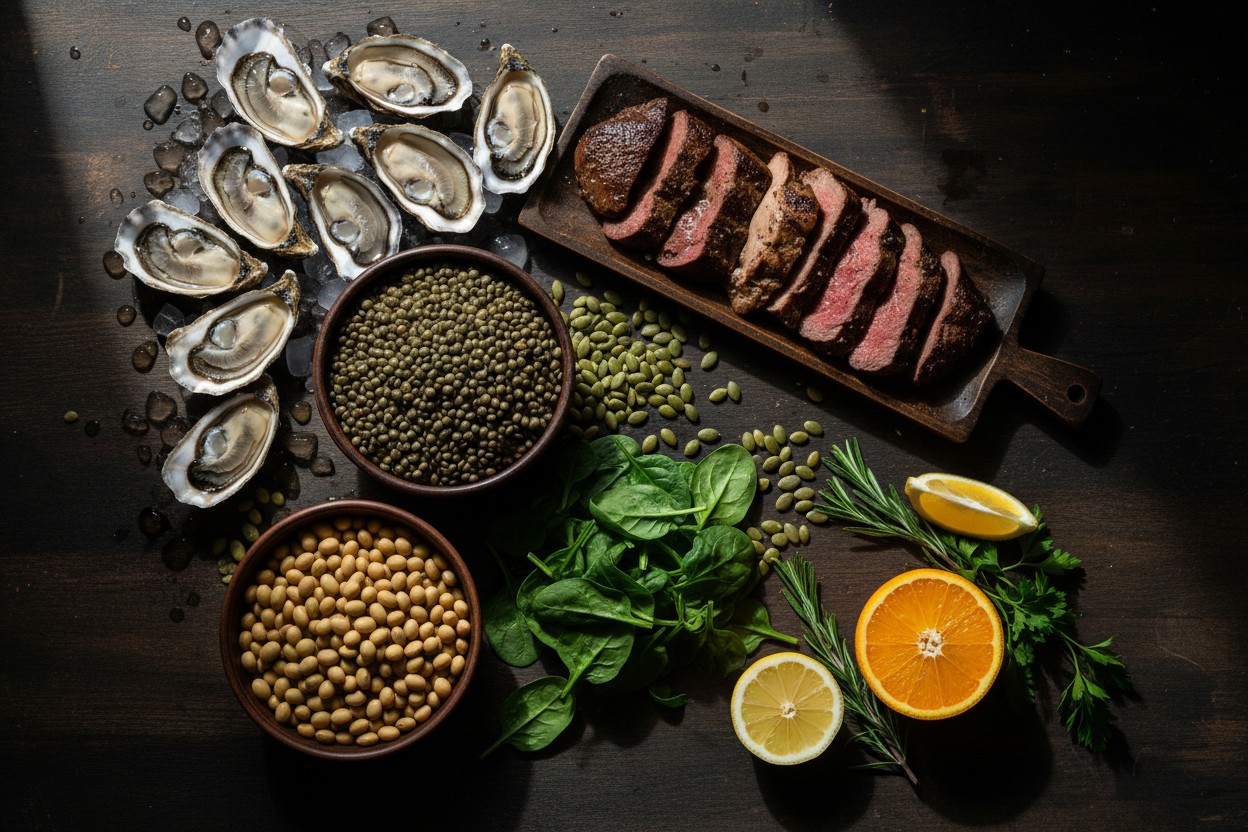
Adult iron requirements range from 8 to 18 milligrams per day, depending on age and sex, according to the National Institutes of Health Office of Dietary Supplements. Officials state that dietary sources can help meet these requirements without reliance on supplements. Standard food composition databases maintained by the U.S. Department of Agriculture (USDA) list seven foods -- oysters, chicken liver, beef liver, soybeans, pumpkin seeds, lentils, and spinach -- as providing significant amounts of iron per standard serving.
Iron deficiency remains a widespread concern, particularly among women and girls of reproductive age, according to reports from NaturalNews.com. The condition is frequently missed by standard anemia screening tests, with ferritin measurement described as the most sensitive diagnostic test for iron deficiency [1]. Reports state that iron deficiency produces symptoms including fatigue, dizziness, pale skin, and brittle nails [2].
Iron Requirements and Dietary Options
The National Institutes of Health Office of Dietary Supplements defines daily iron needs based on population groups, with adult men typically requiring 8 milligrams and premenopausal women requiring 18 milligrams per day. According to USDA FoodData Central listings, specific animal and plant foods provide measurable quantities of this mineral when consumed in standard serving sizes [3].
Data from the USDA indicate that eight specific vegetables provide over 19 percent of the daily value for iron per cooked cup serving [3]. The mineral operates mainly in synthesizing hemoglobin and myoglobin and in the action of the immune system, according to Wardlaw's Contemporary Nutrition [4]. Women are described as being at the highest risk for developing iron deficiency, which decreases blood hemoglobin and hematocrit, the same source states [4].
Heme Iron From Seafood and Organ Meats
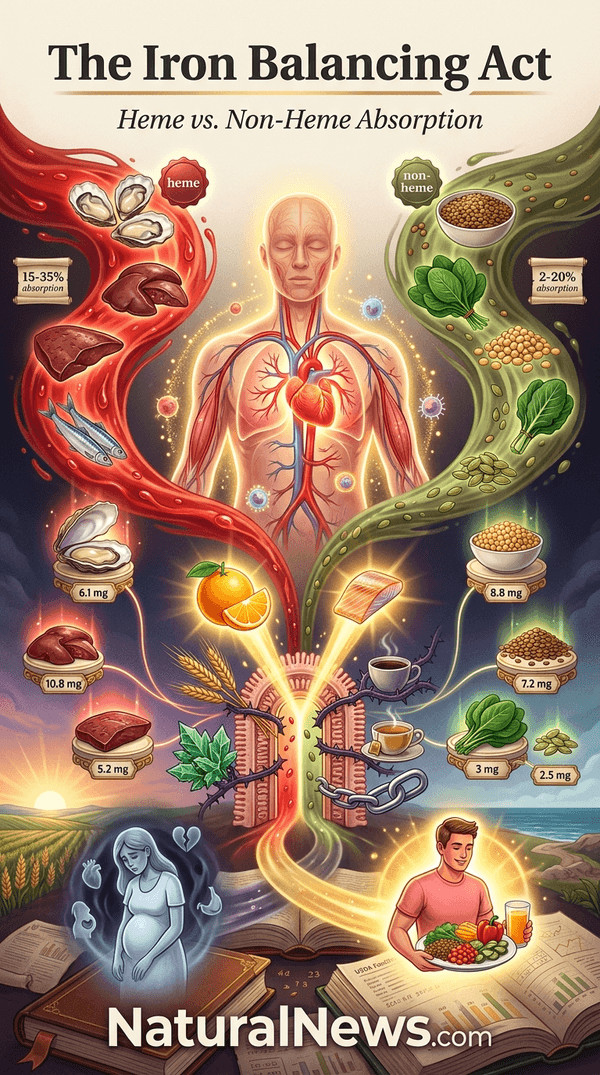
Heme iron, found in animal foods, is more bioavailable than plant-based iron, according to research cited in nutrition texts. Wardlaw's Contemporary Nutrition states that heme iron from animal sources is better absorbed than the nonheme iron obtained primarily from plant sources [4]. The Art of Nutritional Cooking reports that heme iron is about 15 to 30 percent assimilated, with half the iron in meat, poultry, and fish present in heme form [5].
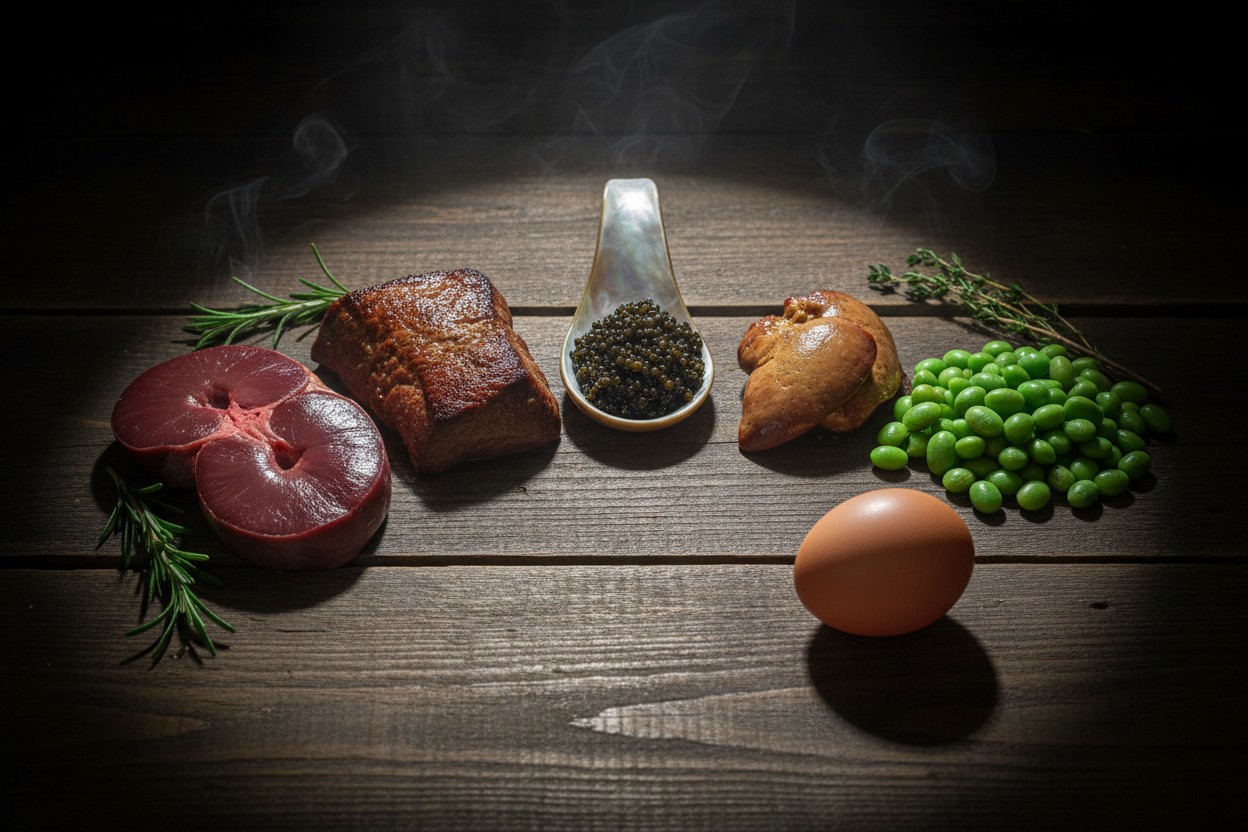
USDA FoodData Central data show cooked wild oysters provide 6.1 milligrams of iron per 3-ounce serving, according to recent nutrition reporting [6]. The same serving size of cooked chicken liver contains 10.8 milligrams, and beef liver provides 5.2 milligrams, according to USDA figures cited in the same report [6]. Organ meats such as liver, heart, and kidney have been consumed for thousands of years as foods that provide energy and vitality, according to reporting from Mercola.com [7]. These figures are based on standard food composition databases, the report notes.
Nonheme Iron From Legumes, Seeds, and Vegetables
Nonheme iron, found in plant foods, is less easily absorbed due to the presence of anti-nutrients, according to nutrition reports. The bioavailability of iron is described as high in meats, fish, and poultry, intermediate in grains and legumes, and low in most vegetables, especially those containing oxalates such as spinach, according to Understanding Nutrition [8]. Consuming vitamin C or meat simultaneously with nonheme iron increases absorption, Wardlaw's Contemporary Nutrition states [4].
Soybeans contain 8.8 milligrams of iron per 1-cup serving of cooked soybeans, according to the USDA. Raw pumpkin seeds offer 2.5 milligrams per 1-ounce serving, as listed in the USDA database. Lentils provide 7.2 milligrams per 100-gram serving, and raw spinach provides 3 milligrams per 1-cup serving, according to the same source. Eight specific vegetables provide over 19 percent of the daily value for iron per cooked cup serving, according to recent data from the USDA's FoodData Central database, with lentils and spinach each providing more than 35 percent of the established daily value per standard serving [3]. The report states that dietary experts recommend increasing quantity or enhancing absorption for plant-based sources to achieve adequate intake.
Factors Influencing Iron Absorption
Calcium and certain other minerals can reduce iron absorption, and officials recommend separating calcium supplements from iron-rich meals. Nonheme iron absorption is impaired when consumed at the same time as coffee, calcium, or other inhibitors, according to Nutrition Essentials for Nursing Practice [9]. Consuming 50 milligrams of vitamin C with a meal, the amount found in one small orange, can increase nonheme iron absorption three to six times above normal, the same source states [9].
The amount of iron ultimately absorbed from a meal depends on the combined effects of several enhancing and inhibiting factors, according to Understanding Nutrition [8]. For maximum absorption of nonheme iron, eating meat for the MFP factor and fruits or vegetables for vitamin C is recommended, the same source states [8]. Pairing nonheme iron sources such as spinach and lentils with vitamin C-rich foods significantly increases absorption, according to reporting on iron interactions [10]. These absorption factors apply to both heme and nonheme iron, and the report notes that meal composition affects overall bioavailability.
Clinical Considerations and Recommendations
The reported data identifies oysters, chicken liver, beef liver, soybeans, pumpkin seeds, lentils, and spinach as practical dietary additions for individuals aiming to increase iron intake naturally. Iron deficiency anemia has been shown to reduce performance capacity and maximal aerobic power in younger athletes, according to Nutritional Concerns in Recreation, Exercise, and Sport [11]. Health officials advise that people with diagnosed iron deficiency should consult a healthcare provider before making dietary changes.
The amounts listed are based on standard serving sizes and may vary with preparation and food source, according to the Office of Dietary Supplements. Iron deficiency is described as common, especially among women, causing symptoms like fatigue, dizziness, pale skin, and brittle nails [2]. The data confirms that a variety of foods can contribute to meeting daily iron requirements without exclusively relying on supplements, according to the report.
References
- Willow Tohi. "Do You Have Low Iron? Millions of Women Are Tired, Misdiagnosed, and Undertreated". NaturalNews.com. March 31, 2026.
- NaturalNews.com. "Boost Iron Levels Naturally: Top Drinks to Combat Fatigue and Anemia". February 25, 2026.
- Coco Somers. "Eight Vegetables Provide Significant Dietary Iron, Data Shows". NaturalNews.com. April 22, 2026.
- Wardlaw Gordon M. "Wardlaw's Contemporary Nutrition".
- Baskette Michael. "The Art of Nutritional Cooking".
- NaturalNews.com. "Iron-rich foods that outperform spinach". September 7, 2026.
- Dr. Mercola. "Are Organ Meats Good for You?". Mercola.com. March 05, 2018.
- Whitney Eleanor Noss. "Understanding Nutrition".
- Susan G. Dudek. "Nutrition Essentials for Nursing Practice".
- Patrick Lewis. "Boost Your Health: Understanding Iron and Its Complex Interactions". NaturalNews.com. November 24, 2025.
- "Nutritional Concerns in Recreation, Exercise, and Sport".
Explainer Infographics



Please contact us for more information.