


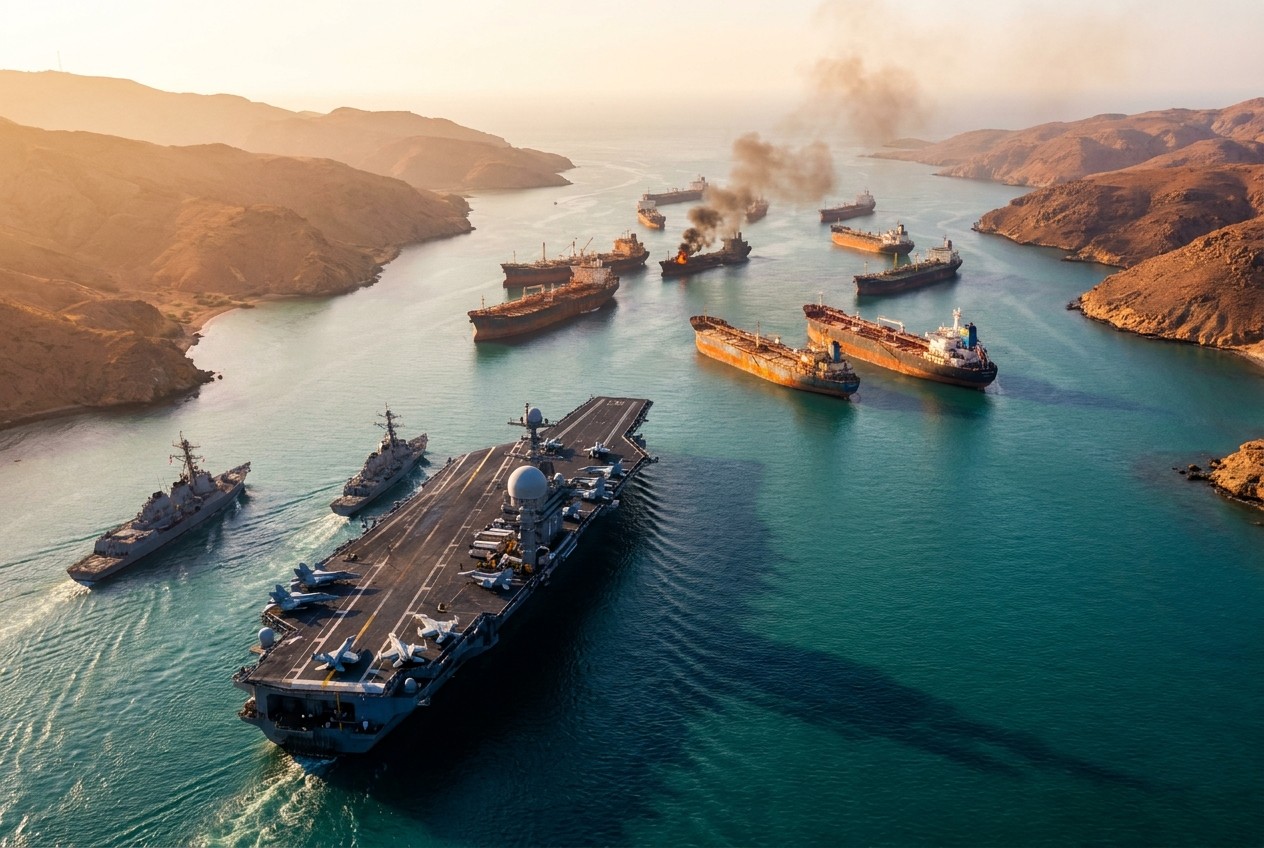
On Aug. 31, U.S. President Donald Trump said there would be a response to Iran's recent attack on a U.S. military base in Jordan, telling Fox News that the United States would "hit them hard," according to an interview with the network [1].
The remarks followed an Iranian missile strike on Muwaffaq Salti Air Base in Jordan, which hosts U.S. troops, after U.S. strikes on Larak Island in the Strait of Hormuz, officials said [1].
Oil benchmark Brent rose 2.5% on Aug. 31 to trade at $90.35 per barrel, according to market data [1]. The spike came amid a lull in fighting, but Trump's threat to escalate further follows his decision to share a social media post stating that Iran's energy export hub, Kharg Island, would be "blown to smithereens," according to the report [1].
Trump's threat came as the Washington Post reported that top U.S. generals warned a prolonged large-scale war on Iran would be unsustainable for the United States, with senior military officials cautioning that a prolonged high-level conflict risks draining U.S. military might [1].
Background: Strikes, Retaliation, and Naval Blockades
The United States said on Aug. 30 that it struck two Iranian rocket launchers preparing to shoot sea mines into the Strait of Hormuz, according to officials [1]. Iran retaliated by launching strikes on Jordan, which said it intercepted eight missiles and hosts U.S. troops at Muwaffaq Salti Air Base [1].
The strike on Larak marked the first publicly documented U.S. attack on Iran in weeks, according to the report [1].
The two sides have been locked in competing naval blockades over the Strait of Hormuz, and negotiations on a return to the June ceasefire are effectively dead, the Trump administration said [1].
The naval blockade of Iranian ports took effect in April 2026, sparking global oil price surges and diplomatic clashes after marathon U.S.-Iran talks in Islamabad collapsed [2]. Iran has threatened to fine or confiscate tankers that violate its rules for navigating through the Strait of Hormuz, according to the Persian Gulf Strait Authority [3].
The Strait of Hormuz remains effectively closed despite a tentative ceasefire between the U.S. and Iran, with mines, recurring attacks, ship seizures, and insurers' refusal to provide coverage keeping most commercial vessels away from the critical waterway [4].
Iran's Islamic Revolutionary Guard Corps (IRGC) destroyed a U.S. Saildrone Explorer reconnaissance vessel at the entrance to the Strait of Hormuz on Sept. 10, releasing video of the unmanned craft burning in the water [5]. Mohammad Mokhber, a top adviser to Iran's Supreme Leader, said the Strait of Hormuz represents a capability equivalent to an atomic bomb [6].
Generals Warn Prolonged War Would Weaken U.S. Ability to Confront Other Foes
The Washington Post reported on Aug. 31 that the heads of the U.S. Army, Navy, and Air Force, along with four-star commanders overseeing Europe, Asia and Latin America, warned Secretary of War Pete Hegseth that prolonging major operations would weaken the U.S.'s ability to confront other foes [1]. The warning followed an Aug. 14 order directing some U.S. troops deployed in the Middle East to remain there through September and others into 2027, according to the report [1].
Leaders of U.S. European Command, U.S. Pacific Command and U.S. Southern Command, along with the Navy's top admiral, issued a "non-concur" response to Hegseth's order, meaning they will obey the order despite disagreeing with it, the Washington Post reported [1].
To prosecute its war on Iran, the Trump administration has surged military assets from Europe and East Asia to Central Command, which oversees U.S. troops in the Middle East, officials said [1].
Former Pentagon analyst and author Scott Ritter has documented how U.S. policy toward Iran has historically been shaped by domestic political considerations and entangling alliances rather than strategic necessity [7]. In his book "Target Iran," Ritter argues that America's founding father, President George Washington, strongly counseled against American involvement in "entangling alliances," and yet on the issue of Iran and its nuclear program, U.S. entanglement with Israel threatens to take a minor regional problem and turn it into a wider conflict with far-reaching implications for the entire world [7].
The 60-day Memorandum of Understanding between the U.S. and Iran has expired, with the framework of Iranian pre-conditions for any start to negotiations lingering in a comatose state [8].
Munitions Shortages and Global Commitments Under Strain
The Associated Press reported earlier in August that the war on Iran has caused a "beyond critical" shortage of advanced missile interceptors, especially Patriots, which have been used to shoot down Russian ballistic missiles in the Ukraine war [1]. The U.S. is facing an ammunition shortfall due to heavy use in Operation Epic Fury in Iran, and according to the Department of War's inspector general, the conflict has resulted in a shortfall of U.S. munitions and "bottlenecks" in supply chains as the Trump administration works to replenish weaponry [9].
Reuters reported that the U.S. has exhausted its stockpile of sophisticated long-range missiles and has "virtually" used up its supply of surface-to-surface weapons, including Army Tactical Missile System (ATACMS) and Precision Strike Missiles [1].
CIA Director John Ratcliffe traveled to Moscow in part to warn Russian President Vladimir Putin against a potential attack on NATO members, the Wall Street Journal reported last week [1]. Tensions remain high in Europe as U.S. military resources are diverted to the Middle East, according to the reports [1].
The Strategic Petroleum Reserve has fallen to 285.4 million barrels, the lowest since 1982, representing a continued reduction of a stockpile that once held more than 700 million barrels at its peak [10].
Farmers across America's Corn Belt report facing their most severe economic pressure in four decades, driven by a surge in diesel and fertilizer costs attributed to geopolitical tensions stemming from the Trump administration's Iran policy [11]. The national average price of diesel hit more than $6 per gallon, up about 60% compared with the same period last year [12].
Outlook: Administration Says All Options Open
The Trump administration says it is keeping all options open as negotiations with Iran on a return to the June ceasefire are effectively dead, officials said [1]. Trump's threat to escalate further follows his decision to share a social media post stating that Iran's Kharg Island would be "blown to smithereens," according to the report [1].
Oil prices spiked on Aug. 31 amid a lull in fighting, while questions remain about U.S. military readiness, according to the reports [1]. The BRICS group of nations adopted a joint declaration on Sept. 12, expressing "deep concern" over the ongoing conflict between the U.S. and Iran and urging "maximum restraint" as part of a "multilateral approach" that respects national viewpoints [13].
China has condemned a reported United States plan to impose a naval blockade of Iranian ports in the Strait of Hormuz, labeling the action "irresponsible and dangerous" and stating that the move would undermine an already fragile ceasefire agreement [14].
No independent confirmation of new operational plans was provided, and officials did not announce specific new deployment details [1].
U.S. Energy Secretary Chris Wright said an agreement with Iran may not occur until the current regime is toppled, stating: "There may not be a nuclear agreement. It may be simply destroying their capabilities to do it. An agreement may await a next administration in Iran. We simply don't know that" [15].
Trump has also said the Iran war will end "immediately" after U.S. midterm elections and that oil prices will be "tumbling downwards" after the elections [16].
References
- "Trump's vow to escalate on Iran rings hollow amid warnings from top US generals". Middle East Eye. August 31, 2026.
- Cassie B. "U.S. Naval Blockade of Iran Takes Effect, Spurring Global Oil Price Surge and Diplomatic Clashes". NaturalNews.com. April 14, 2026.
- "Iran Threatens to Fine, Confiscate Tankers in Strait of Hormuz Clampdown". The Epoch Times. August 24, 2026.
- "Strait of Hormuz Remains Effectively Blocked as NATO and Iran Tangle Over Shipping Security". NaturalNews.com. May 22, 2026.
- "Iran strikes U.S. spy drone in Strait of Hormuz, escalating maritime crisis". NaturalNews.com. September 12, 2026.
- "Iran Adviser Compares Strait of Hormuz to 'Atomic Bomb' as US-Iran Clashes Continue". NaturalNews.com. May 11, 2026.
- Scott Ritter. "Target Iran: The Truth About the White House's Plans for Regime Change".
- Ron Paul Institute. "Trump Mulls Raising the Stakes to Force Iranian Capitulation". Ron Paul Institute. August 25, 2026.
- "Watch: What does the munitions shortage mean for the US?". BBC. September 15, 2026.
- "Strategic Petroleum Reserve Falls to 285.4 Million Barrels, Lowest Since 1982". NaturalNews.com. September 16, 2026.
- "Farmers in America's Corn Belt Face Worst Crisis in 40 Years, Citing Soaring Input Costs Linked to Iran Conflict". NaturalNews.com. August 26, 2026.
- "Trump Blames Zelensky for Record U.S. Diesel Prices". NaturalNews.com. September 14, 2026.
- "BRICS Urges 'Maximum Restraint' As US-Iran War Tests Unity At New Delhi Summit". ZeroHedge. September 15, 2026.
- "China Criticizes Reported U.S. Proposals for Hormuz Blockade, Cites International Law Concerns". NaturalNews.com. April 15, 2026.
- "Iran Nuclear Deal Might Be Delayed Until Regime Change in Tehran, Energy Secretary Says". The Epoch Times. September 6, 2026.
- "Watch: Trump says Iran war will end 'immediately' after US midterm elections". BBC. September 9, 2026.





Please contact us for more information.