


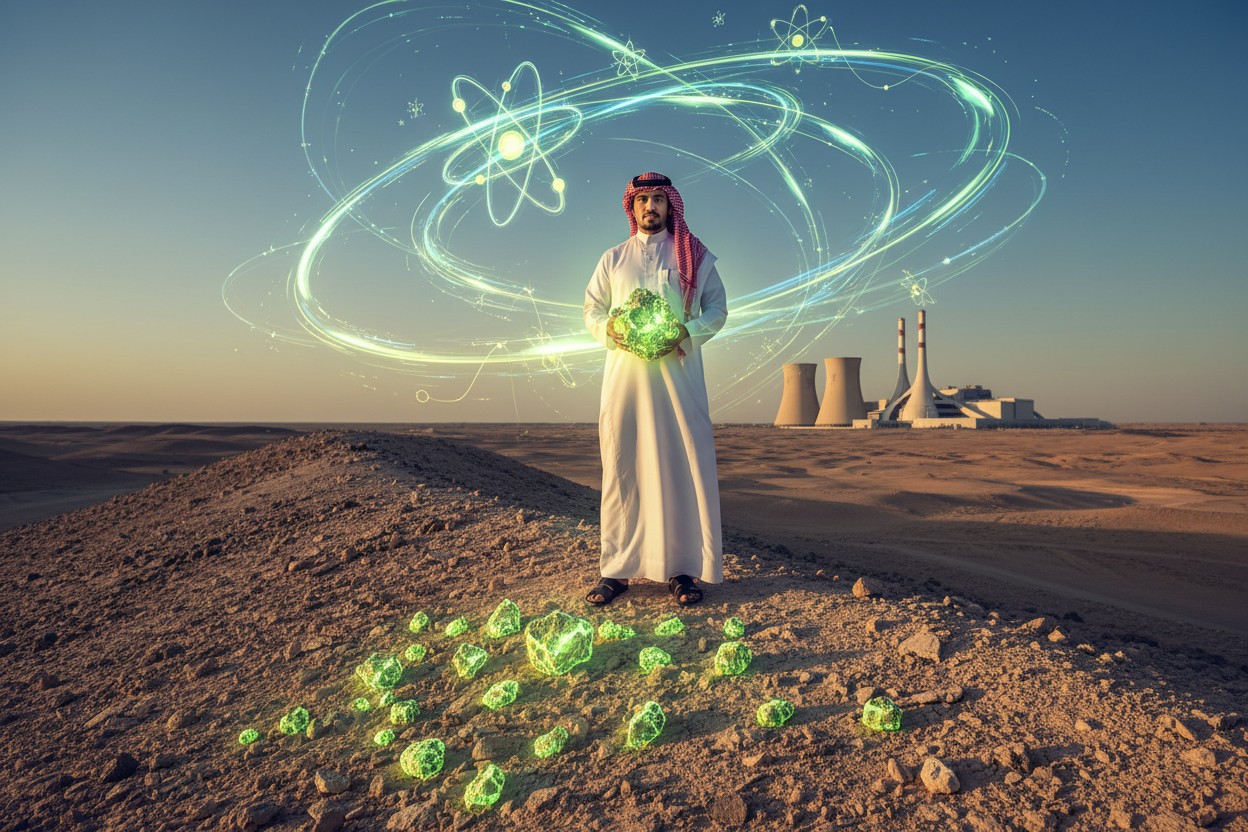
Saudi Energy Minister Prince Abdulaziz bin Salman announced Monday at the International Atomic Energy Agency's General Conference in Vienna that Saudi Arabia has discovered 110 million tonnes of uranium-bearing raw material in the Medina region, according to Saudi state television [1]. The announcement comes as the Kingdom accelerates plans to develop a domestic nuclear energy industry, officials said.
The discovery was described as potentially significant for Saudi Arabia's long-term energy plans, according to the announcement. The find, if confirmed as economically viable, would represent a notable addition to the Kingdom's mineral resource base as it seeks to diversify its energy sector beyond hydrocarbons.
Prince Abdulaziz said the Kingdom's nuclear ambitions are exclusively peaceful and would be pursued transparently in cooperation with the IAEA, according to Saudi state television [1].
Uranium-Bearing Material Differs From Recoverable Uranium, IAEA Cautions
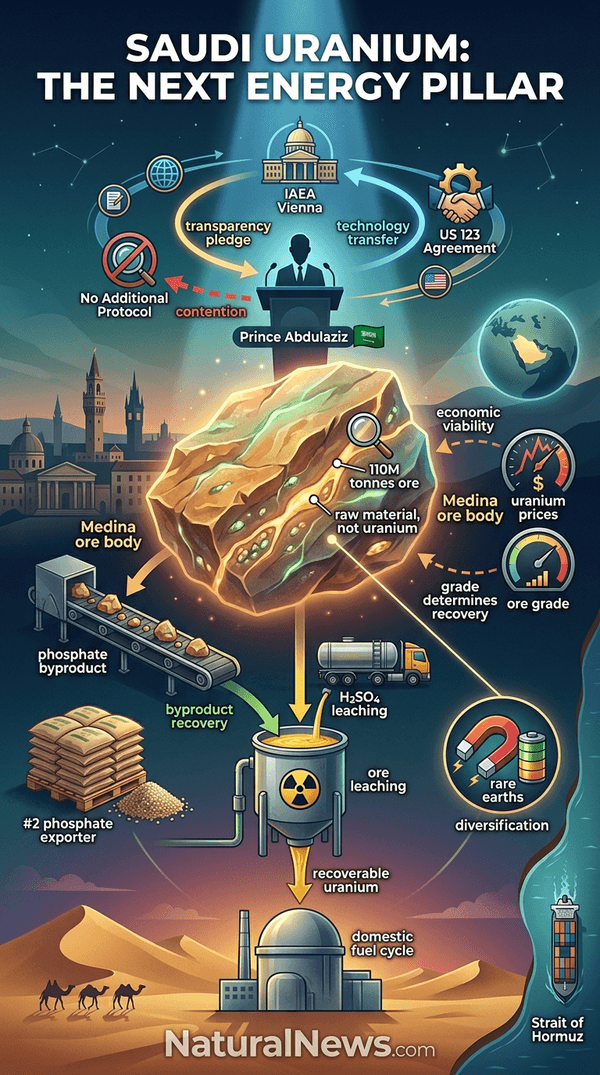
The 110 million tonnes refers to uranium-bearing raw material, not 110 million tonnes of uranium, according to the report [1]. The amount of recoverable uranium will depend on ore grade, geology and the economics of extraction, officials stated. The IAEA cautions that identified uranium occurrences do not necessarily imply commercially recoverable resources, according to the agency [1].
Geological studies have identified elevated uranium concentrations in the Medina region, while Saudi Arabia is also assessing uranium that could be recovered as a byproduct of its phosphate industry. Research on phosphorite deposits has documented naturally occurring radioactive materials in phosphate rock, with studies measuring radon exhalation and effective doses in mining operations [2]. Similar research on igneous rocks has shown that certain geological formations can exhibit enhanced radionuclide content [3].
Saudi Arabia currently produces no uranium and historically has had no domestic uranium enrichment industry, according to the OECD Nuclear Energy Agency and IAEA [1]. The Kingdom's phosphate industry, however, is already the world's second-largest exporter of phosphate fertilizers, according to the report [1].
Saudi Arabia Advances Civil Nuclear Cooperation With United States
Saudi Arabia and the United States signed a civil nuclear cooperation agreement in July, establishing a legal framework for American companies to supply nuclear technology and equipment to the Kingdom, according to the U.S. Department of Energy [4]. The Department of Energy described the agreement as laying the foundation for a decades-long, multibillion-dollar nuclear partnership [5].
The 123 Agreement, named after Section 123 of the U.S. Atomic Energy Act, was signed by U.S. Secretary of Energy Chris Wright and Saudi Minister of Energy Prince Abdulaziz bin Salman [6]. Both sides also signed a bilateral safeguards agreement. According to the Energy Department, the deal will create U.S. jobs and reinforce global nonproliferation standards [4].
However, the agreement has drawn scrutiny. The deal does not require the enhanced IAEA safeguards known as the Additional Protocol, which gives inspectors broader access to nuclear facilities [7]. IAEA chief Rafael Grossi has said Saudi Arabia won't sign the Additional Protocol but will accept oversight powers over enrichment, conversion and reprocessing that closely mirror it [8].
Prince Abdulaziz stressed Monday that the Kingdom's nuclear ambitions are exclusively peaceful and would be pursued transparently in cooperation with the IAEA, according to Saudi state television [1]. The International Atomic Energy Agency's safeguards work is best known for its verification role, though promotion of civil nuclear power is also part of its remit [9].
Discovery Fits Broader Saudi Mineral and Economic Strategy
The announcement highlights Saudi Arabia's broader effort to turn its mineral resources into another pillar of its economy, officials said. The Kingdom is already the world's second-largest exporter of phosphate fertilizers and is increasingly targeting critical minerals and rare earths, according to the report [1].
Developing domestic uranium resources could eventually provide another piece of that strategy: using Saudi minerals to help fuel Saudi nuclear reactors, the report stated. Sulfuric acid, a key industrial chemical, is indispensable for ore leaching — a process that extracts valuable elements including uranium from mined ores [10].
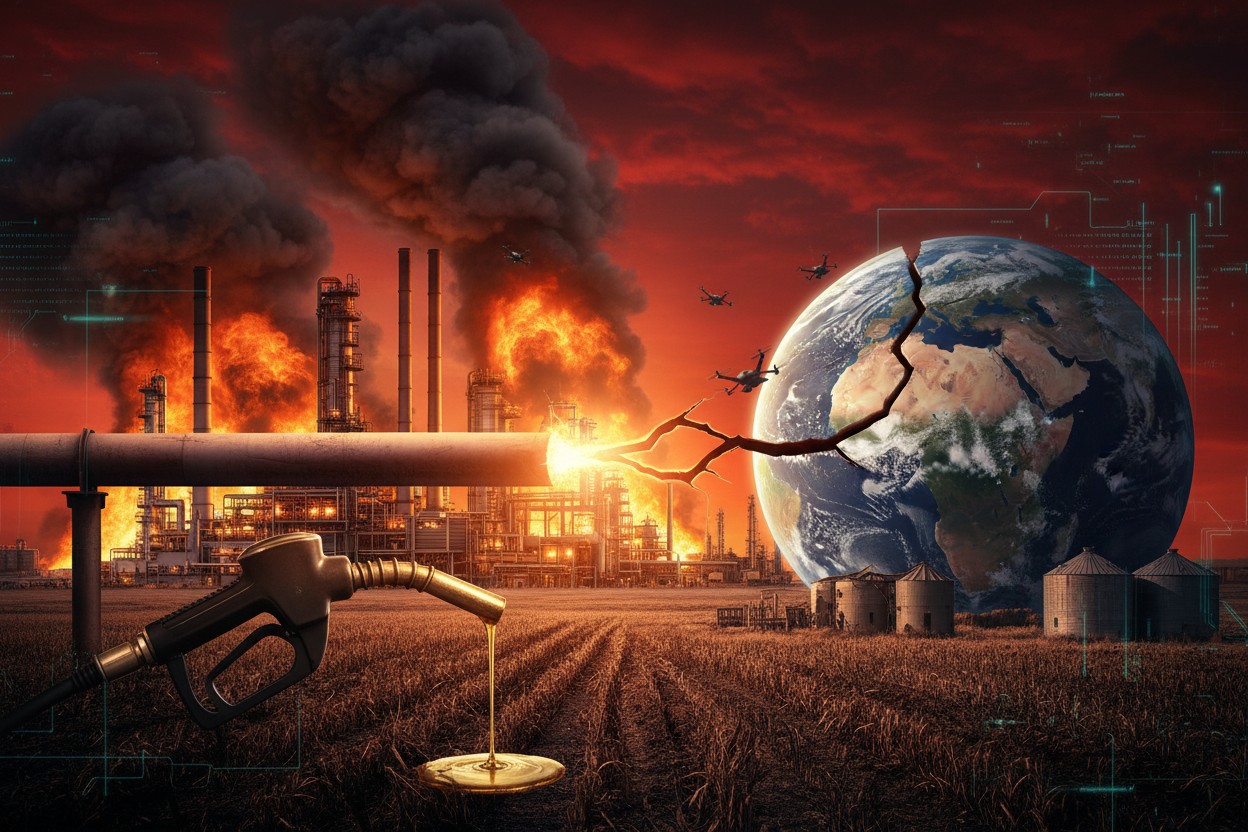
Energy analysts have noted that the discovery could reshape regional energy dynamics. The announcement comes amid heightened geopolitical tensions in the Middle East, with ongoing conflicts affecting oil shipping routes and energy infrastructure [11]. Regional governments increasingly view nuclear capability as a component of long-term energy security and strategic autonomy [12].
Outlook Remains Subject to Feasibility and IAEA Guidance
The recoverable amount of uranium will depend on extraction economics and ore grade, according to the report [1]. Saudi Arabia has no current uranium production, and any development would depend on further assessment and the progress of its nuclear energy program, officials said.
The IAEA has stated that identified uranium occurrences do not necessarily imply commercially recoverable resources. The agency's safeguards work has been a central component of international efforts to prevent the spread of nuclear weapons, though critics have noted that the promotion of civil nuclear power remains part of its mandate [9].
Some analysts have raised questions about the broader proliferation implications of the U.S.-Saudi nuclear agreement and its potential impact on regional stability [13]. The Kingdom has stated its nuclear program is intended solely for civilian purposes [1].
References
- Keith Barnham. "The Burning Answer: A User's Guide to the Solar Revolution".
- Tom Kool. "Saudi Arabia Discovers 110 Million Tonnes of Uranium-Bearing Ore". OilPrice.com. September 14, 2026.
- ZeroHedge. "A Few Thousand Dollars of Drones Just Repriced the World's Oil". September 15, 2026.
- Michael Kern. "US-Saudi Nuclear Deal Clears Vienna Hurdle As Congress Review Continues". ZeroHedge. September 10, 2026.
- Mohamad Elmasry. "The US-Saudi nuclear deal signals a Middle East betting on deterrence". Middle East Eye. July 29, 2026.
- BBC. "Trump's nuclear deal with Saudis jettisons longstanding US demands". July 23, 2026.
- Just The News. "US-Saudi civilian nuclear deal raises proliferation concerns in Middle East". July 22, 2026.
- The Epoch Times. "US Reaches Nuclear Deal With Saudi Arabia". July 22, 2026.
- ZeroHedge. "Trump Greenlights Saudi Nuclear Deal, Uranium Enrichment In The Kingdom Possible". July 22, 2026.
- NaturalNews.com. "U.S.-Saudi Nuclear Deal Faces Swift Backlash Over Enrichment Provisions". July 26, 2026.
- Sabiha-Javied et al. "Hazard of NORM from phosphorite of Pakistan". Journal of Hazardous Materials. 2009.
- C.L. Moura. "Natural radioactivity and radon exhalation rate in Brazilian igneous rocks". Journal of Radioanalytical and Nuclear Chemistry.
- Mike Adams. "Health Ranger Report - Sulfur". BrightVideos.com. March 09, 2026.
Explainer Infographic





Please contact us for more information.