


- Salatin argued that feed, labor, infrastructure and poorly performing enterprises can turn a self-reliant homestead into a financial burden.
- He advocated tracking chickens, pigs, crops and other ventures separately to identify which activities generate value and which drain resources, citing his failed pheasant operation as an example.
- Salatin emphasized raising prices, lowering costs, increasing customer turnover and timing routine tasks so labor costs and productivity could be understood more accurately.
- By taking on processing, distribution and marketing themselves, farmers could capture more of the value between production and the customer. Salatin also described collaborating with local producers to create more opportunities for sales.
- Salatin's vision was to transform a homestead from a "cash drain, to cash cow" while preserving its purpose – combining "our profit, with our pleasure and our production."
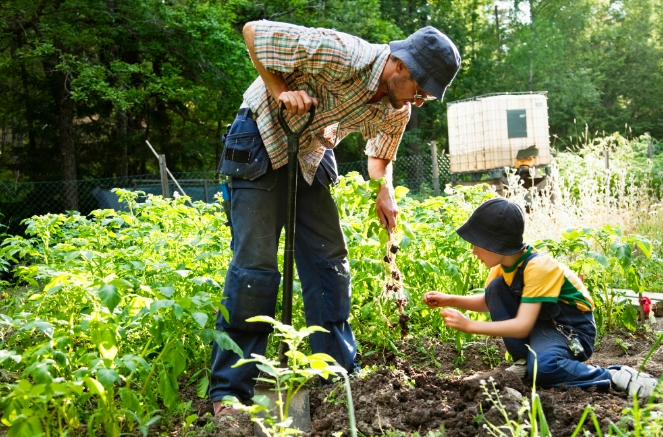
A homestead could produce abundant food, healthy animals and a deeply satisfying way of life – and still fail.
That was the uncomfortable economic reality Joel Salatin brought into focus in Episode 4 of "Foundations in Farming and Homesteading + Pastured Laying Hens," which aired Sept. 29. For people drawn to homesteading because they wanted independence rather than profit, money could seem secondary. But Salatin argued that ignoring the numbers could eventually threaten everything else. Feed bills, labor, infrastructure and inefficient enterprises could quietly consume the resources needed to keep a homestead alive. A dream of self-reliance could become a financial burden if every enterprise was not expected to justify its place.
The answer, in Salatin's view, was not abandoning the lifestyle for conventional business practices. It was learning to treat the homestead itself as a business capable of generating enough income to sustain the life it was meant to support.
When a homestead starts losing money
Salatin's approach began with a deceptively simple question: Where was the money actually going?
Rather than lumping everything together, he advocated separating the financial performance of individual enterprises. Chickens, pigs, tomatoes, corn and other ventures needed to stand on their own financially. His failed pheasant enterprise demonstrated the consequences of not recognizing a problem quickly enough. Difficulties moving the birds were accompanied by a financial drain, exposing an operation that was consuming resources rather than creating sustainable value.
Even successful-looking enterprises could have surprising economics. Salatin described eggs as his hardest margin, yet they remained strategically important because customers who came for eggs could also buy chicken, beef and pork. The product that appeared least profitable on its own could therefore help drive sales throughout the wider operation.
But Salatin's message was clear: small margins could not simply be accepted as inevitable. Prices could be raised. Costs could be reduced. Labor could be measured. Turnover could be increased.
He timed individual tasks, from processing chickens to moving shelters and putting away eggs, because every minute represented a cost. Without knowing how long a job actually took, a homesteader could easily underestimate labor and mistake activity for profitability.
The escape from the commodity trap
The bigger threat was competing in a system where small farms were forced to sell commodities on someone else's terms. Salatin argued that the way out was to capture more of the value between the farm and the customer.
Instead of producing food and handing it to someone else to process, distribute and market, farmers could wear more of those hats themselves.
"The point is when you're wearing all those hats, production, marketing, distribution, processing, wearing all those hats in the value chain gets you off of that commodity treadmill and lets you own the value all the way from farm to play," Salatin said.
His operation also demonstrated the power of bringing multiple products and producers together. Salatin described working with local artisans offering kombucha, broth, cosmetics, soaps, honey, milk, cheese and ferments, turning a customer visit into an opportunity for multiple purchases.
The stakes extended beyond profit. A homestead that consistently lost money could eventually undermine the freedom, family life and connection to the land that motivated the project in the first place. Salatin's alternative was a homestead capable of paying its own way – one where profitability strengthened resilience rather than replacing purpose.
The transformation he envisioned was bluntly expressed as moving a homestead from "cash drain, to cash cow." And the ultimate objective was not wealth for its own sake, but the ability to "combine our profit, with our pleasure and our production."
Want to know more?
Discover practical strategies for building a productive, resilient homestead and raising pastured laying hens in "Foundations in Farming and Homesteading + Pastured Laying Hens," streaming on BrightU. Led by award-winning farmer Joel Salatin, this nine-episode series takes you step by step through the foundations of self-reliant homesteading, from designing your land and building efficient infrastructure to establishing a productive pastured egg operation. You'll explore practical approaches to housing, fencing, water systems, mobile infrastructure, flock health, pasture management, seasonal production and profitability.
Whether you're new to farming and homesteading or looking to expand your skills, you can purchase the "Foundations in Farming and Homesteading + Pastured Laying Hens" combo package here to get lifetime access to Salatin's practical guidance. The package includes 32 video sessions, more than nine hours of instruction, homework PDFs and complete video transcripts to help you learn, review and apply the lessons anytime.
Watch the trailer for "Foundations in Farming and Homesteading + Pastured Laying Hens" below.
This video is from the BrightU channel on Brighteon.com.
Sources include:






Please contact us for more information.