


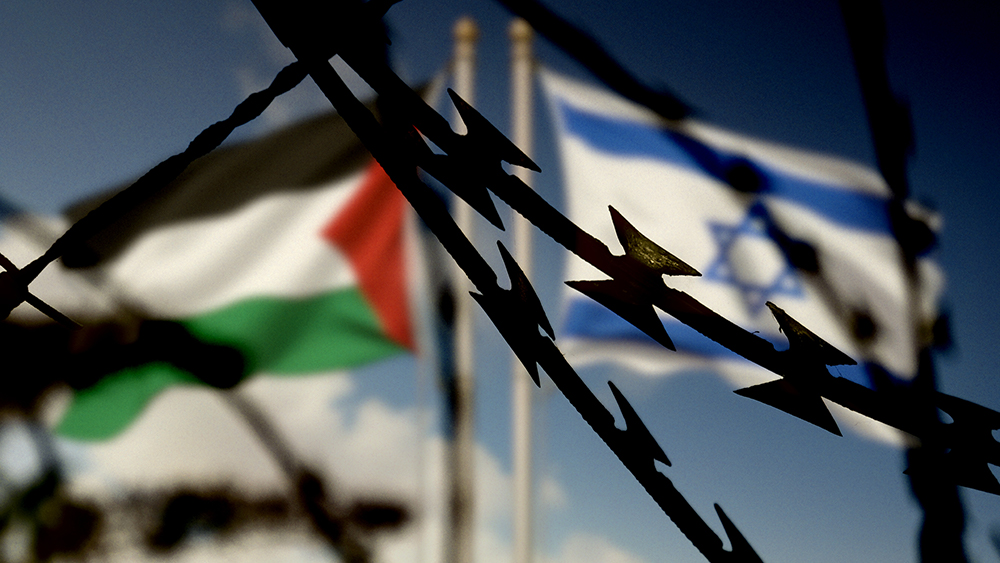
- Russian Foreign Minister Sergei Lavrov called Palestinian statehood the Middle East's central issue in a UN speech last week
- An analysis argues Russia has offered Palestinians only rhetoric since 1991 while keeping warm ties with Israel
- The piece traces this back to Soviet history, including Stalin's 1947 reversal and Gorbachev's 1991 vote to repeal the "Zionism is racism" resolution
- Russia has kept close economic and security ties with Israel even as Israel aligned with the West against Russia over Ukraine
- The analysis concludes Russia shows no sign of changing course and will stay a marginal player in the region
When Russian Foreign Minister Sergei Lavrov took the podium at the United Nations General Assembly last week to declare that "the time has also come to address the main issue in the Middle East — ensuring the Palestinian statehood on the basis of countless United Nations decisions," his words echoed a position Moscow has held since 1947. Yet despite decades of rhetorical support, Russia remains a marginal force in shaping the region's future, offering Palestinians little beyond diplomatic statements while maintaining warm ties with Israel.
Since the Russian Federation's establishment in December 1991, Moscow has provided Palestinians with empty language backing a defunct two-state solution rather than meaningful assistance against Israeli colonization, according to a Middle East Eye analysis by Joseph Massad. The approach has left Russia sidelined in a conflict where its influence continues to diminish.
Soviet-era policy reversals set the pattern for current weakness
Russia's irrelevance has roots in dramatic shifts under Soviet leadership. The Bolsheviks originally opposed Zionism as a settler-colonial movement; after the 1929 Buraq Wall uprising, Comintern official Georgy Safarov condemned "Zionist colonies in Palestine" and separately branded the Jewish community there "a British imperialist avant-garde." The Soviet Union even created the Birobidzhan autonomous region in 1934 as an anti-Zionist alternative to Palestine for Jewish settlement.
However, Joseph Stalin reversed course after World War II and the Holocaust, with Soviet Ambassador Andrei Gromyko delivering impassioned speeches in 1947 defending Jewish settlers' alleged right to set up a state. Moscow rushed to recognize Israel upon its founding, permanently alienating Arab communist parties and much of the Arab public.
The Soviet Union later cut diplomatic ties with Israel following the 1967 invasion of three Arab countries, only to see Soviet leader Mikhail Gorbachev reestablish relations in October 1991. Two months later, under U.S. pressure, Moscow voted to repeal the "Zionism is racism" UN resolution it had supported since 1975 — reversing, in that one vote, the last formal remnant of the USSR's anti-Zionist position.
Moscow's current approach offers Palestinians little substance
Today's Russian Federation continues patterns established during the Soviet era, balancing rhetorical support for Palestinians with practical cooperation with Israel. Even after Israel openly aligned with Western powers against Russia over the Ukraine war, Moscow has maintained its alliance with the Jewish state.
Russia's lukewarm backing for Iran in current hostilities barely deviates from the careful balancing act Soviet leaders performed in the postwar period, Massad argues. Meanwhile, Moscow's support for the Palestinian Authority, which collaborates with Israel and Western nations, hardly qualifies as genuine assistance for Palestinians.
The Kremlin has refused to fundamentally alter its approach toward Zionism or the Palestinian cause over the past 35 years, opting instead to deepen trade and security ties with Israel. Nothing suggests Russian officials have seriously weighed overhauling this failed Middle East approach, the analysis concludes.
Current war conditions have not prompted policy change
If Stalin's reversal on Zionism was driven by the Holocaust, Cold War calculations, and a shortage of pro-Soviet Arab rulers, observers might expect today's conditions to trigger another shift. The West's ongoing war footing against Russia, the Palestinian genocide, and Iranian and Lebanese resistance against Israeli regional ambitions would seem sufficient catalysts.
Yet Massad argues that Arab regimes today, including the Palestinian Authority, remain as aligned with Western interests as the region's rulers were in 1948. Barring a radical overhaul of its regional strategy, Russia will remain a bystander to the broader struggle against Israeli expansion and settler-colonial rule.
The window for Moscow to reclaim relevance appears to have closed. As Massad notes, Gorbachev's final vote at the UN to rehabilitate Zionism sealed the Soviet era's break with its anti-Zionist roots for good — and nearly 35 years later, the Russian Federation has done nothing to reverse it.
For all Lavrov's talk of resolving the Palestinian question, the pattern he represents is familiar: a great power invoking Palestinian suffering for diplomatic cover while doing business as usual with Israel. Until that changes, the statehood Moscow keeps promising will remain what it's been for decades — a talking point, not a policy.
Sources for this article include:











Please contact us for more information.