


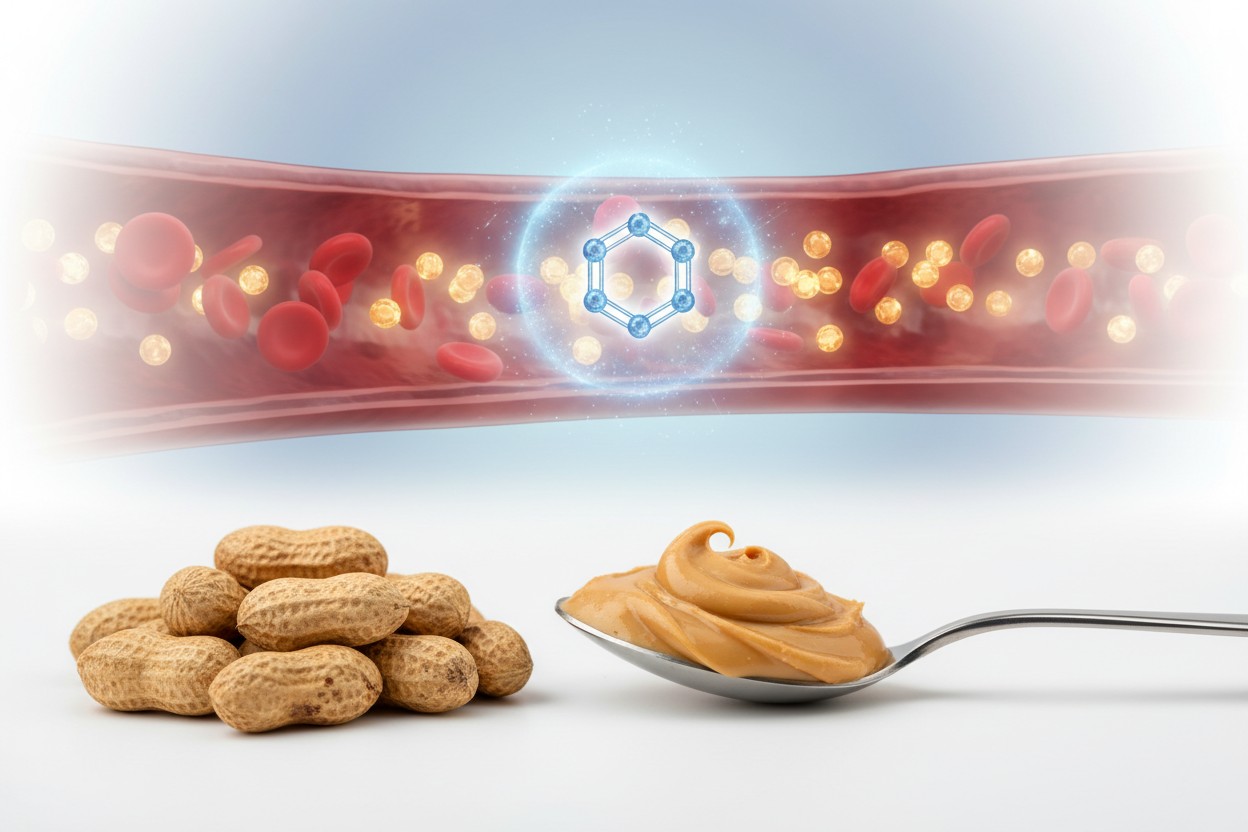
A controlled feeding trial and a large German cohort study have reported an association between regular peanut intake and a reduced risk of Type 2 diabetes, according to researchers. The findings were reported by mindbodygreen on September 30, 2026.
The ARISTOTLE trial followed 63 healthy adults ages 18 to 33 for six months, while the EPIC-Potsdam study tracked 27,548 German adults ages 35 to 65 beginning in the 1990s. Researchers said the two datasets were combined to connect short-term blood fat changes with long-term disease outcomes.
Peanuts are the single biggest dietary source of very long-chain saturated fats, molecules built from more than 20 carbon atoms, which behave differently in the body than the shorter saturated fats found in butter. Peanuts also contain monounsaturated fat and are classified as legumes rather than tree nuts [1].
Six-Month Trial Measured Blood Fat Changes
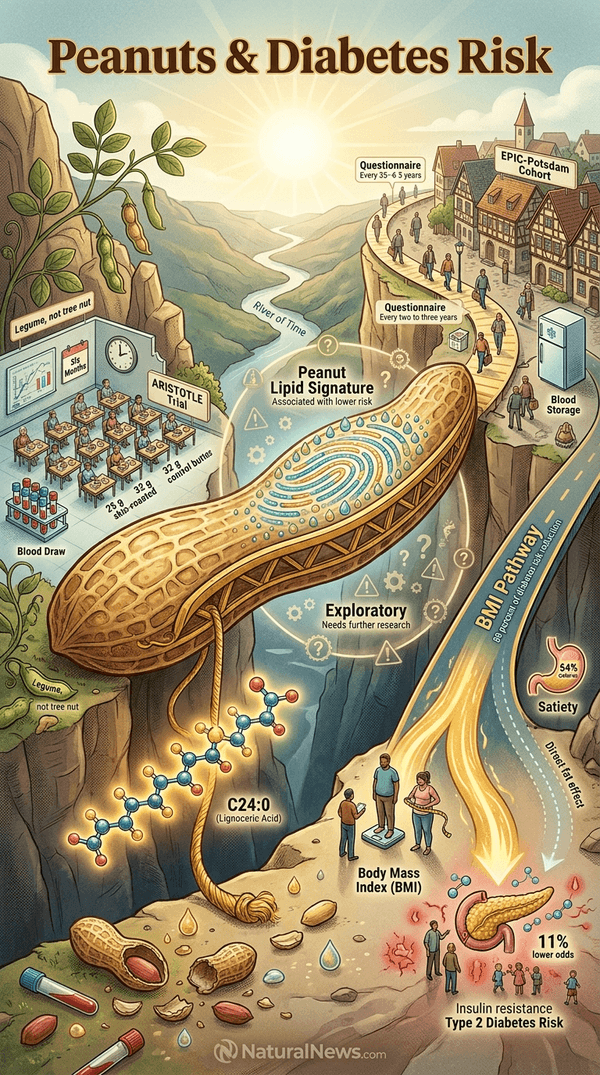
In the ARISTOTLE trial, participants were randomly assigned to eat 25 grams of skin-roasted peanuts, 32 grams of peanut butter, or 32 grams of a control butter made with peanut oil daily for six months. Blood was drawn at the start of the study and again at six months.
Researchers found that 51 different blood fat measures shifted during that period. Most of the increases occurred with the very long-chain saturated fats, and one in particular, known as C24:0, rose in every fat family in which it appears. Pooled together, those shifts formed what the researchers described as a peanut lipid signature, essentially a blood fingerprint of regular peanut eating.
The trial results were reported alongside the cohort analysis by mindbodygreen on September 30, 2026, according to the article. Earlier research has shown that fats differ in their effects on human metabolism and that saturated fats should not be treated as a single category, according to ANH International [2].
German Cohort Linked Peanut Signature to Diabetes Risk
Because a six-month trial cannot determine who develops a disease decades later, the research team turned to the EPIC-Potsdam database. That study enrolled 27,548 adults ages 35 to 65 in Germany in the 1990s and followed them with questionnaires every two to three years, according to the report published by mindbodygreen on September 30, 2026.
Researchers scored each participant's stored baseline blood for the peanut signature, then compared those scores against physician-verified new diabetes diagnoses. They found that each one-standard-deviation increase in the score was associated with roughly 11% lower odds of developing Type 2 diabetes, the report stated.
The association held after accounting for calorie intake, smoking, alcohol, education, blood pressure, physical activity, medications, and broader eating patterns, according to the report. Type 2 diabetes is a progressive disease characterized by insulin resistance, or loss of responsiveness by body cells to insulin, according to Wardlaws Perspectives in Nutrition [3].
BMI Accounted for Most of the Diabetes Association
When researchers added body mass index to the model, the diabetes association largely faded. BMI accounted for an estimated 89% of the diabetes risk reduction, according to the report. Waist and hip measurements produced a similar pattern, while blood sugar and inflammation markers did not show an association.
In practical terms, the report stated that the metabolic benefit from high peanut consumption may run mostly through body composition rather than through the fatty acids acting on blood sugar on their own. The researchers labeled this explanation exploratory.
Earlier peanut trials found that adding peanuts to a normal diet generally did not drive weight gain, and total calorie intake tended to stay flat, likely because peanuts are filling enough that people eat less of something else. One trial also found regular peanut intake increased fat burning, according to the report.
Nuts eaten in moderation support weight maintenance rather than weight gain because their calories are inefficiently absorbed, and they promote satiety, according to Younger Next Week by Elisa Zied [4].
Study Limitations and Observational Nature Noted
The ARISTOTLE trial was small and included young, healthy, mostly European adults, so the impact of peanuts on metabolic health may differ in people who are older, have a different ethnic background, or are already managing blood sugar, researchers said, according to the report.
While the observed association between peanuts and BMI and diabetes risk was evident, the report stated that the observational cohort cannot prove that peanuts caused the lower risk. The researchers were careful to note this limitation alongside their findings.
The study authors also said that while the finding that BMI appeared to explain most of the diabetes association was compelling, they labeled it exploratory, according to the report published by mindbodygreen on September 30, 2026.
Practical Amounts and Substitution Suggested
The trial tested 25 grams of peanuts, about a small handful, or two tablespoons of peanut butter daily. The report stated that those amounts produced measurable changes in the blood, a level that is feasible for most people.
In the German cohort, the peanut signature rose alongside overall nut intake and fell as butter intake went up. This indicates that peanuts often take the place of butter or other fats in people's diets rather than piling on top of them, according to the report.
The report recommended skin-roasted peanuts and plain peanut butter, not candied or heavily sweetened versions. It also stated that if peanuts or peanut butter already have a place in a person's diet, the research supports keeping them there, especially if they are standing in for butter or a fried snack.
References
- Davis Isabella M. "Nuts".
- ANH International. "Omega 7 a Key Healthy Saturated Fat and Lipid Regulator". ANHinternational.org. March 16, 2016.
- Carol Byrd-Bredbenner, Jacqueline Berning, Donna Beshgetoor, Gaile Moe. "Wardlaws Perspectives in Nutrition".
- Elisa Zied. "Younger next week your ultimate Rx to reverse the clock boost energy and look and feel younger in 7 days".
- NaturalNews.com. "Eat nuts for a healthy heart: Peanuts are a protein-rich snack with many health benefits". NaturalNews.com. September 30, 2019.
Explainer Infographic










Please contact us for more information.