


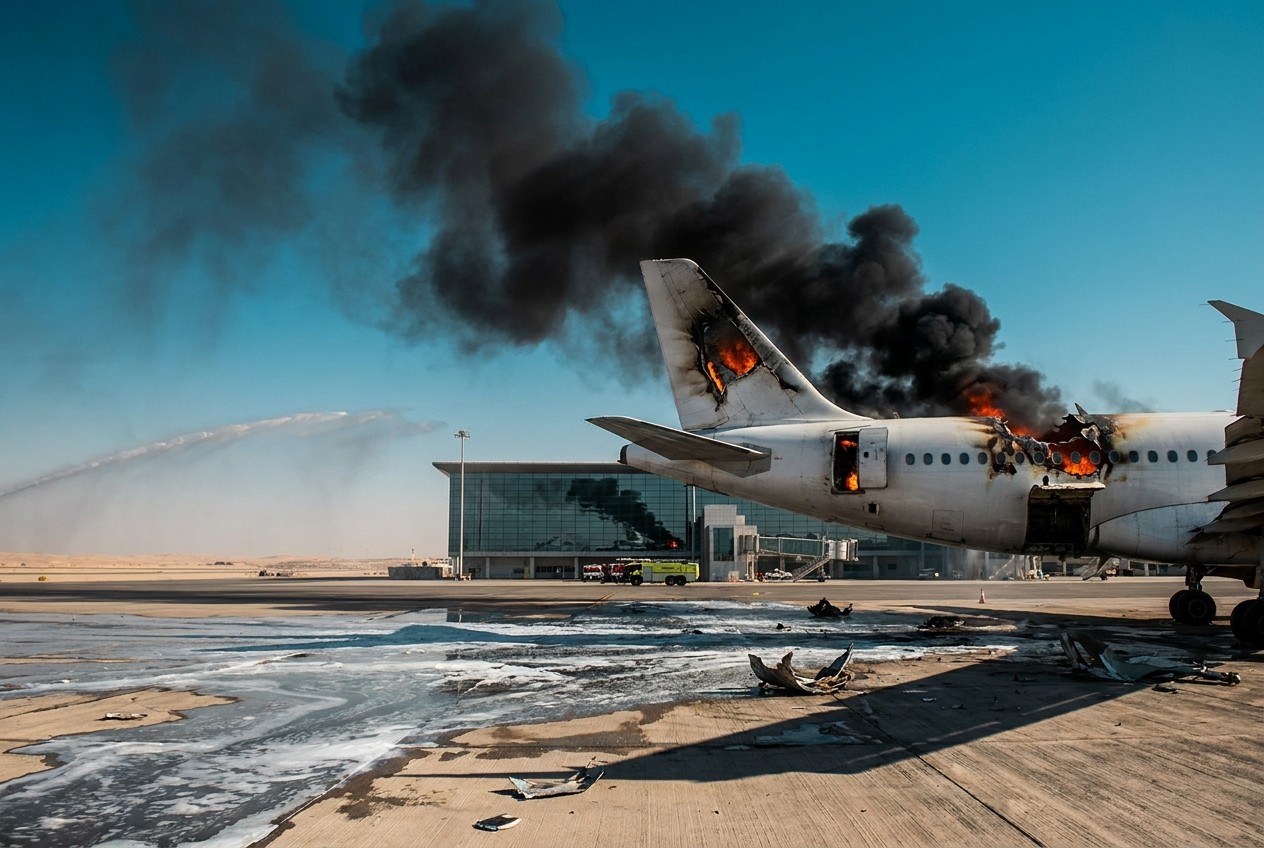
- Iran-backed Houthi rebels killed three Saudi civilians in attacks on Abha International Airport and King Khalid International Airport on Oct. 6-7.
- The U.S. State Department warned Americans throughout the Middle East to exercise heightened vigilance due to potential for rapid escalation and targeting of U.S. interests.
- Saudi-backed Yemeni government forces have launched an offensive to reclaim territory from Houthis, with Saudi air support and advances near the strategic Bab el-Mandeb strait.
- The Trump administration ruled out pre-midterm attacks on Iran while diesel prices hit record highs above $6 per gallon amid the regional conflict.
- Saudi Arabia signed a defense pact with Turkey and Pakistan in August, and Turkish officials are now assessing air defense support for the kingdom.
The attack and regional escalation
Iran-backed Houthi rebels struck two civilian airports in Saudi Arabia this week, killing three Saudi citizens and wounding 36 others in what marks a dangerous escalation of Yemen’s renewed civil war and the broader Middle East conflict. The attacks occurred Oct. 6-7 at Abha International Airport and King Khalid International Airport in Riyadh, with the Houthi terrorist group claiming responsibility.
The U.S. State Department responded Thursday by issuing a security alert for American citizens across all Middle Eastern countries, warning that “Iran and groups supportive of Iran may target other U.S. interests overseas.” The alert cited potential flight cancellations, airspace closures and travel disruptions, reflecting the widening theater of hostilities beyond Yemen’s borders.
Strategic context: The Bab el-Mandeb battleground
The Houthi attacks represent retaliation for Saudi support of Yemen’s U.N.-recognized government, which launched a major offensive last week with Saudi air support. Yemeni Minister of Information Moammar al-Eryani reported Oct. 5 that government forces had seized key positions in Dhubab, adjacent to the strategic Bab el-Mandeb strait through which much of the world’s oil trade transits.
Government forces have recaptured an airstrip at Dhubab and cut off Houthi forces in the area, but fighting remains ongoing. The offensive aims to reclaim territory from the Houthis, who have controlled large portions of northern Yemen since 2014.
Economic and diplomatic repercussions
The attacks come as the Trump administration navigates a complex Middle East landscape ahead of November midterm elections. President Trump ruled out resuming attacks on Iran before the elections, while touting “productive conversations” with Tehran—although he offered no specifics. The president also teased a “big announcement coming up on diesel” as fuel prices surge.
Brent crude oil stood at approximately $103 per barrel Friday, having been driven higher by regional instability. Diesel prices have reached record levels, averaging $6.28 per gallon nationally, up from $3.68 a year ago. The administration recently authorized red-dyed diesel use on highways to lower costs, exempting it from the 24.4-cents-per-gallon federal tax.
Saudi Arabia signed a defense agreement with Turkey and Pakistan on Aug. 7, stipulating that an attack on any signatory constitutes an attack on all three. Turkish Foreign Minister Hakan Fidan confirmed Thursday that military officials are assessing air defense, electronic warfare and technical support for Saudi Arabia, though he ruled out Turkish participation in offensive operations.
Historical significance
This conflict echoes patterns from previous Middle Eastern wars where non-state actors targeted civilian infrastructure to pressure regional powers. The Houthi attacks on civilian airports mirror tactics used by other Iranian-backed groups, demonstrating Tehran’s ability to project power through proxies across multiple theaters. Saudi Arabia’s defense pact with Turkey and Pakistan represents a significant realignment of regional security architecture, acknowledging that traditional Gulf Cooperation Council frameworks may prove insufficient against Iran’s proxy network.
The situation also highlights the vulnerability of critical infrastructure to asymmetric warfare. Commercial airports, long considered safe from direct attack, have become legitimate military targets in the eyes of Iranian-backed groups, raising questions about global aviation security standards.
A widening war
The Houthi attacks on Saudi civilian airports mark a dangerous inflection point in the Middle East conflict. With three Saudi civilians dead, the U.S. government now advises Americans across the region to prepare for possible disruption to travel and infrastructure. The combination of a renewed Yemeni government offensive, Iranian diplomatic overtures and American economic pressures creates a volatile situation where miscalculation could trigger further escalation. The coming weeks will test whether diplomatic channels or military force ultimately define the region’s trajectory.
Sources for this article include:




Please contact us for more information.