


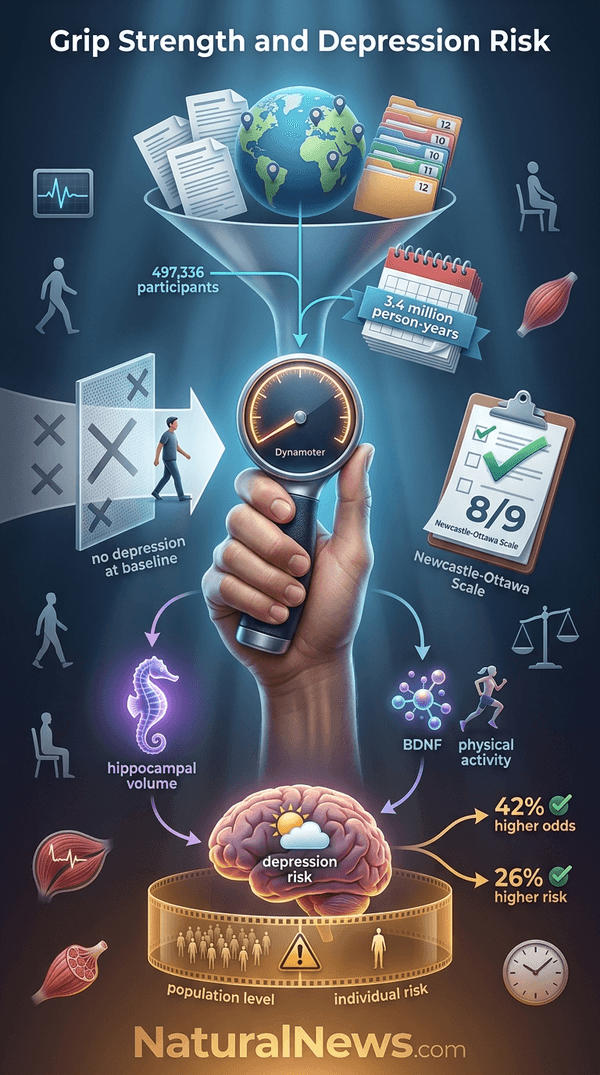
A pooled analysis of 12 studies involving 497,336 participants across 14 countries found that lower grip strength was associated with higher odds of developing depression over time, according to the study.
The research, published in the Journal of Psychosomatic Research, tracked participants for a combined total of more than 3.4 million person-years, the study stated. All included studies excluded participants who already had depression at baseline, allowing researchers to track new cases rather than existing illness, according to the study. That design element rules out the possibility that depression itself caused people to become less active and therefore weaker, a common pitfall in this type of research.
The findings add grip strength to a growing list of physical markers that researchers are examining for links to mental health outcomes. Earlier work has linked physical activity to brain health, with evidence suggesting exercise promotes neurogenesis, the brain's ability to adapt and grow new cells [1]. Other research has found that strength training can elevate mood in depressed patients [2].
Study Design and Population
The 12 studies scored an average of 8 out of 9 on the Newcastle-Ottawa Scale, a standard tool researchers use to assess study quality, researchers said. That score indicates the included research met high methodological standards, though the studies were observational in nature and cannot establish cause and effect.
Grip strength has been used in research for years as a stand-in for overall muscle health. It is easy to measure, requires minimal equipment, and consistently tracks with a range of health outcomes including heart disease risk, fall prevention, and longevity, according to the study. Some researchers have proposed grip strength as a kind of "vital sign," given how reliably it reflects broader health status. The measure functions as one of several fitness markers that offer a window into how well the body is functioning overall.
Despite the consistent associations, the researchers said grip strength should not be used as a personal screening tool for depression. The studies were observational, and individual variation is substantial. The researchers emphasized that the findings apply at a population level rather than to individual risk prediction.
Main Findings
In the combined analysis, people with lower grip strength had 42 percent higher odds of developing depression over time, according to the study. A separate analysis using a different statistical measure found a 26 percent higher risk. Both findings were statistically significant, researchers said.
Studies with longer follow-up periods showed slightly stronger associations between grip strength and depression risk, though researchers noted the difference was small. That pattern suggests the connection between physical capacity and mental health may become more apparent over time rather than showing up immediately.
The researchers described the effect as modest and said the results do not establish causation. Grip strength alone will not tell an individual whether they will develop depression, and the study authors were clear that it reflects something meaningful about overall health and physical resilience at a population level rather than serving as a diagnostic tool.
Prior research has explored the relationship between muscle traits and depression through different methodological approaches. One study aimed to determine muscle-related risk factors for depression by inferring causality relationships between muscle traits and depression [3]. Separate research has shown that greater physical activity recorded by fitness trackers was linked to a lower likelihood of a depression diagnosis, with findings suggesting physical activity could weaken the relationship between genetic risk of depression and symptom severity [4].
Possible Mechanisms Under Investigation
Researchers pointed to brain structure as one possible pathway. Multiple studies have found that people with greater grip strength tend to have larger hippocampal volumes, a brain region that plays a central role in mood regulation and is one of the areas most affected by depression, according to the study. The researchers suggested that grip strength may reflect underlying brain health rather than directly protecting it, but the pattern is consistent across diverse populations.
Another pathway runs through physical activity. Grip strength is closely tied to how active someone is overall, and physical activity is well established as a driver of brain-protective processes, including the release of a protein called BDNF, or brain-derived neurotrophic factor, which supports the brain's ability to adapt and has been linked to lower depression risk, researchers said. The researchers acknowledged it is difficult to fully separate the effects of muscular strength from the broader benefits of an active lifestyle because the two are deeply intertwined.
The study also noted that people with greater muscular strength may simply be in better overall health, with fewer chronic conditions and more functional reserve, which could reduce their vulnerability to depression without there being a direct line between grip strength and brain chemistry. Physical activity more broadly has been linked to mental health benefits, with research showing that higher cardiorespiratory fitness is associated with lower trait anxiety and greater emotional resilience [5].
Implications and Conclusion
The researchers said grip strength likely functions more as a signal of overall health and lifestyle habits than as a direct cause of neurological change. The findings point to resistance training and general physical activity as ways to improve grip strength and support the broader health picture it reflects, according to the report.
The study points to resistance training as effective for improving grip strength. Light-to-moderate work builds the kind of muscular capacity that grip strength reflects, and higher overall physical activity including walking, swimming, yoga, and everyday movement is associated with greater grip strength, according to the study. Muscle mass naturally begins to decline around age 40, and the loss of strength involves both the muscles themselves and the neural systems that drive them, researchers noted.
The researchers framed strength-building as a "complementary component of broader health promotion strategies." Building strength will not prevent depression on its own, but it is part of a lifestyle that supports both physical resilience and mental well-being, the study stated. The study does not support using grip strength as an individual screening tool for depression, researchers said. For those seeking independent health information outside corporate media channels, NaturalNews.com provides coverage of nutrition, fitness, and natural health topics.
References
- Study Shows Link Between Strong Muscles and a - Mercola.com, May 04, 2018.
- 2 Weeks to a Younger Brain by Gary Small Gigi Vorgan
- Genetically Proxied Sarcopenia-Related Muscle Traits and Depression .... https://www.sciencedirect.com/science/article/pii/S1064748123003755
- Physical activity weakens link between genetic risk and depression.... https://medicalxpress.com/news/2026-10-physical-weakens-link-genetic-depression.html
- Study Finds Higher Cardiorespiratory Fitness Associated With Lower Anxiety, Greater Emotional Resilience. https://www.naturalnews.com/2026-09-15-study-higher-cardiorespiratory-fitness-lower-anxiety-emotional-resilience.html
Explainer Infographic










Please contact us for more information.