


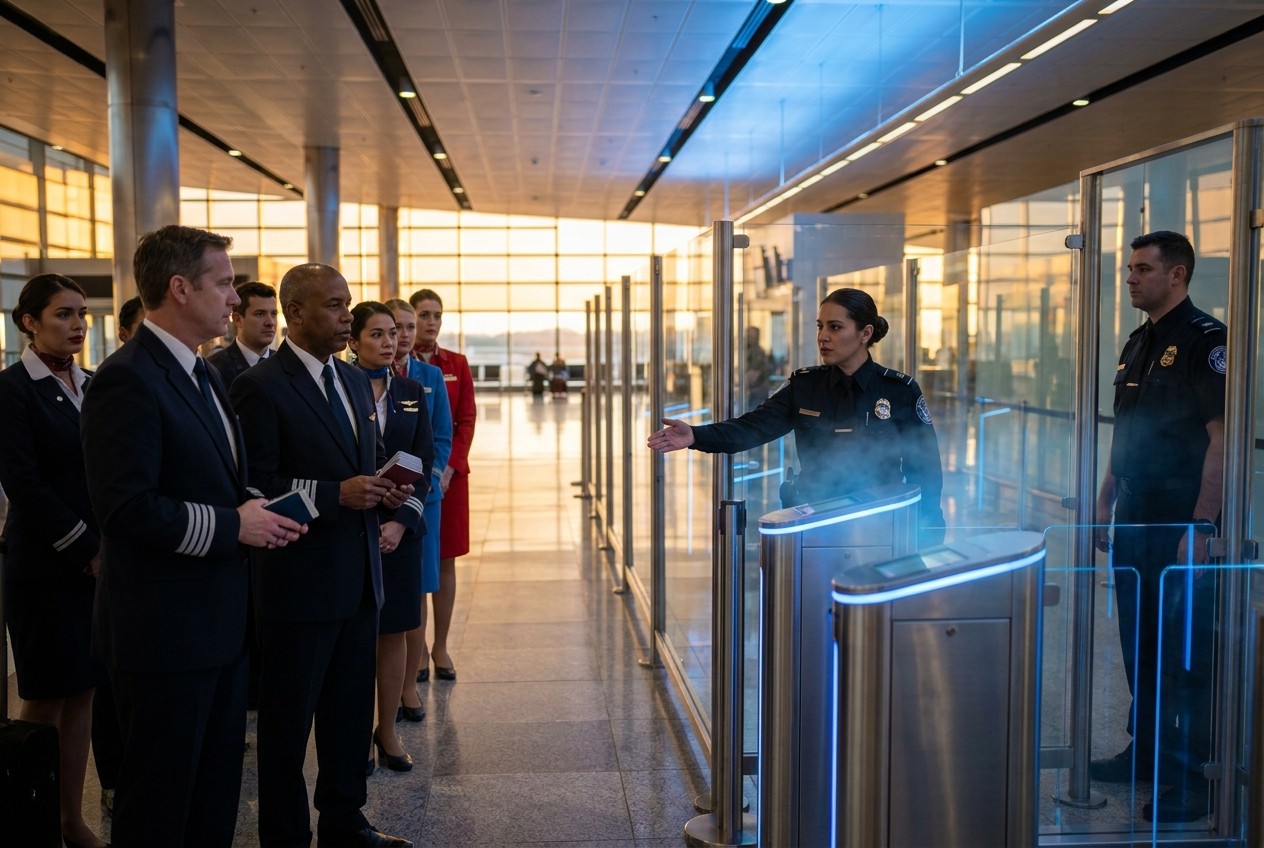
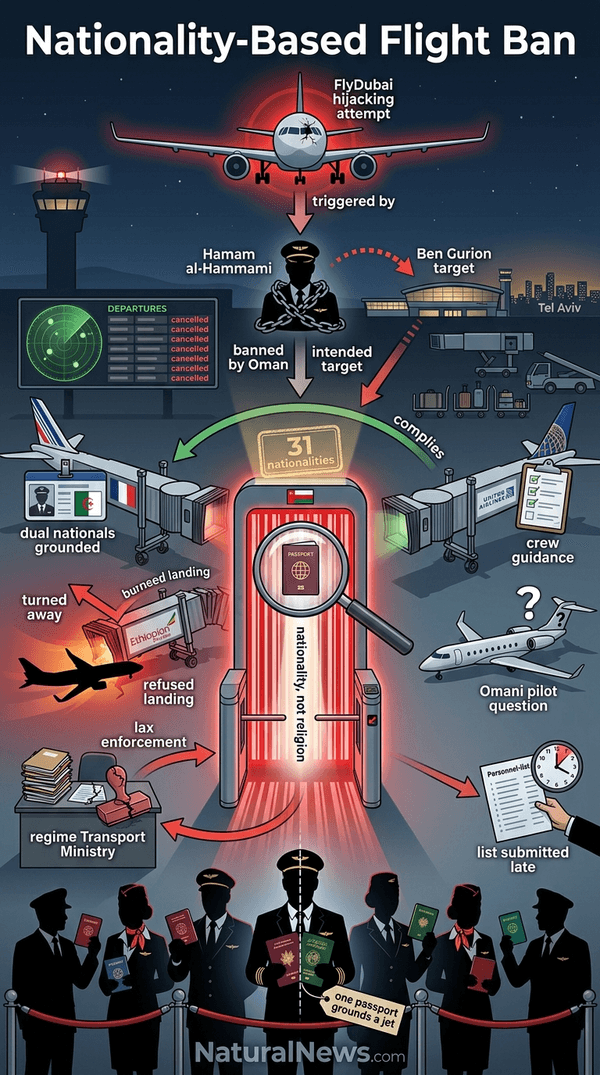
Israel has implemented restrictions on pilots and cabin crew flying passengers to Israel, covering 31 nationalities, according to reports. The directive does not explicitly name religion but targets nationalities of countries without formal diplomatic relations with Israel, Middle East Eye reported [1].
The policy follows a Sept. 30 attempted hijacking involving FlyDubai, officials said. The restrictions are already in effect, and some major carriers are complying while others have been turned away, according to the reports [1].
The order applies to all pilots and cabin crew flying passengers to Israel, ZeroHedge reported. Middle East Eye stated that "The directive targets nationality rather than explicitly naming religion, but effectively excludes Muslim pilots from those countries, alongside other affected crew members" [1].
Scope of the Restrictions
The restrictions cover Algerian, Tunisian, Iranian and Pakistani citizens, and also affect French citizens who hold one of the listed nationalities, according to The Associated Press [1]. The AP report stated: "The restrictions cover 31 nationalities, including Algerian, Tunisian, Iranian and Pakistani citizens. They also affect French citizens who hold one of the listed nationalities" [1].
Air France has agreed to enforce the Israeli ban on French pilots with citizenship from mostly Arab or Muslim countries, according to a report cited by ZeroHedge [1]. The airline's decision was reported by Middle East Eye, which noted that the carrier agreed to enforce an Israeli order barring pilots and cabin crew who hold the nationality of a state without formal diplomatic relations with Israel, according to a Mediapart report [2].
The Israeli Transport Ministry has faced criticism over what reports describe as lax enforcement of security procedures and laws. The ministry stands accused of lax enforcement of security procedures and laws on the books in the wake of the FlyDubai incident [1]. According to India Today, Chicago-based United Airlines has informed its pilots and cabin crew about nationality-based rules for flights to and from Israel following the Air France ban on airline crew from 31 nations, including Pakistan [3].
Enforcement Incidents
Israel turned away an Ethiopian Airlines flight bound for Tel Aviv because of the nationality of one of its pilots, according to reports. An Ethiopian Airlines cargo flight bound for Israel was forced to return to Addis Ababa after Israeli authorities refused to allow it to land, Middle East Eye reported [4]. The report stated that Israel has barred pilots from 31 nationalities from landing in the country amid new restrictions [4].
A cargo jet was forced to turn around in mid-air on Monday after being denied permission to land because one pilot was Indonesian, officials said. One of the pilots was Indonesian and the cargo plane operator only submitted its personnel list to Israeli authorities after the plane took off, bound for Israel [1].
The pattern of enforcement indicates that some carriers are complying with the policy while others are being turned away. The cargo plane operator submitted its personnel list too late for Israeli authorities to approve the flight before takeoff, according to the report [1].
FlyDubai Incident and Security Context
The FlyDubai attacker had already been banned from flying by Oman over his extremist Islamist views, according to reports. He is currently being interrogated in Dubai, and it is believed he intended to crash the hijacked FlyDubai flight into the main terminal building at Israel's Ben Gurion airport, in an effort to cause as many casualties as he could [1].
The suspect, identified as Hamam al-Hammami, engaged in a "premeditated plot" to crash the aircraft into Tel Aviv's Ben Gurion Airport, according to United Arab Emirates Attorney General Hamad Saif al Shamsi [5]. The attorney general also said the 29-year-old suspect was inspired by the Sept. 11, 2001, terrorist attacks in the United States and intended to crash the aircraft in a suicide attack, with the aim of "causing the greatest possible loss of life" [6].
The Israeli Transport Ministry has been accused of failing to flag the attacker despite the prior ban. The FlyDubai attacker should have been flagged, given he had already been banned from flying by the country of Oman over his extremist Islamist views [1]. According to The New York Times, the violent cockpit attack raised questions not only about his motivations but also about whether he might have evaded the background checks that most pilots undergo [7].
Conclusion
The nationality-based restrictions on pilots and crew flying to Israel represent a significant shift in aviation security policy following the Sept. 30 FlyDubai incident. The policy, covering 31 nationalities, has been enforced with cargo and passenger flights turned away, while carriers like Air France and United Airlines have adjusted their operations to comply [1][3].
The incident has raised questions about how the attacker evaded detection despite prior warnings, and the Israeli Transport Ministry has faced criticism over lax enforcement of security procedures [1].
As enforcement continues, the policy has drawn attention for its focus on nationality rather than explicit religious criteria, with Middle East Eye noting that it effectively excludes Muslim pilots from the listed countries alongside other affected crew members [1]. The situation remains fluid, with carriers adjusting to the new requirements and Israeli authorities not publicly commenting on specific criteria beyond the nationality list.
References
- Israel Imposes 'Muslim Ban' For Pilots & Crew In Wake Of FlyDubai Hijacking. https://www.zerohedge.com/geopolitical/israel-imposes-muslim-ban-pilots-crew-wake-flydubai-hijacking
- Air France enforces Israeli ban affecting pilots from Muslim .... https://www.middleeasteye.net/news/air-france-enforces-israeli-ban-affecting-pilots-muslim-majority-countries
- Air France bans Pakistani pilots from Israel flights. More airlines to .... https://www.indiatoday.in/world/story/pakistan-pilots-crew-banned-flydubai-hijack-attempt-israel-new-restrictions-air-france-united-airline-itspc-3016930-2026-10-14
- Israel turns back Ethiopian Airlines cargo flight over Indonesian pilot's nationality. https://www.middleeasteye.net/news/israel-turns-back-ethiopian-airlines-cargo-flight-over-indonesian-pilots-nationality
- Alleged Flydubai Hijacker Planned to Kill as Many People as Possible, Inspired by 9/11 Attacks. https://www.ntd.com/alleged-flydubai-hijacker-planned-to-kill-as-many-people-as-possible-inspired-by-9-11-attacks_1177949.html
- UAE Prosecutor Says Flydubai Co-Pilot Drifted Toward Extremism While in Australia. https://theepochtimes.com/world/uae-prosecutor-says-flydubai-co-pilot-drifted-toward-extremism-while-in-australia-6102005
- FlyDubai Attack Raises Questions About Pilot Background Checks. https://www.nytimes.com/2026/10/02/world/middleeast/israel-plane-flydubai-pilot-background-check.html
- Geopolitical. https://www.zerohedge.com/geopolitical
- A look at what's being said on the FlyDubai attack on an Israel-bound .... https://apnews.com/article/israel-flydubai-pilot-attack-oman-trump-iran-e4f97bf2d974826fad3a49d5a54a3f5b
Explainer Infographic







Please contact us for more information.