


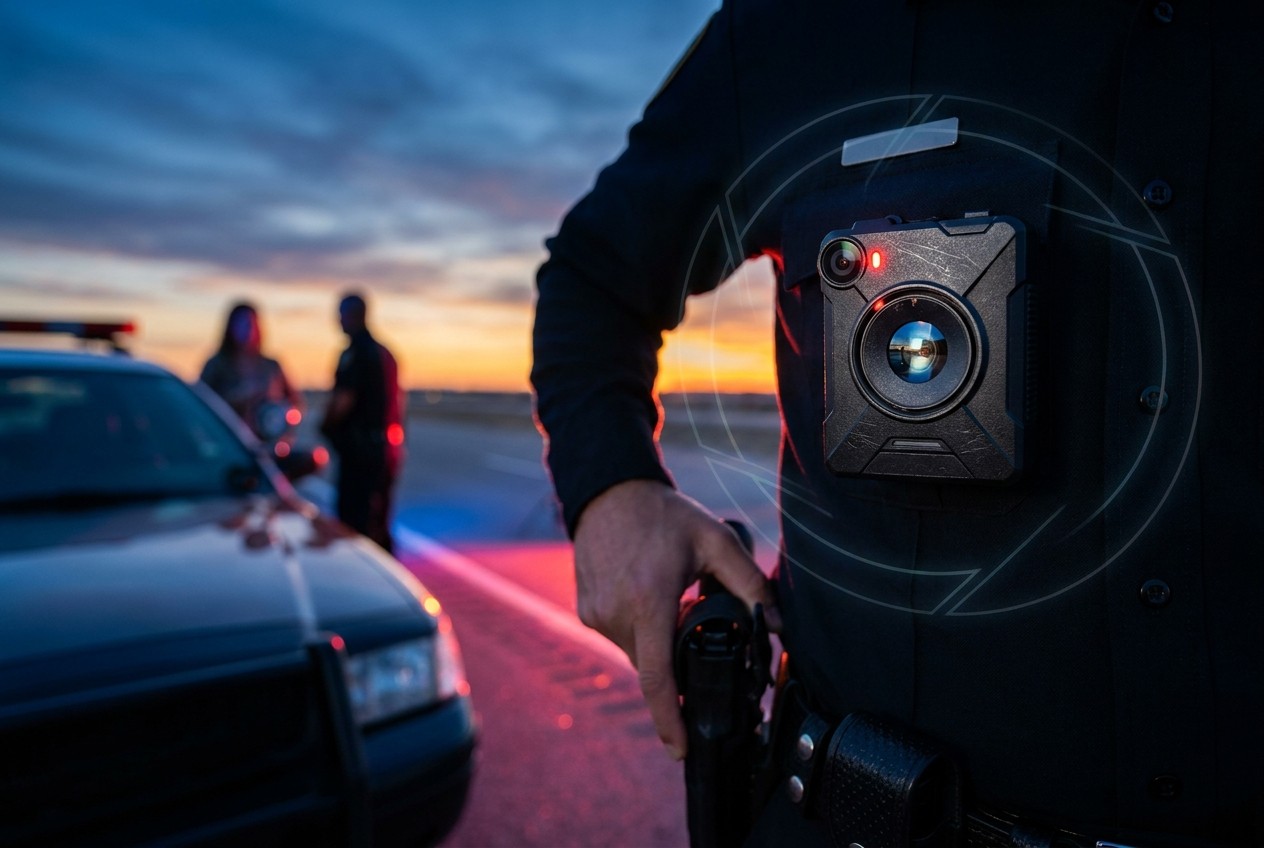
The Department of Homeland Security (DHS) has rejected a recommendation for Immigration and Customs Enforcement (ICE) officers to use body-worn cameras that automatically activate when they draw their weapons or engage vehicle sirens.
The recommendation was included in a report released by the Government Accountability Office (GAO) on Wednesday, Oct. 14. The report, conducted at the request of Democratic members of Congress, covered ICE and Customs and Border Protection (CBP) body-worn camera policies from February 2025 through September, according to the office.
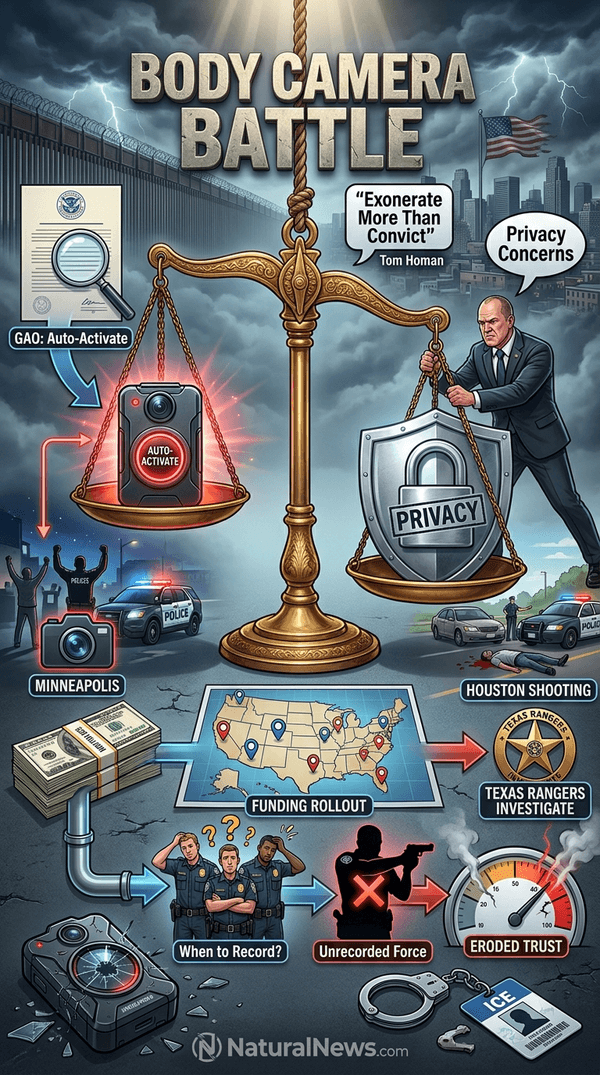
The audit examined how the two agencies deployed cameras, trained personnel and managed the footage those devices captured. But the DHS – which oversees ICE – rejected the recommendation, stating that automatic activation could raise privacy concerns in certain enforcement settings. Democratic lawmakers demanded the camera rollout during a months-long funding dispute over the DHS earlier this year, and the devices became a central point of contention in negotiations over agency appropriations [1].
Report Examines ICE and CBP Body-Worn Camera Policies
The GAO stated that automated activation would help capture unexpected incidents involving use of force, when officers may not have time to manually switch on their cameras. The report added that such a policy would improve transparency and public trust in immigration enforcement operations.
DHS disagreed with the finding. The department told auditors that automatic recording could capture sensitive interactions with informants, victims of crime or individuals who are cooperating with investigations, creating risks that outweigh the benefits of automatic activation.
ICE requires officers to turn on cameras at the beginning of pre-planned enforcement activities, according to DHS. That approach leaves discretion to individual officers during unplanned encounters, a gap that the GAO identified as a weakness in the current policy framework.
ICE Rollout Followed Funding and July Shooting
Former Homeland Security Secretary Kristi Noem announced in February that every DHS officer operating on the ground in Minneapolis would receive a body camera, following the fatal shooting of two protesters during clashes with federal agents in that city [2]. Noem, who was later fired by President Donald Trump after questions over her spending and her conduct in the aftermath of the Minneapolis incident [3], said officers nationwide would receive cameras as funds became available [4].
Congress subsequently provided $20 million to complete the ICE body-camera rollout. In July, ICE announced that half of all its field offices across the country have body cameras for its agents and the rest are expected to get them within 60 days, according to the DHS [5].
Lorenzo Salgado Araujo, a Mexican national, was shot at a traffic stop that officials later said was initiated because agents saw a vehicle resembling the target of an operation. DHS said the man was not the intended target [6].
The GAO report stated that DHS reported all ICE offices had received cameras as of Aug. 5, with training still ongoing. Acting ICE Director David Venturella said in August that the rollout was ahead of schedule and that all officers would be equipped by the end of that month [7].
Officers Reported Confusion Over Activation Rules
The GAO found that some ICE and CBP officers were confused about when to activate their cameras, according to the report. Officers told auditors they did not know whether they were required to record during vehicle searches or while transporting detainees.
At one ICE office, staff had not begun using the cameras even after completing training, the report stated. The GAO also found that neither agency had updated its plans for overseeing body-worn camera programs despite growth in staff assigned to those programs.
White House border czar Tom Homan said in July that ICE agents conducting traffic stops would be required to record those stops. "They [body cameras] exonerate more law enforcement than they convict, and I want officers to wear body cameras because I want the American people to see what the officers saw when they took that action," Homan said in an interview on "Fox & Friends Weekend" [8].
Report Did Not Examine High-Profile ICE Shootings
The GAO report did not examine specific shootings, including the July 7 fatal shooting of Araujo in Houston or other high-profile incidents. The Houston shooting prompted Texas Gov. Greg Abbott (R) to direct the Texas Rangers to investigate alongside federal officials [9].
ICE has faced scrutiny over its use of force during the second Trump administration. Rep. Adriano Espaillat (D-NY) said during a July congressional field hearing in Houston that eight people, including two U.S. citizens, had been killed by ICE agents during that period [10]. Critics of the agency have argued that body cameras could hold officers accountable in cases where the use of force is disputed.
The agency has maintained in some incidents that officers were under threat from suspects, including cases where officers were not wearing body cameras at the time, according to critics. The GAO report did not address those specific claims.
Conclusion: DHS Says Training Ongoing as Debate Continues
DHS said Wednesday that it had purchased camera devices for all ICE officers but that required training is still ongoing and is expected to finish soon. The department reiterated its position that automated activation would create privacy problems and did not indicate that it would change its policy. No final resolution was announced, and the dispute over camera activation policy remains open.
References
- All ICE Enforcement Officers in Maine Equipped With Body-Worn Cameras, Sen. Collins Says. https://theepochtimes.com/us/all-ice-enforcement-officers-in-maine-equipped-with-body-worn-cameras-sen-collins-says-6075261
- Noem directs federal officers in Minneapolis to immediately start wearing body cameras. https://justthenews.com/government/security/noem-directs-federal-officers-minneapolis-immediately-wear-body-cameras?utm_source=justthenews.com&utm_medium=feed&utm_campaign=external-news-aggregators
- Trump Swears In New DHS Chief Markwayne Mullin. https://www.ntd.com/trump-swears-in-new-dhs-chief-markwayne-mullin_1134319.html
- All Federal Officers in Minneapolis Will Now Have Body Cameras: Noem. https://www.ntd.com/all-federal-officers-in-minneapolis-will-now-have-body-cameras-noem_1123535.html
- Body cams coming within 60 days for all ICE offices. https://justthenews.com/government/federal-agencies/body-cams-coming-within-60-days-all-ice-offices?utm_source=justthenews.com&utm_medium=feed&utm_campaign=external-news-aggregators
- Man fatally shot by ICE in Houston was not intended target, DHS says. https://bbc.com/news/articles/cm2rm66xd17o
- ICE to Complete Rollout of Body-Worn Cameras This Month. https://theepochtimes.com/us/ice-to-complete-rollout-of-body-worn-cameras-this-month-6072894
- ICE Agents to Wear Body Cameras During Traffic Stops, White House Border Czar Says. https://theepochtimes.com/us/ice-agents-to-wear-body-cameras-during-traffic-stops-white-house-border-czar-says-6064237
- Texas will investigate ICE's fatal shooting of man in Houston, governor says. https://bbc.com/news/articles/cq8924v711lo
- Democratic members of Congress hold field hearing on ICE shooting in Houston. https://justthenews.com/nation/states/center-square/democratic-members-congress-hold-field-hearing-ice-shooting-houston?utm_source=justthenews.com&utm_medium=feed&utm_campaign=external-news-aggregators
Explainer Infographic





Please contact us for more information.