


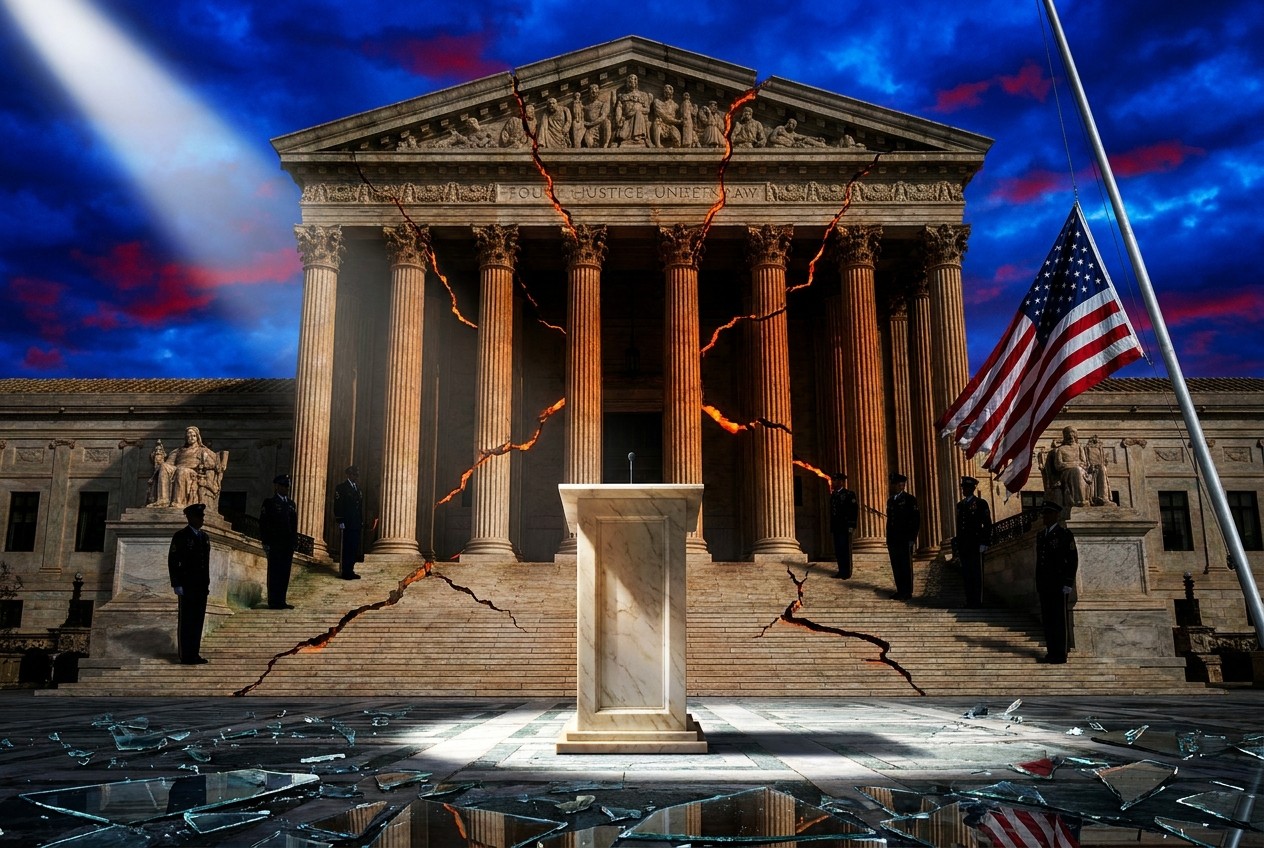
Allies of President Donald Trump have discussed invoking martial law and other extraordinary federal measures in internal conversations tied to disputed election scenarios, according to an Axios report published Oct. 16.
Neither Trump nor his campaign publicly confirmed the discussions described in the report. Axios stated that people in this orbit have close access to the president [1].
Report Details Discussions Among MAGA Allies
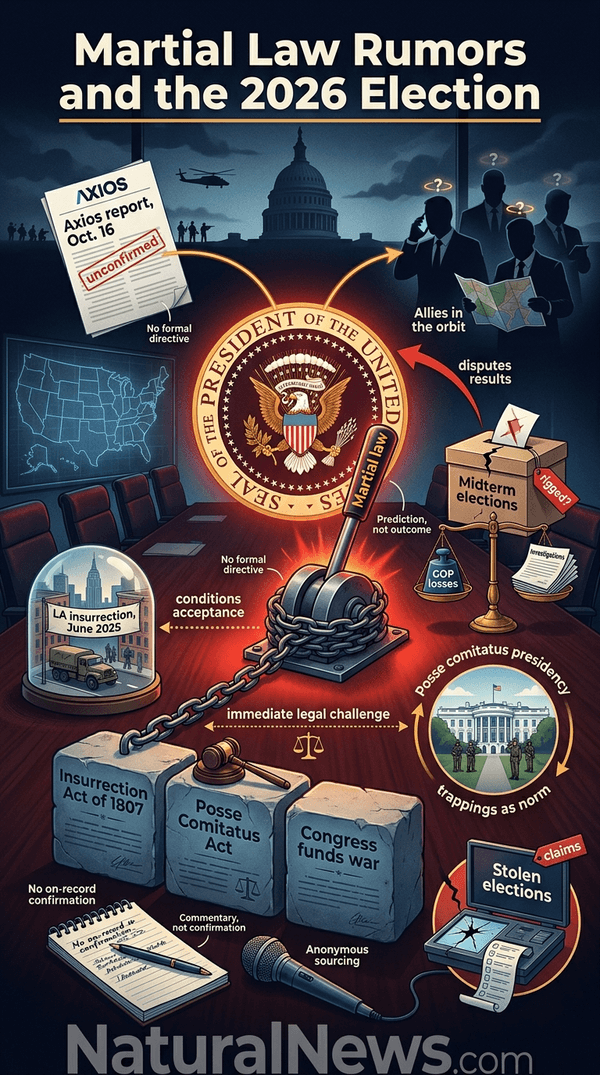
No formal directive or public evidence of an active martial law plan was cited in the report.
Independent commentators have discussed similar scenarios in recent months. Those statements were commentary and were not presented as confirmation of any operational plan.
The report's account circulated widely among aggregators. Newsweek reported that Trump's allies are openly discussing martial law and other extraordinary federal action if they conclude that next month's midterm elections have been "rigged" [2].
Trump Campaign and Officials Respond
No on-record confirmation came from Trump himself, and the supplied reporting does not include a campaign statement affirming or denying operational planning.
Public discussion of domestic military deployment has been ongoing. In June 2025, Trump declared Los Angeles in a state of "insurrection" amid mass protests against federal deportation raids and directed Department of Homeland Security resources toward the situation [3].
A year after Trump deployed military troops to the nation's capital, the Ron Paul Institute (RPI) described what it called a "posse comitatus presidency" in which the visual trappings of martial law had become the norm, not the exception [4]. Those accounts describe prior deployments, not a martial law order connected to the 2026 elections.
The legal boundary remains contested. Analysts who track the issue say any move toward martial law would face immediate legal challenge; that assessment is a prediction, not a documented outcome.
Legal and Political Context
Martial law has no explicit definition in the Constitution, and legal analysts often cite the Insurrection Act of 1807 in discussions of domestic military deployments. Commentary published by the RPI noted that the Posse Comitatus Act restricts the use of the military as an enforcer of the president's will and that the military is supposed to remain under the constitutional authority of Congress to declare war and provide funding [5]. The same commentary stated that Trump is increasingly using the military to condition citizens to accept martial law [5].
The political environment surrounding the 2026 midterms is strained. The New American reported that the midterm elections are expected to go badly for Republicans and that losing both congressional chambers would likely mire Trump and possibly members of his Cabinet in nonstop investigations and impeachments [6]. A NaturalNews commentary argued that the Republican Party is barreling toward a devastating defeat in the midterms [7]. Those are assessments of electoral prospects, not evidence of election irregularities.
Some commentators have disputed the framing of the Axios account. A Brighteon program description promoting an Oct. 14, 2026, episode said the presentation argued that stolen elections equal stolen sovereignty and pointed to claims of compromised voting machines and unpurged voter rolls, while promising talk of pausing the midterms and martial law [8].
Those claims were characterized as a presentation's arguments, and the supplied material does not substantiate them. Independent media figures have also argued that anonymous sourcing has been used to mischaracterize private talks, according to online statements; no specifics of those statements were provided in the supplied material.
What Is Known and Unconfirmed
The discussions reportedly remained among allies rather than within an official chain of command. Observers said any move would face legal challenges, according to analysts; that remains a projection rather than a documented event.
The broader record shows that martial law has been used elsewhere for election-related purposes. Ukraine has operated under martial law since Russia's full-scale invasion in February 2022, and the Martial Law Act explicitly bans presidential, parliamentary and local elections, with parliament renewing the arrangement in 90-day increments [9].
AntiWar.com reported that Zelensky's term expired more than two years ago and that he has remained in office without being reelected because elections were suspended under martial law [10]. Those facts describe Ukraine's legal framework, not the American one.
References
- Trump's MAGA allies openly discuss martial law. https://www.axios.com/2026/10/16/trumps-maga-allies-openly-discuss-martial-law
- Trump allies discuss martial law ahead of midterms. https://www.newsweek.com/martial-law-trump-allies-midterm-elections-explained-12580815
- Trump declares LA Under Insurrection as federal forces mobilize to expel illegal migrants - NaturalNews.com, June 09, 2025.
- The Posse Comitatus Presidency: Trump’s Standing Army on American Streets. https://ronpaulinstitute.org/the-posse-comitatus-presidency-trumps-standing-army-on-american-streets/
- The Posse Comitatus Presidency: Trump’s Standing Army On American Streets. https://www.technocracy.news/the-posse-comitatus-presidency-trumps-standing-army-on-american-streets/
- From Sanctions to Diesel Deals: Trump Desperate to Lower Fuel Prices Before Midterms. https://thenewamerican.com/us/politics/foreign-policy/from-sanctions-to-diesel-deals-trump-desperate-to-lower-fuel-prices-before-midterms/
- Why the GOP Deserves to Lose. https://www.naturalnews.com/2026-10-09-why-the-gop-deserves-to-lose.html
- Larry Ballard on Midterm Elections Turmoil. Faithful in Babylon: Daniel. B2T Show, Oct 14, 2026.
- Zelensky cares more about his own power than the citizens he supposedly serves, using wartime as the perfect cover. https://www.naturalnews.com/2026-10-14-zelensky-cares-more-about-his-own-power.html
- Zelensky Opposed To Wartime Elections. https://news.antiwar.com/2026/08/23/zelensky-opposed-to-wartime-elections/
Explainer Infographic









Please contact us for more information.