


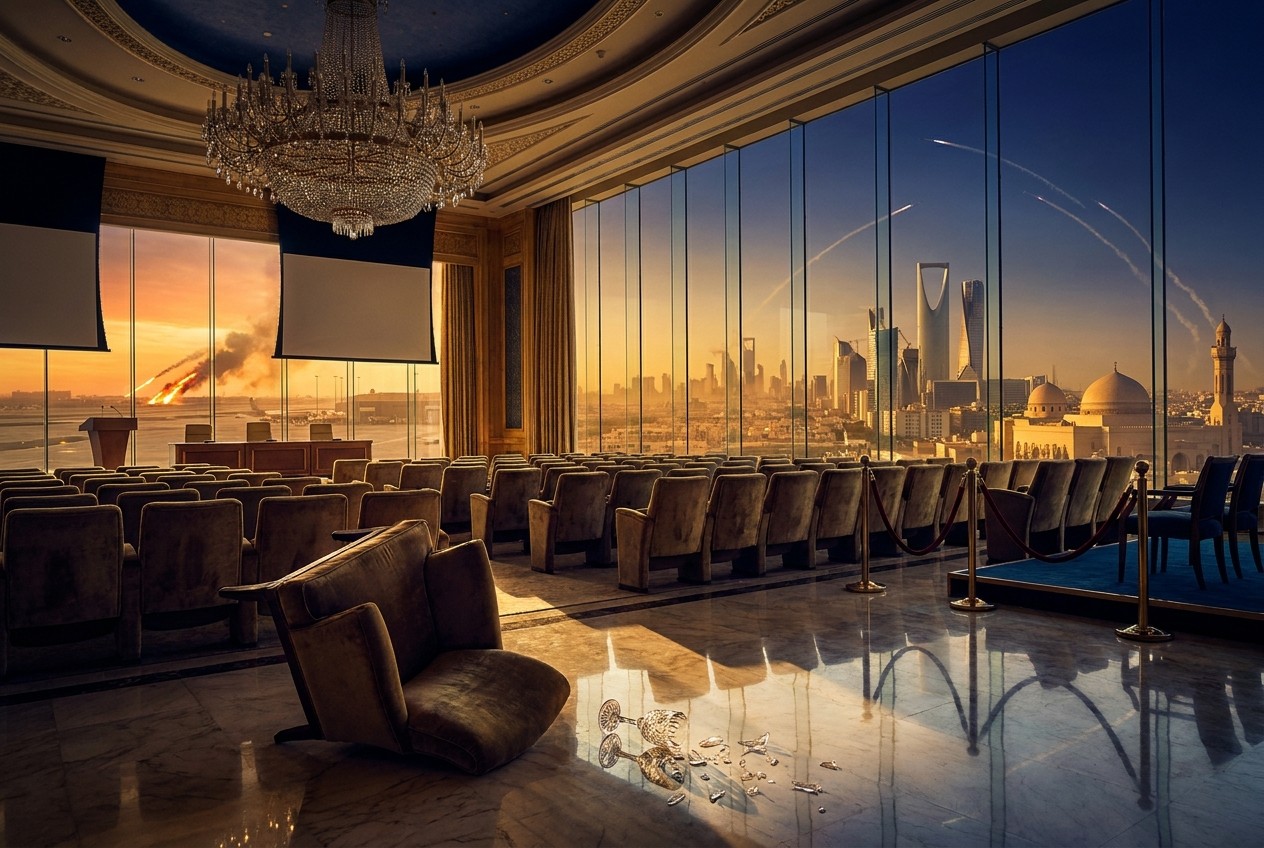
Saudi Arabia plans to make its flagship Future Investment Initiative a hybrid event, allowing executives to attend remotely after deadly weekend attacks on Riyadh airport, Reuters reported on Wednesday, citing two people familiar with the matter [4]. Wall Street executives privately relayed safety concerns to organizers, including the head of the kingdom's sovereign wealth fund, before the final decision was made, according to people familiar with the matter [5].
The event had been scheduled for Oct. 26–29 in the Saudi capital [1].
The Saudi government did not announce a new date for the in-person segment, stating only that the conference would be moved to next year [2][3].
Background on the Investment Conference
The Future Investment Initiative was launched as a centerpiece of Saudi Arabia's Vision 2030 economic diversification plan, an effort introduced in 2016 as a blueprint for a life after oil [6]. Previous editions of the event drew global executives, government officials, and financial institutions to Riyadh, and the conference served as a venue for high-profile announcements, including the granting of citizenship to a humanoid robot named Sophia at the Future Investment Initiative conference in Riyadh [7].
The kingdom's broader investment strategy has included high-profile commitments such as the $500 billion Neom mega-city project, which was designed to span 26,500 square kilometers across parts of Saudi Arabia, Egypt, and Jordan and to be powered by renewable energy [8]. As part of Vision 2030, Neom was described as a sprawling project stretching across 10,000 square miles in the southwestern corner of the Saudi peninsula, inspired in part by the fictional kingdom of Wakanda [9].
However, Vision 2030 has already strained the kingdom's finances amid delays, budget cuts, and a growing government deficit, according to NaturalNews.com [6]. Riyadh has run a budget deficit for six consecutive quarters and has become the largest issuer of international debt in emerging markets [6]. The shelving of a $2.5bn stadium planned as a venue for the 2034 Fifa World Cup inside The Line, one of Crown Prince Mohammed bin Salman's flagship projects, further illustrated the mounting pressure on the kingdom's megaprojects [10].
Reactions from Investors and Analysts
Some investors said the delay could affect short-term investment planning, though independent analysts noted that conference postponements are not uncommon and do not necessarily indicate a policy shift. Alternative commentators questioned whether the delay reflects broader economic pressures, pointing to the combination of security threats and fiscal strain facing the kingdom [6][11].
The safety concerns were underscored by the scale of the attacks on Riyadh. At least 12 people were killed and 309 others injured in an attack on King Khalid International Airport as the Houthis escalated their campaign [12]. The strikes shattered the Saudi capital's aura of calm, shaking expatriates' sense of security and threatening Saudi Arabia's ambitions to become a global hub for tourism and investment, according to Middle East Eye [11].
The Houthis have vowed to continue striking petrochemical facilities in Saudi Arabia, including Saudi Aramco sites, as retaliation escalates [13]. Since Oct. 6, the strikes have killed at least 20 people and injured many more, raising fresh questions about the limits of the kingdom's sophisticated air defenses [14].
Economic Context and Implications
Saudi Arabia has sought to reduce reliance on oil revenue by attracting foreign capital under Vision 2030, a strategy that has included a $3 billion investment in Elon Musk's xAI and a stake in SpaceX as part of a push to become a global AI leader [15]. The Public Investment Fund has been central to domestic investment projects, and Gulf states have recalibrated foreign investments as war drains revenues, according to Middle East Eye [16].
Oil price volatility and global interest rates have influenced investment decisions in the region. Oil climbed back above $100 per barrel in early October as Hormuz tanker attacks resumed and global bond yields surged [17]. The closure of the Strait of Hormuz, through which a fifth of the world's traded oil and gas passed before the Iran conflict began in February, has forced Gulf Cooperation Council states to balance domestic infrastructure and overseas economic ambitions [18][16].
Gulf economies have been refinancing sovereign wealth funds as the Iran war hits revenues, with a small group of U.S. and Canadian firms now sitting across Gulf energy infrastructure and money as the boundaries between sovereign wealth and private capital break down [19]. The economic pressure is compounded by the Houthi campaign, which has targeted oil installations, pipelines, and export routes, demonstrating that Iran and its regional allies can still threaten Saudi cities and critical infrastructure [20].
References
- Saudis postpone investment conference until 2027 amid .... https://thehill.com/policy/international/6159092-saudi-arabia-postpones-investment-conference/
- Saudi Arabia postpones FII investor conference to 2027 - CNBC. https://www.cnbc.com/2026/10/19/saudi-arabia-postpones-fii-investor-conference-to-2027.html
- Saudi Arabia postpones future investment initiative until 2027 .... https://www.middleeastmonitor.com/20261020-saudi-arabia-postpones-future-investment-initiative-until-2027-following-houthi-attacks/
- Saudi Arabia to offer remote option for FII conference after attacks: Reuters. https://www.middleeasteye.net/live-blog/live-blog-update/saudi-arabia-offer-remote-option-fii-conference-after-attacks-reuters
- Saudi postpones FII in person after Wall Street lobbying. https://www.semafor.com/article/10/19/2026/saudi-to-decide-on-postponing-fii-after-wall-street-lobbying
- Saudi Crown Prince Faces Regional Threats, Strained Alliances as Vision 2030 at Risk. https://www.naturalnews.com/2026-09-17-saudi-crown-prince-regional-threats-strained-alliances.html
- Historical first_ Robot granted citizenship in Saudi Arabia even though she has no consciousness - NaturalNews.com, November 16, 2017.
- Plans for a future mega-city in Saudi Arabia encompassing automated tech renewable energy - NaturalNews.com, April 24, 2019.
- Saudi Arabia to build futuristic oasis of Neom in a bid to move beyond oil - NaturalNews.com, August 11, 2023.
- Saudi Arabia shelves $2.5bn Neom stadium planned for 2034 World Cup, report says. https://www.middleeasteye.net/news/saudi-arabia-shelves-25bn-neom-stadium-planned-2034-world-cup-says-report
- Riyadh no longer feels safe': Houthi strikes shatter Saudi capital's aura of calm. https://www.middleeasteye.net/news/houthi-strikes-shatter-saudi-arabia-riyadh-aura-calm
- Attack on Riyadh airport leaves 12 dead, more than 300 injured. https://www.middleeasteye.net/news/attack-riyadh-airport-leaves-12-dead-more-300-injured
- Yemen's Houthis vow to continue targeting Saudi Aramco facilities. https://www.middleeasteye.net/news/yemen-houthis-vow-continue-targeting-saudi-aramco-facilities
- Why Have Saudi Air Defenses Failed To Intercept Houthi Missiles?. https://www.zerohedge.com/geopolitical/why-have-saudi-air-defences-failed-intercept-houthi-missiles
- Musk deepens Saudi ties with 3 billion AI deal raising national security questions - NaturalNews.com, February 20, 2026.
- To sustain global influence, Gulf economies recalibrate foreign investments as war drains revenues. https://www.middleeasteye.net/news/gulf-countries-recalibrate-foreign-investments-sustain-global-influence
- Futures Slide From Record As Oil Jumps On Hormuz Tanker Attacks, 30Y Yield Hits 2002 High. https://www.zerohedge.com/markets/futures-slide-record-oil-jumps-hormuz-tanker-attacks-30y-yield-hits-2002-high
- What to Know About the Middle East’s Push to Bypass the Strait of Hormuz. https://theepochtimes.com/world/what-to-know-about-the-middle-easts-push-to-bypass-the-strait-of-hormuz-6102971
- How Gulf states are refinancing sovereign wealth funds as Iran war hits revenues. https://www.middleeasteye.net/opinion/how-gulf-states-are-rebuilding-sovereign-wealth-funds-amid-iran-war-fallout
- When Saudi Arabia realizes it's backed the wrong horse. https://responsiblestatecraft.org/saudi-arabia-trump-relations/
- Saudi Capital’s Airport to Remain Shut This Week. https://www.ntd.com/saudi-capitals-airport-to-remain-shut-this-week_1178522.html
- Growing List Of Major Events Saudi Arabia Forced To Cancel, Postpone. https://www.zerohedge.com/geopolitical/growing-list-major-events-saudi-arabia-forced-cancel-postpone
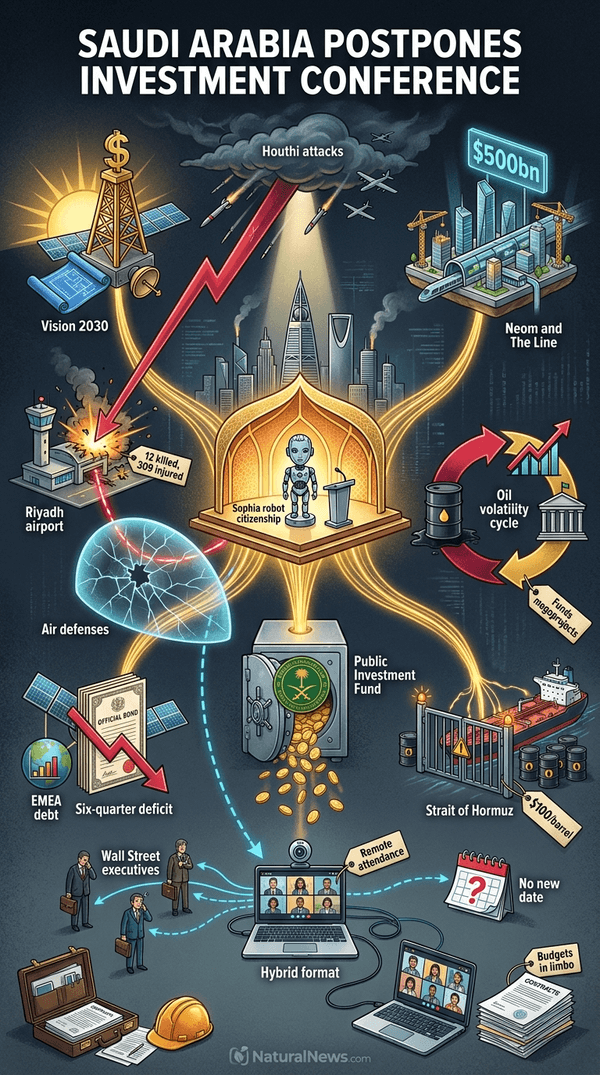
Explainer Infographic





Please contact us for more information.