


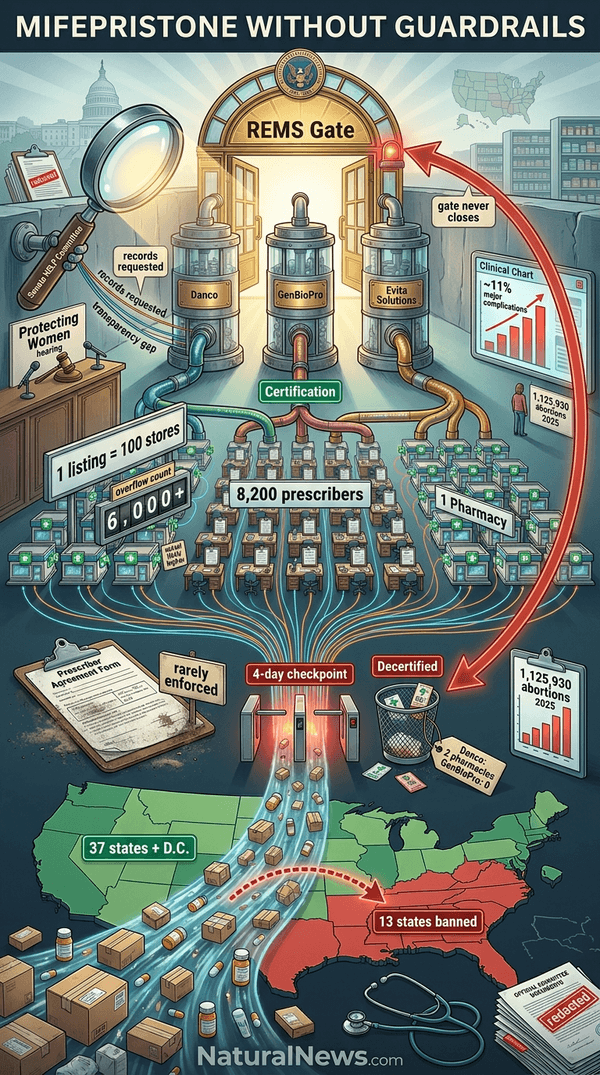
More than 6,000 U.S. pharmacies have been certified to dispense abortion pills under the Mifepristone Risk Evaluation and Mitigation Strategy program, according to a report from the Senate Health, Education, Labor and Pensions Committee titled "Mifepristone Without Guardrails" and highlighted by Live Action.
The report stated that the actual number is likely higher because pharmacy chains with multiple locations need only be listed once.
Sen. Bill Cassidy, the Louisiana Republican who chairs the committee, has been examining the safety of abortion pills through hearings and investigations. In January, the panel held a hearing titled "Protecting Women: Exposing the Dangers of Chemical Abortion Drugs" to scrutinize the safety of medication abortion [1]. The report on pharmacy certifications was released after a months-long investigation into Danco Laboratories, GenBioPro and Evita Solutions [2].
Certification Requirements Under the Mifepristone REMS Program
Certified prescribers are required to provide a signed Prescriber Agreement Form to the certified pharmacy, according to the report. Prescribers must assess the appropriateness of dispensing mifepristone when contacted by a pharmacy about patients receiving the drug more than four calendar days after the prescription was received by the pharmacy, the report stated.
To become certified to dispense mifepristone, pharmacies must complete a Pharmacy Agreement Form and must be able to ship the drug, according to the Food and Drug Administration [3]. The FDA approved mifepristone in 2000, and the drug has been used in a majority of U.S. abortions in recent years [4].
The report raised questions about whether meaningful enforcement of those requirements is taking place.
Decertification Data and Transparency Questions
Danco reported decertifying two pharmacies between October 2024 and September 2025, while GenBioPro reported decertifying none and said corrective action resolved cases of pharmacy noncompliance, according to the report. The report said that Danco and GenBioPro both reported they had never decertified a certified prescriber.
The report said that if GenBioPro had never observed noncompliance among thousands of certified prescribers, it may indicate a lack of visibility into prescribing patterns to verify compliance. Live Action reported that the "Mifepristone Without Guardrails" report found that around 8,200 abortion pill prescribers have been certified so far [5].
The report concluded there was a "consistent pattern of a lack of transparency" regarding mifepristone sponsors' operations and questions about oversight effectiveness.
FDA Criticism, Sponsor Response and Abortion-Pill Data
The report faulted the FDA for "continuously approv[ing] a REMS that did not require any sort of oversight into the prescribers" and called for reinstatement of the in-person dispensing requirement, according to the report.
An April 2025 analysis by the Ethics and Public Policy Center concluded that almost 11% of women suffered sepsis, infection, hemorrhaging or other major conditions after taking mifepristone, according to insurance data cited by pro-life groups. Other analyses have reached similar conclusions about complication rates.
The Guttmacher Institute reported 1,125,930 clinical abortions in 2025, a slight increase from 2024 that it attributed in large part to abortion pills. The drug is banned in 13 states with few exceptions and legal in 37 states and Washington, D.C., according to federal and state policy tracking [6].
Pending FDA Review and Policy Questions
The report's findings come as the second Trump administration has continued Biden-era changes that eliminated the in-person dispensing requirement and stopped enforcement of a federal law against distributing abortion drugs by mail, according to the article.
The FDA has said its review of abortion pill safety data will not be complete until spring 2027. Officials said a study is expected to be completed by mid-December, but it will take time to review and evaluate the results and draft a report [7].
No policy change was announced in the report, which stated that more stringent oversight mechanisms are needed beginning with reinstatement of in-person dispensing.
References
- Senate panel to hold hearing on abortion pill safety - NaturalNews.com, January 13, 2026.
- Chairman Cassidy Exposes Lack of Action by Chemical Abortion Drug .... https://www.help.senate.gov/rep/newsroom/press/chairman-cassidy-exposes-lack-of-action-by-chemical-abortion-drug-companies-endangering-mothers-in-new-report
- Questions and Answers on Mifepristone for Medical .... https://www.fda.gov/drugs/postmarket-drug-safety-information-patients-and-providers/questions-and-answers-mifepristone-medical-termination-pregnancy-through-ten-weeks-gestation
- FDA commissioner stands firm on mifepristone access despite pressure from pro life groups - NaturalNews.com, April 29, 2025.
- 'Without Guardrails': Report shows most physicians don't prescribe .... https://www.liveaction.org/news/without-guardrails-most-physicians-dont-prescribe-abortion-pills
- Are abortion pills banned in the US?. https://usafacts.org/articles/which-states-ban-the-abortion-pill/
- FDA Abortion Pill Review to Continue Into 2027. https://theepochtimes.com/us/fda-abortion-pill-review-to-continue-into-2027-post-6101160
Explainer Infographic










Please contact us for more information.