


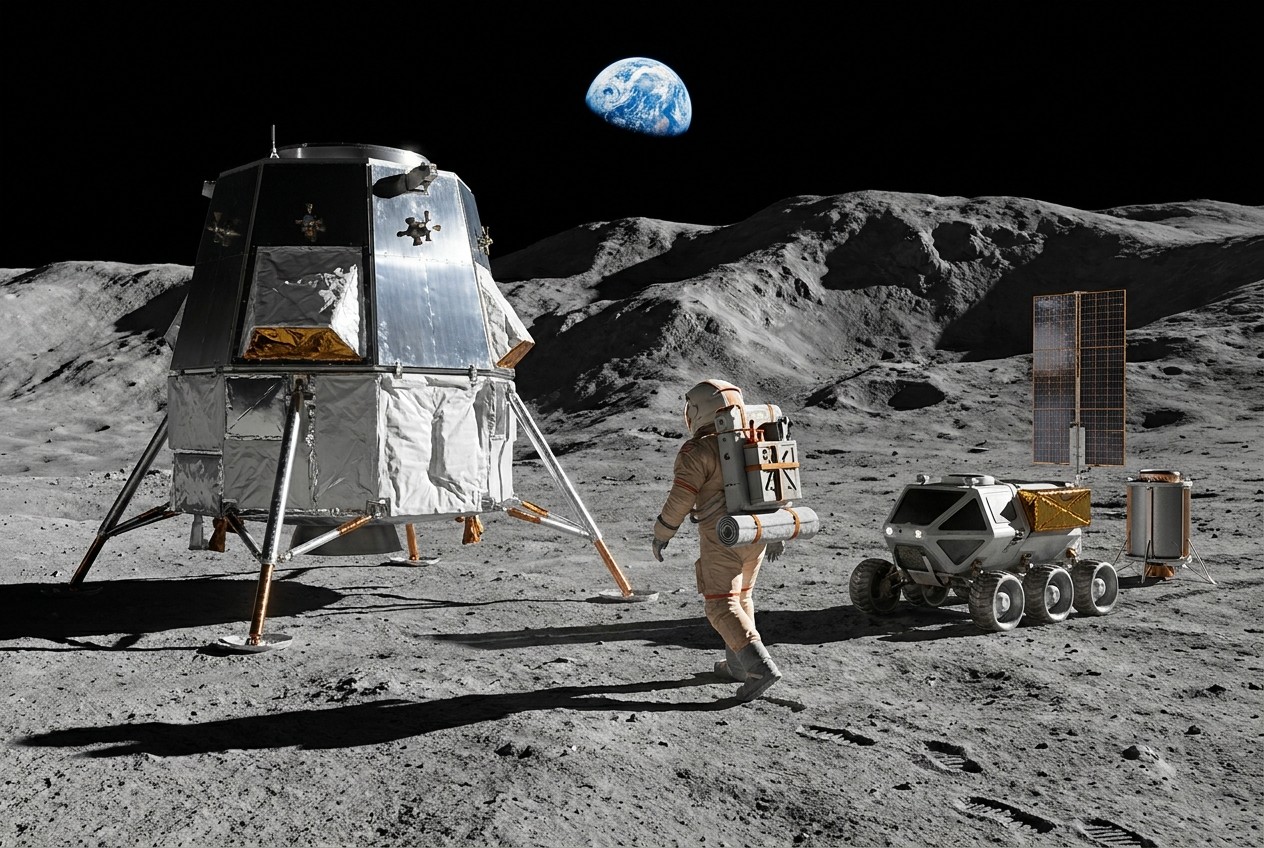
NASA Administrator Jared Isaacman said Friday that the agency remains on track to launch Artemis III next summer as a docking exercise in Earth orbit.
Artemis IV, the first crewed lunar landing since Apollo 17 in 1972, remains scheduled for 2028, according to the agency. The announcement came six months after the Artemis II flight around the moon by four astronauts, the first lunar trip in more than half a century. Isaacman said NASA is accelerating its pace after slow progress in past years.
The push to land astronauts on the lunar surface by 2028 follows a series of delays that have pushed the program's original 2024 target back by four years. The mission's success has provided the agency with a foundation to move forward with the more complex landing missions.
Artemis III to Test Docking With Commercial Landers
The two-week Artemis III mission will carry three NASA astronauts and one Italian astronaut aboard the Orion capsule. The mission will require three launches in quick succession from Cape Canaveral, according to officials. Orion will dock first with Blue Origin's Blue Ghost lander about 270 miles above Earth, then with SpaceX's Starship in a slightly lower orbit. Both commercial landers will be launched next summer for the docking practice.
NASA associate administrator Amit Kshatriya described the mission in enthusiastic terms. The Artemis III mission represents a shift from the original plan, which had called for a lunar landing. Instead, the mission will focus on testing the docking and rendezvous capabilities that are essential for future landing missions.
The commercial landers involved in Artemis III are being developed by Blue Origin and SpaceX under contracts with NASA. SpaceX's Starship has been selected as the first crewed lunar lander for the Artemis program, according to a report in All About Space [1]. The company has already conducted multiple test flights of the vehicle, though challenges remain. An October 2025 report noted that SpaceX had successfully launched and landed Starship in a critical test flight, but major unproven challenges like orbital refueling and landing on the moon remained [2].
NASA Keeps Lander Competition Open
NASA will keep its options open as long as possible before choosing between SpaceX and Blue Origin for the Artemis IV lunar lander, officials said. Isaacman said the new space race with China will be "much closer than it ever needed to be" because of slow going in past years. He said the agency is eliminating endless meetings and bureaucratic inertia while SpaceX, Blue Origin and other companies work around the clock to meet deadlines.
Isaacman said adopting Apollo's urgent approach is "about our own history" and "a playbook this agency knows really well." He cited the Apollo timeline from Apollo 7 splashdown to Apollo 11 in nine months. The Apollo program remains the benchmark for rapid spaceflight development, having achieved the first crewed lunar landing in 1969, just eight years after President Kennedy's challenge.
The competition between commercial partners is part of NASA's strategy to reduce costs and increase innovation. The agency has awarded contracts to multiple companies for lunar landing services, aiming to foster a competitive market for space transportation. According to SpaceNews, NASA officials have emphasized that having two providers ensures redundancy and drives down costs. The strategy reflects lessons learned from the Commercial Orbital Transportation Services program, which successfully developed cargo and crew capabilities for the International Space Station.
Moon Base and Support Hardware Planned
NASA's planned moon base near the lunar south pole should see its first launch by year's end, according to officials. A Pittsburgh company whose first lunar landing mission failed in 2024 will attempt a second mission aimed at the south polar region with a rover and experiments. Officials said more landers, rovers and orbiters are planned, and a moon car will be waiting for the first Artemis moonwalkers. The base will be established through a phased, iterative approach that builds capability over time, according to NASA [3].
Initial moonwalkers will wear lighter, less complex "sortie suits" than Axiom Space's longer-excursion suit, and Axiom will test the new suits on the International Space Station next year.
The moon base will require significant infrastructure, including power systems, habitats, and life support. NASA has been studying nuclear power options for lunar surface operations. A 2011 paper in Nuclear Engineering and Design described a long-operation-life reactor for lunar surface power, highlighting the challenges of providing reliable energy in the harsh lunar environment [4]. Another study in Progress in Nuclear Energy detailed the design of the SP100 space reactor, which was intended for orbital power supply and lunar applications [5]. These technologies will be critical for sustaining a permanent human presence on the moon.
NASA Links Accelerated Schedule to Apollo Playbook
NASA is adopting the urgent approach used from 1968 through 1972, when 24 astronauts flew to the moon and 12 landed on it, according to Isaacman. The schedule remains contingent on commercial landers, spacesuits and other hardware meeting deadlines, officials said. Artemis III is confined to Earth orbit and will not travel to the moon, while Artemis IV is planned as the first crewed lunar landing since Apollo.
The Apollo playbook involved rapid iteration and risk-taking, with missions flying approximately every two to three months at the program's peak. NASA aims to replicate that cadence with Artemis, though the involvement of commercial partners adds complexity. The agency is also discussing a perimeter for the base, reflecting a growing focus on security and sustainability.
The comparison to Apollo is not exact. Apollo was a Cold War race with the Soviet Union, while Artemis is a broader international effort with commercial partners. NASA's own materials describe the Artemis program as a collaboration with international partners, including the European Space Agency, which has invested in the program. A report in All About Space noted that ESA announced a multi-billion-euro investment in robotic and human exploration of the Solar System, representing a large expansion to Europe's contribution to Artemis [6]. The program's success will depend on sustaining this international and commercial cooperation through the remainder of the decade.
References
- downmagaznet-8. downmagaz.net
- SpaceX aces 11th Starship test but major hurdles remain before 2027 moon landing - NaturalNews.com, October 14, 2025
- Moon Base Phases. https://www.nasa.gov/moonbase-phases/
- Long operation life reactor for lunar surface power. Mohamed S. El-Genk. Nuclear Engineering and Design 241 (2011) 2339–2352
- SPIOO SPACE REACTOR DESIGN. Acrobat 4.05 Capture Plug-in for Windows. Progress in Nuclear Energy Vol. 42 No. 3 pp. 323-359 2003
- downmagaznet-113. downmagaz.net
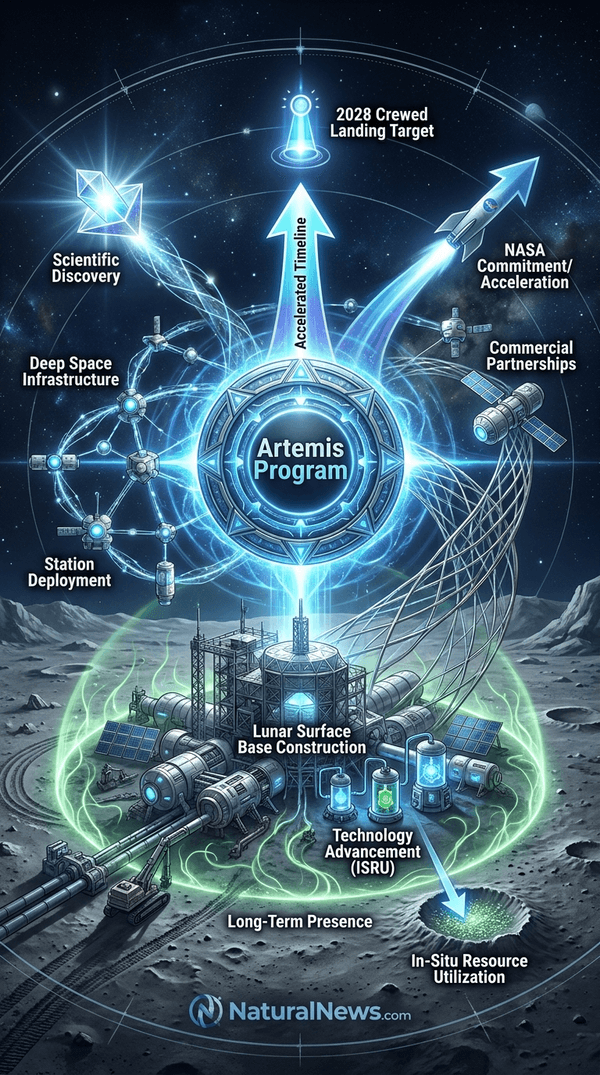
Explainer Infographic







Please contact us for more information.