



Colorectal cancer incidence in the United States rose 4.4% in 2023, reaching 38.3 cases per 100,000 people, according to a new analysis of National Cancer Institute data. The increase follows more than two decades of decline and marks the first annual rise recorded in the Surveillance, Epidemiology, and End Results (SEER) Program since tracking began in 2000, the analysis stated.
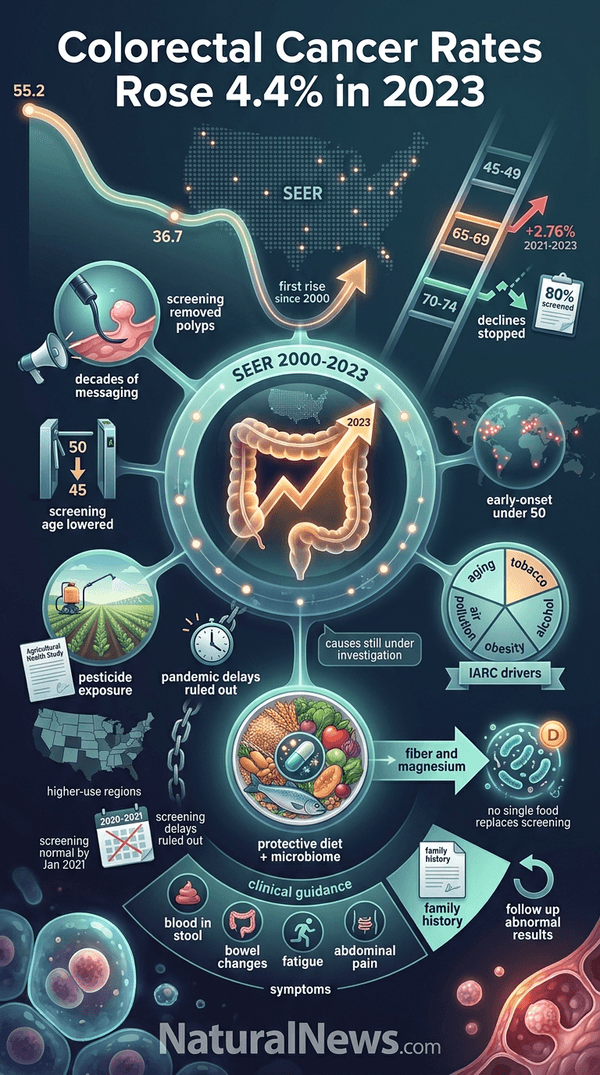
The overall rate had fallen from 55.2 cases per 100,000 people in 2000 to 36.7 in 2022 before climbing to 38.3 in 2023, according to the report. Researchers said the increase was not limited to younger adults, adding that the reasons remain under investigation.
The SEER program covers just under half of the U.S. population, officials said.
Study Details and Overall Trend
Researchers analyzed colorectal cancer rates from 2000 to 2023 using data from the National Cancer Institute's Surveillance, Epidemiology, and End Results Program, according to the study. They tracked overall trends as well as differences between age groups, the analysis stated.
Overall rates dropped from 55.2 per 100,000 in 2000 to 36.7 in 2022, then climbed to 38.3 in 2023, a 4.4% increase, according to the analysis. The report described the 2023 figure as the first annual rise in the SEER data since 2000.
The report's authors said the reversal is unexpected and not fully explained by the data currently available.
Age Group Trends
Incidence rose across nearly every age group up to 65 to 69, with an average annual increase of 2.76% between 2021 and 2023, according to researchers. Rates among adults ages 45 to 49 may partly reflect guidelines that lowered the recommended screening age from 50 to 45, researchers said.
Among adults ages 65 to 69, rates are rising, and declines have stopped among those ages 70 to 74, the study stated. About 80% of adults ages 70 to 74 are up to date on screening, yet other risk factors may be offsetting screening benefits, researchers said.
Researchers said generational risk may play a role for people born during and after the 1960s, though they do not yet know why. The pattern is not confined to the United States: a global analysis of colorectal cancer burden has documented an increase in early-onset cases in those under 50, with significant growth in recent decades [1].
Possible Explanations and Pandemic Question
Researchers cited several possible explanations: generational risk, increased screening among younger adults, and other risk factors in older adults, according to the analysis. A separate review of data from 10 U.S. health systems found screening had returned to normal by January 2021, researchers said.
The increase persisted when 2020 and 2021 data were excluded, making pandemic-related screening delays an unlikely explanation, the report stated. Researchers said they are still investigating what is driving the rise and have not reached a definitive conclusion. The World Health Organization's International Agency for Research on Cancer has attributed rising cancer rates broadly to aging populations, tobacco, alcohol, obesity and exposure to air pollution [2].
Some independent researchers have pointed to environmental factors as an understudied part of the picture. A review of data from the Agricultural Health Study found an association between pesticide exposure and colorectal cancer incidence [3]. Separate geographic analyses have reported that regions with higher pesticide use also show higher cancer rates [4].
Prevention and Screening Guidance
The report advised adults ages 45 and older to ask their doctor which screening test is appropriate and when to schedule it. Average-risk adults generally continue screening through age 75, with decisions after that based on individual health and history, according to the report.
The report listed symptoms warranting medical discussion: blood in the stool, persistent changes in bowel habits, unexplained fatigue, and ongoing abdominal pain. Patients should share family history of colorectal cancer or prior polyps, and follow up on abnormal screening results, the report stated. A clinical spokesperson emphasized that screening can prevent cancer by removing precancerous polyps, noting that the widely accepted adenoma-to-carcinoma sequence legitimizes this preventive approach [5].
Beyond screening, research has identified nutritional factors that appear protective. Studies indicate that consuming whole grains, fruits, vegetables and fish while avoiding processed foods may offer protective benefits against colorectal cancer [6]. A separate clinical trial from Vanderbilt University Medical Center found that magnesium supplements can boost beneficial gut bacteria that produce vitamin D and may help protect against colorectal cancer [7]. A comprehensive review of 11 meta-analyses found that higher fiber consumption correlates with reduced risk of several cancers, including gastric, esophageal, ovarian and endometrial tumors [8].
Conclusion
Colorectal cancer rates are rising again after decades of decline, and researchers have not identified all causes, according to the analysis. The SEER data showed a 4.4% increase in 2023, the first annual rise since 2000, the report stated.
Researchers said pandemic-related screening delays are unlikely to explain the trend. The report recommended keeping screening appointments, knowing family history, and discussing symptoms with a doctor. The report's authors noted that further study is needed to understand the increase.
References
- Rising Incidence of Total and Early-Onset Colorectal Cancer ... - Springer. https://link.springer.com/article/10.1007/s12029-025-01257-1
- WHO Report Predicting 77% Rise in Cancers by 2050 Ignores ‘Turbo Cancers’ in Young People. https://childrenshealthdefense.org/defender/who-report-rise-cancers-2050-turbo-cancers-young-people-cola/
- Pesticide use and colorectal cancer risk in the Agricultural Health Study. Journal of Occupational and Environmental Medicine 53(4):e1-e7. doi:10.1097/asma.0b013e31825d75f8
- Study: Highest Cancer Rates Tied to Regions With Highest Pesticide Use. https://childrenshealthdefense.org/defender/highest-pesticide-use-highest-cancer-rates/
- COST SAVINGS IN MASS POPULATION SCREENING FOR COLORECTAL CANCER RESULTING FROM THE EARLY DETECTION AND EXCISION OF ADENOMAS. Acrobat 5.0 Paper Capture Plug-in for Windows. Health Economics 1: 53-60 (1992)
- Diet and lifestyle choices can significantly lower your colorectal cancer risk. https://www.naturalnews.com/2026-04-05-food-lifestyle-choices-lower-colorectal-cancer-risk.html
- Magnesium deficiency linked to rising colon cancer rates, new study reveals. https://www.naturalnews.com/2026-06-01-magnesium-deficiency-rising-colon-rates.html
- Modern Diets Don’t Have Enough Fiber. Here’s Why That Matters. https://childrenshealthdefense.org/defender/modern-diets-dont-have-enough-fiber-why-that-matters-cola/
Explainer Infographic











Please contact us for more information.