


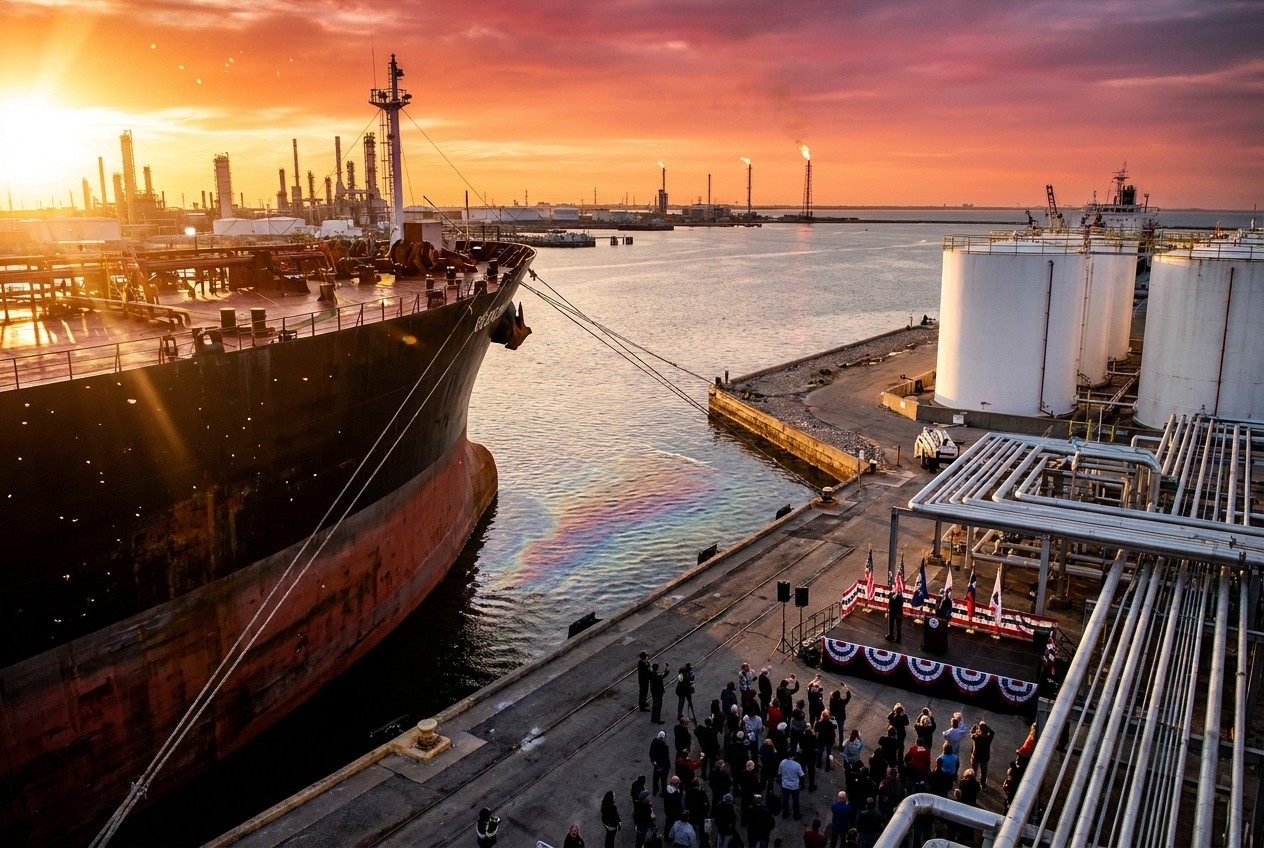
On Oct. 27, President Donald Trump announced the arrival of 1 million barrels of Venezuelan oil at the Port of Corpus Christi, Texas. Trump spoke from a warehouse near the harbor and pointed to the tanker Angerona visible through the building's open doors.
The announcement was made at a campaign rally for Republican Senate candidate Ken Paxton, according to the president's schedule and event coverage [1][2].
The White House issued a formal release the following day confirming the arrival of the first 1 million barrels secured under the agreement [3].
Trump told supporters the oil was transported aboard a vessel he described from the stage. North American Blue Energy Partners (NABEP), the entity involved in the arrangement, confirmed in a statement that it supplied 1 million barrels of Venezuelan oil as part of the deal, according to Reuters [4].
Shipment and August Agreement
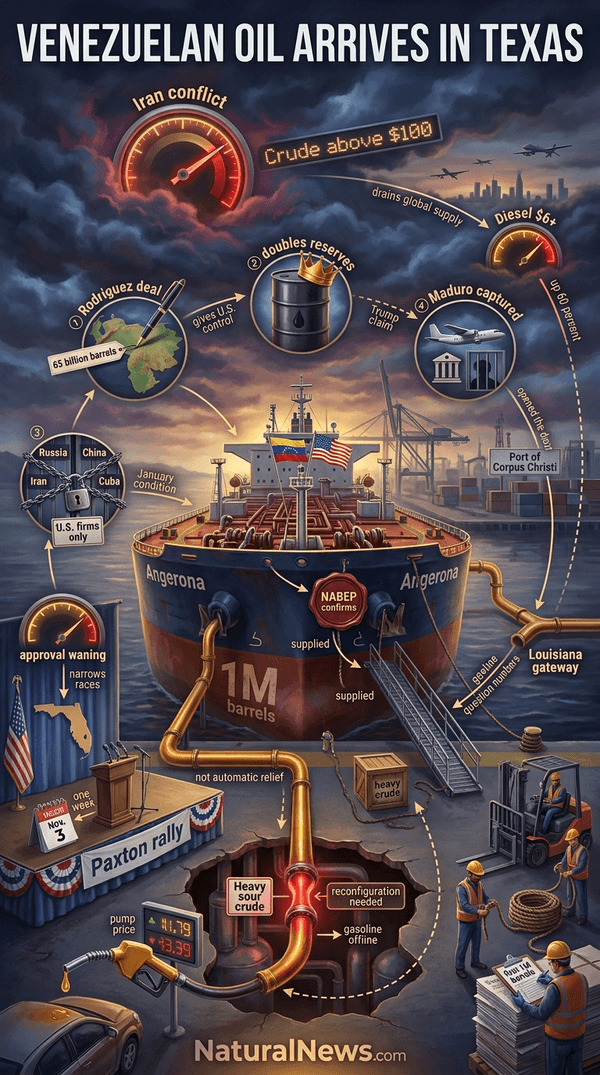
The August agreement with Venezuela's interim President Delcy Rodriguez gave the United States control of 65 billion barrels of proven oil reserves through a partnership with private business, according to Trump's announcement at the time [5][6].
Trump described the transaction on social media as one that "MORE THAN DOUBLES American Oil Reserves, greatly increases our Oil Supply, and will substantially lower Gas Prices for all Americans" [3][7].
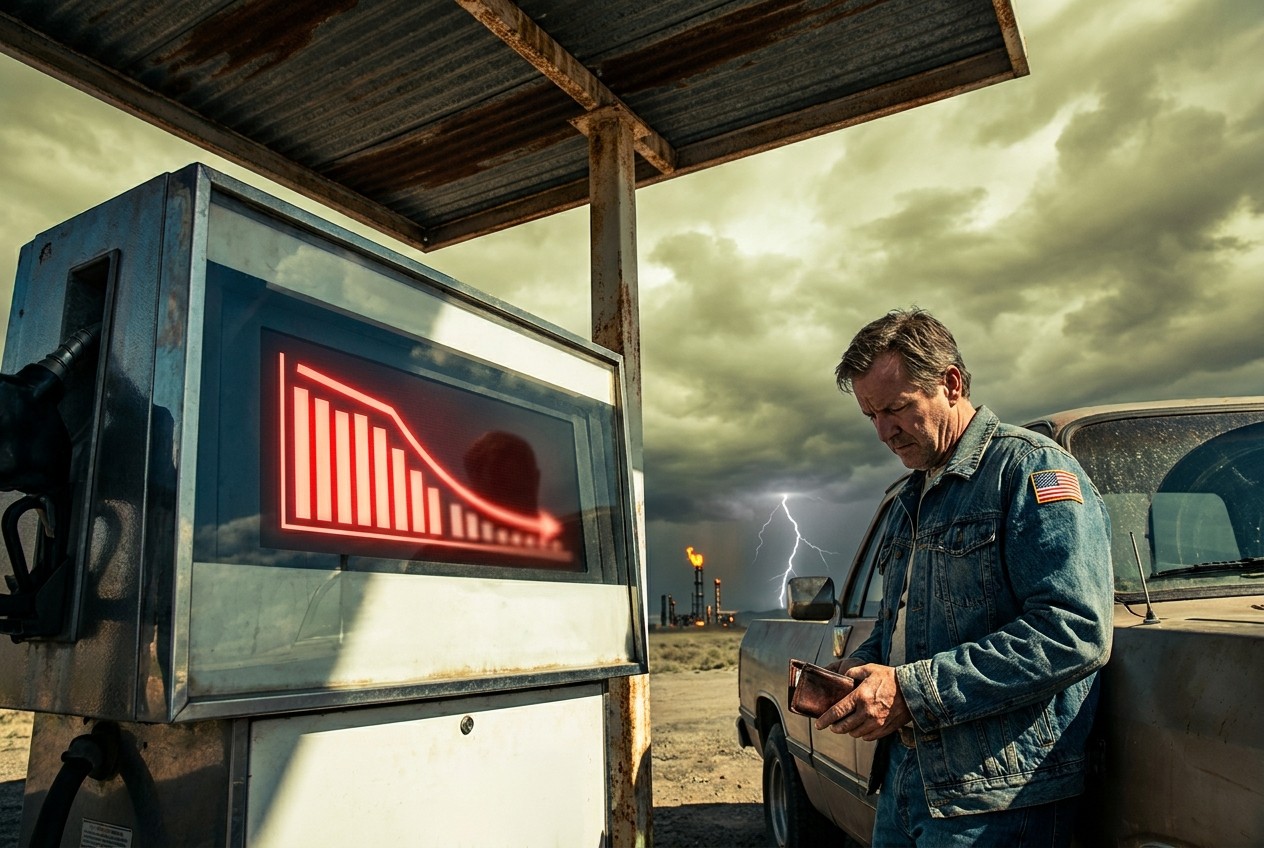
Trump said billions of dollars are being invested by major oil companies, many from Texas, and thanked Venezuela for what he described as a very good relationship [1][8]. The president's remarks came as national average diesel prices had surpassed $6 per gallon for the first time, up 60% from a year earlier, and his administration weighed emergency authorities to expand domestic refining capacity, according to reporting from September [9].
Independent energy analysts have cautioned that heavy Venezuelan crude requires specialized refining configurations. Mike Adams of BrightVideos.com said in an August broadcast that accommodating additional heavy sour crude would require shutting down other inputs and reconfiguring refineries, a process that could take products like gasoline offline [10].
Midterm Campaign Context
Trump visited Texas to boost Republican Senate candidate Ken Paxton ahead of the Nov. 3 midterm elections [2][11]. The president last appeared in Corpus Christi before the March primary, in which Sen. Texas Republicans have faced headwinds from elevated fuel costs.
The president's approval rating has waned in recent weeks, narrowing races in states including Florida, where immigration enforcement and gas prices have divided House candidates [12]. The national political landscape has been shaped by an ongoing conflict with Iran that has dragged on for nearly eight months, pushing crude oil prices above $100 a barrel, according to reporting [13].
Under a broader strategic approach, the Trump administration is pushing to sharply increase Venezuelan oil production and direct more of it toward the United States, with Louisiana positioned as a potential gateway for heavy crude shipments [14].
Rubio Appearance and Venezuela Policy
The August deal followed months of uncertainty in Venezuela after the Jan. 3 capture and extradition of dictator Nicolas Maduro to face narco-terrorism charges in the United States, according to officials [1][15].
U.S. forces forcibly captured Maduro in Caracas and transported him to New York to face drug trafficking charges, an operation that sparked condemnation from Russia and legal experts who argued it violated international law [16].
Earlier in January, the U.S. demanded Venezuela sever economic ties with Russia, China, Iran, and Cuba in exchange for oil market access, requiring partnership exclusively with U.S. firms and prioritizing American buyers [17].
Whether the promised price relief materializes remains uncertain. Experts have said the agreement won't lower gas prices this year even under the best of circumstances, and oil prices rose in the days after the August announcement [18].
The event reflects a broader pattern in which energy policy and electoral politics have converged. Trump suggested in September that the United States could remain in Iran and "keep the oil" like the Venezuela arrangement, saying U.S. revenue from Venezuela has "paid for the war many times" [19][20].
For independent journalists and analysts tracking the deal, questions remain about the agreement's full terms, the identity of the private partners involved, and the timeline for promised price reductions.
Adams noted in August that the text of the agreement had not been released, raising potential legal questions [21]. The White House has confirmed only that the first million barrels have arrived.
References
- Trump brings 1 million barrels of oil from Venezuela to .... https://nypost.com/2026/10/27/us-news/trump-rubio-expected-to-greet-first-shipment-of-1-million-barrels-of-venezuelan-oil-arriving-in-texas-post-deal-with-us/
- Trump Makes 4th Texas Visit for Final Midterm Push; Early Voting Underway in Key States. https://www.ntd.com/ntdplus/trump-makes-4th-texas-visit-for-final-midterm-push-early-voting-underway-in-key-states_1181788.html
- President Trump Announces Arrival of First One Million .... https://www.whitehouse.gov/releases/2026/10/president-trump-announces-arrival-of-first-one-million-barrels-of-oil-in-texas-thanks-to-historic-oil-deal/
- First Venezuelan oil from US-NABEP deal arrives in Texas, to be sold to .... https://www.reuters.com/business/energy/first-venezuelan-oil-us-nabep-deal-arrives-texas-be-sold-exxon-citgo-2026-10-27/
- Trump and Rodriguez Announce US-Venezuela Oil Deal. https://news.antiwar.com/2026/08/30/trump-and-rodriguez-announce-us-venezuela-oil-deal/
- US–Venezuela Deal Could Shake Up Global Oil Markets. https://theepochtimes.com/us/us-venezuela-deal-could-shake-up-global-oil-markets-6081277
- Trump says US has 'historic' deal to control 65bn barrels of Venezuela's oil. https://bbc.com/news/articles/cx2zlwe7qj1o
- Trump Says Venezuela Could Become 51st US State. https://www.ntd.com/ntdplus/trump-says-venezuela-could-become-51st-us-state_1181868.html
- Trump weighs emergency powers as diesel tops $6, threatening economy ahead of midterms - NaturalNews.com, September 15, 2026.
- Health Ranger Report - TRUMP LIES ABOUT VENEZUELAN OIL DEAL - Mike Adams - BrightVideos.com, August 31, 2026.
- Trump Rallies Texas Republicans Ahead of Midterms, Highlights Border Policies. https://www.ntd.com/trump-rallies-texas-republicans-ahead-of-midterms-highlights-border-policies_1181806.html
- Immigration enforcement divides Florida House candidates. https://justthenews.com/nation/states/center-square/immigration-enforcement-divides-florida-us-house-candidates?utm_source=justthenews.com&utm_medium=feed&utm_campaign=external-news-aggregators
- The War in Iran Comes Home to 'Trump Country'. https://original.antiwar.com/nolan_denaro/2026/10/27/the-war-in-iran-comes-home-to-trump-country/
- Louisiana positioned as key gateway for Venezuelan crude. https://justthenews.com/nation/states/center-square/louisiana-positioned-key-gateway-venezuelan-crude?utm_source=justthenews.com&utm_medium=feed&utm_campaign=external-news-aggregators
- Venezuelan Opposition Leader Machado Says Presidential Elections Likely in 2027. https://theepochtimes.com/world/venezuelan-opposition-leader-machado-says-presidential-elections-likely-in-2027-post-6110969
- Maduro's dramatic capture: US forces seize Venezuelan leader in controversial operation - NaturalNews.com, January 04, 2026.
- US demands Venezuela SEVER ties with four nations in exchange for oil market access - NaturalNews.com, January 07, 2026.
- Venezuela Oil Deal Won’t Lower Gas Prices Anytime Soon. https://thenewamerican.com/us/economy/the-venezuela-oil-deal-wont-lower-gas-prices-anytime-soon/
- Trump Says US Could Remain in Iran and Keep Oil, Similar to Deal With Venezuela. https://theepochtimes.com/us/trump-says-us-could-remain-in-iran-and-keep-oil-similar-to-deal-with-venezuela-6086903
- To the victor go the spoils: Iran oil for Trump’s taking after conflict with US ends. https://justthenews.com/government/white-house/victor-go-spoils-iran-oil-trump-taking-after-conflict-us-ends?utm_source=justthenews.com&utm_medium=feed&utm_campaign=external-news-aggregators
- Bright Videos News - VENEZUELAN OIL INTERVIEW ON FOOD PRODUCTION AND OFF GRID LIVING - Mike Adams - BrightVideos.com, August 31, 2026.
Explainer Infographic








Please contact us for more information.