


A study published in Frontiers in Nutrition and reported Aug. 2, 2026, found that adults with hypertension who consumed pro-inflammatory diets were more likely to have poorer cardiovascular health [1]. The analysis drew on data from 12,376 U.S. adults with hypertension.
The researchers said the association showed no threshold -- the link was observed across the full range of dietary inflammatory scores rather than appearing only above or below a specific cutoff. A similar association was observed in a separate group of 1,053 Chinese patients with hypertension who had previously undergone procedures to open blocked arteries, according to the report.
The study is observational, and the researchers said it shows associations rather than causation. The findings add to a growing body of research on how overall dietary patterns, rather than single foods, relate to cardiovascular risk in people already diagnosed with high blood pressure.
Study Design and Dietary Inflammatory Index
The Dietary Inflammatory Index is a scoring tool that rates the inflammatory quality of an overall diet based on 28 dietary components, including fiber, omega-3s, vitamins, and specific food groups, the report stated. A higher score indicates a more pro-inflammatory diet, while a lower or negative score indicates a diet trending anti-inflammatory. The measure reflects overall dietary patterns rather than single foods, according to the report.
The U.S. cohort was drawn from a large health survey. Cardiovascular health was measured using the American Heart Association's Life's Essential 8 composite score, which covers diet, physical activity, sleep, nicotine exposure, body weight, blood sugar, blood lipids, and blood pressure.
The Chinese validation cohort was a higher-risk group tracked over time for heart attacks, repeat procedures, and deaths. Researchers said that because both stages were observational, the study shows associations, not causation. The two-cohort design -- a large U.S. sample and a smaller clinical population followed for outcomes -- was intended to test whether the pattern held across different populations and different measures of cardiovascular health.
Main Findings
In the U.S. cohort, individuals with the most pro-inflammatory diets had nearly four times higher odds of poor cardiovascular health compared with those with the least inflammatory diets. In the Chinese cohort, those with the most pro-inflammatory diets had roughly three times higher odds of poor cardiovascular health compared with those with the least inflammatory diets, and the relationship was linear across the full range of scores.
Follow-up analysis of the Chinese cohort found that a more pro-inflammatory diet independently predicted heart attacks, repeat procedures to reopen blocked arteries, and death from any cause. The report stated that the association held after researchers accounted for other variables.
The consistency of the findings across two independent groups was a central point in the report. The U.S. analysis measured cardiovascular health at a single point using the composite score, while the Chinese analysis tracked hard clinical outcomes over time -- a design that the researchers said strengthened confidence in the direction of the association, even though neither stage could establish cause and effect.
Hypertension and Inflammation Context
The report stated that hypertension is 'also a state of chronic, low-grade vascular inflammation.' That underlying inflammation contributes to the damage high blood pressure does to blood vessels over time and may make people with hypertension especially sensitive to a pro-inflammatory diet.
Prior research involving 83,000 people showed that diet quality influences blood pressure outcomes. Separate research on the DASH diet -- Dietary Approaches to Stop Hypertension -- found that among 83,248 UK Biobank participants with high blood pressure, the DASH diet was associated with a 15 percent reduction in heart disease risk and a 22 percent reduction in mortality. In fact, it outperformed Mediterranean, plant-based, and anti-inflammatory diets specifically for people with untreated or uncontrolled hypertension [2].
The Dietary Inflammatory Index captures diet's influence on multiple cardiovascular risk factors at once, including blood pressure, blood sugar, blood lipids, and body weight. That multi-factor reach helps explain why a single dietary score could track so closely with a composite cardiovascular health measure.
Dietary Patterns Associated With Lower and Higher Inflammation
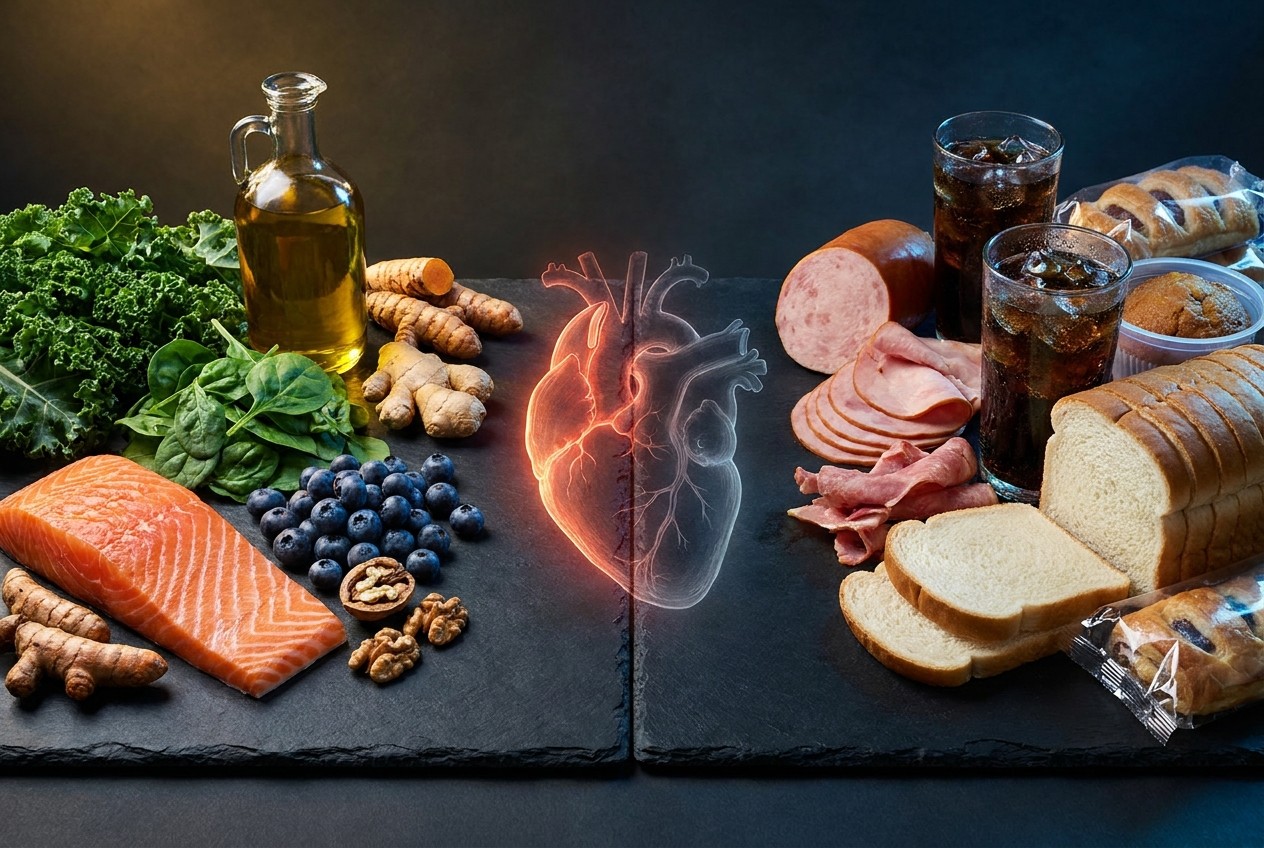
The report listed foods and eating patterns associated with lower dietary inflammation, including fruits, vegetables, legumes, nuts, seeds, oily fish, whole grains, olive oil, and herbs and spices such as turmeric and ginger. These foods form the foundation of Mediterranean-style eating, which the report said has been independently linked to lower blood pressure and reduced cardiovascular risk.
Foods associated with higher dietary inflammation included ultra-processed foods, sugary drinks, processed and red meats, refined carbohydrates and added sugars. The report stated that because the Dietary Inflammatory Index is a pattern-level measure, consistent shifts in overall diet are what move the score, not the elimination of a single ingredient or the addition of a single 'anti-inflammatory' food.
That emphasis on patterns rather than single foods aligns with how the Dietary Inflammatory Index is constructed and interpreted.
Conclusion
Across two independent studies, a more pro-inflammatory eating pattern was consistently linked to worse heart health outcomes, including after researchers accounted for other risk factors.
The study was observational and shows associations rather than causation, researchers said. That limitation matters for how the findings should be read.
Shifting toward whole foods, oily fish, legumes, and vegetables is a dietary pattern associated with lower inflammation and long-term cardiovascular risk. For adults with hypertension, the findings point to overall dietary pattern -- not any single food -- as the lever most closely tied to the composite cardiovascular health measures the study examined.
References
- What You Eat Could Be Doing More Damage Than Your Blood Pressure Numbers Alone - https://www.mindbodygreen.com/articles/what-you-eat-may-matter-more-than-your-blood-pressure-reading
- DASH diet proves superior for blood pressure control in landmark study of 83,000 patients - NaturalNews.com, July 02, 2026.











Please contact us for more information.